
多发性硬化症患者对 SARS-CoV-2 疫苗接种的免疫反应:系统评价/荟萃分析。
Immune responses to SARS-CoV-2 vaccination in multiple sclerosis: a systematic review/meta-analysis.
机构信息
Department of Pediatrics, Division of Pediatric Neurology, Emory University School of Medicine and Children's Healthcare of Atlanta, 1400 Tulle Road NE, 8th Floor, Atlanta, Georgia, 30329, USA.
Department of Neurology, Emory University School of Medicine, Atlanta, Georgia, USA.
出版信息
Ann Clin Transl Neurol. 2022 Aug;9(8):1321-1331. doi: 10.1002/acn3.51628. Epub 2022 Jul 19.
INTRODUCTION
Responses to SARS-CoV-2 vaccination in patients with MS (pwMS) varies by disease-modifying therapies (DMTs). We perform a meta-analysis and systematic review of immune response to SARS-CoV-2 vaccines in pwMS.
METHODS
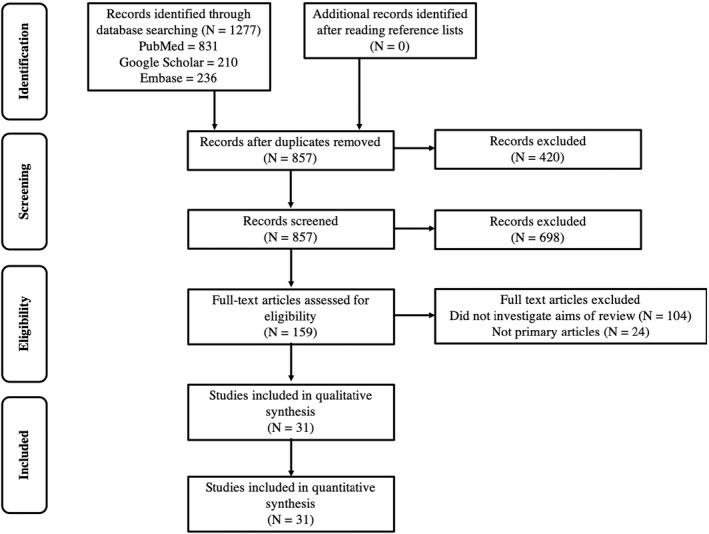
Two independent reviewers searched PubMed, Google Scholar, and Embase from January 1, 2019-December 31, 2021, excluding prior SARS-CoV-2 infections. The meta-analysis of observational studies in epidemiology (MOOSE) guidelines were applied. The data were pooled using a fixed-effects model.
RESULTS
Eight-hundred sixty-four healthy controls and 2203 pwMS from 31 studies were included. Antibodies were detected in 93% healthy controls (HCs), and 77% pwMS, with >93% responses in all DMTs (interferon-beta, glatiramer acetate, cladribine, natalizumab, dimethyl fumarate, alemtuzumab, and teriflunomide) except for 72% sphingosine-1-phosphate modulators (S1PM) and 44% anti-CD20 monoclonal antibodies (mAbs). T-cell responses were detected in most anti-CD20 and decreased in S1PM. Higher antibody response was observed in mRNA vaccines (99.7% HCs) versus non-mRNA vaccines (HCs: 72% inactivated virus; pwMS: 86% vector, 59% inactivated virus). A multivariate logistic regression model to predict vaccine response demonstrated that mRNA versus non-mRNA vaccines had a 3.4 odds ratio (OR) for developing immunity in anti-CD20 (p = 0.0052) and 7.9 OR in pwMS on S1PM or CD20 mAbs (p < 0.0001). Antibody testing timing did not affect antibody detection.
CONCLUSION
Antibody responses are decreased in S1PM and anti-CD20; however, cellular responses were positive in most anti-CD20 with decreased T cell responses in S1PM. mRNA vaccines had increased seroconversion rates compared to non-RNA vaccines. Further investigation in how DMTs affect vaccine immunity are needed.
简介
在多发性硬化症(pwMS)患者中,对 SARS-CoV-2 疫苗的反应因疾病修正治疗(DMT)而异。我们对 pwMS 对 SARS-CoV-2 疫苗的免疫反应进行了荟萃分析和系统评价。
方法
两名独立审查员从 2019 年 1 月 1 日至 2021 年 12 月 31 日在 PubMed、Google Scholar 和 Embase 上进行了搜索,排除了先前的 SARS-CoV-2 感染。应用了流行病学观察研究的荟萃分析(MOOSE)指南。使用固定效应模型对数据进行汇总。
结果
来自 31 项研究的 864 名健康对照者和 2203 名 pwMS 被纳入研究。93%的健康对照者(HCs)和 77%的 pwMS 检测到抗体,所有 DMTs(干扰素-β、格拉替雷、克拉屈滨、那他珠单抗、二甲基富马酸、阿仑单抗和特立氟胺)的反应率均超过 93%,除了鞘氨醇-1-磷酸调节剂(S1PM)的 72%和抗 CD20 单克隆抗体(mAbs)的 44%。大多数抗 CD20 可检测到 T 细胞反应,而 S1PM 则减少。mRNA 疫苗(HCs:99.7%;pwMS:86%载体,59%灭活病毒)比非 mRNA 疫苗(HCs:72%灭活病毒)的抗体反应更高。一个用于预测疫苗反应的多变量逻辑回归模型表明,与非 mRNA 疫苗相比,mRNA 疫苗在抗 CD20 中产生免疫的几率为 3.4(比值比[OR];p=0.0052),在 pwMS 中使用 S1PM 或 CD20 mAbs 的几率为 7.9(OR;p<0.0001)。抗体检测时间并不影响抗体检测。
结论
S1PM 和抗 CD20 会降低抗体反应;然而,大多数抗 CD20 都有阳性的细胞反应,而 S1PM 的 T 细胞反应则减少。与非 RNA 疫苗相比,mRNA 疫苗的血清转化率更高。需要进一步研究 DMTs 如何影响疫苗免疫。


 Zotero 插件