
用于骨组织工程的生物材料中功能化锶:在骨免疫调节中的重要作用
Strontium Functionalized in Biomaterials for Bone Tissue Engineering: A Prominent Role in Osteoimmunomodulation.
作者信息
You Jiaqian, Zhang Yidi, Zhou Yanmin
机构信息
Department of Oral Implantology, Jilin Provincial Key Laboratory of Tooth Development and Bone Remodeling, Hospital of Stomatology, Jilin University, Changchun, China.
出版信息
Front Bioeng Biotechnol. 2022 Jul 6;10:928799. doi: 10.3389/fbioe.2022.928799. eCollection 2022.
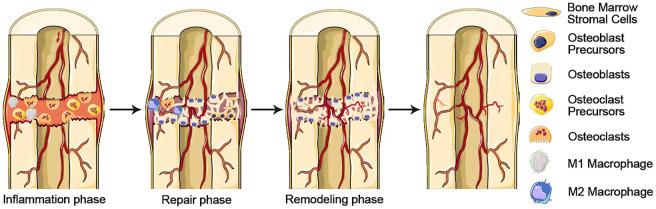
With the development of bone tissue engineering bio-scaffold materials by adding metallic ions to improve bone healing have been extensively explored in the past decades. Strontium a non-radioactive element, as an essential osteophilic trace element for the human body, has received widespread attention in the medical field due to its superior biological properties of inhibiting bone resorption and promoting osteogenesis. As the concept of osteoimmunology developed, the design of orthopedic biomaterials has gradually shifted from "immune-friendly" to "immunomodulatory" with the aim of promoting bone healing by modulating the immune microenvironment through implanted biomaterials. The process of bone healing can be regarded as an immune-induced procedure in which immune cells can target the effector cells such as macrophages, neutrophils, osteocytes, and osteoprogenitor cells through paracrine mechanisms, affecting pathological alveolar bone resorption and physiological bone regeneration. As a kind of crucial immune cell, macrophages play a critical role in the early period of wound repair and host defense after biomaterial implantation. Despite Sr-doped biomaterials being increasingly investigated, how extracellular Sr guides the organism toward favorable osteogenesis by modulating macrophages in the bone tissue microenvironment has rarely been studied. This review focuses on recent knowledge that the trace element Sr regulates bone regeneration mechanisms through the regulation of macrophage polarization, which is significant for the future development of Sr-doped bone repair materials. We will also summarize the primary mechanism of Sr in bone, including calcium-sensing receptor (CaSR) and osteogenesis-related signaling pathways.
在过去几十年里,通过添加金属离子来开发骨组织工程生物支架材料以促进骨愈合已得到广泛探索。锶作为一种非放射性元素,是人体必需的亲骨性微量元素,因其具有抑制骨吸收和促进成骨的卓越生物学特性,在医学领域受到广泛关注。随着骨免疫学概念的发展,骨科生物材料的设计已逐渐从“免疫友好型”转向“免疫调节型”,旨在通过植入生物材料调节免疫微环境来促进骨愈合。骨愈合过程可被视为一种免疫诱导过程,在这个过程中免疫细胞可通过旁分泌机制作用于效应细胞,如巨噬细胞、中性粒细胞、骨细胞和骨祖细胞,影响病理性牙槽骨吸收和生理性骨再生。作为一种关键的免疫细胞,巨噬细胞在生物材料植入后的伤口修复早期和宿主防御中发挥着至关重要的作用。尽管对掺锶生物材料的研究越来越多,但细胞外锶如何通过调节骨组织微环境中的巨噬细胞来引导机体实现有利的成骨作用却鲜有研究。本综述聚焦于微量元素锶通过调节巨噬细胞极化来调控骨再生机制的最新知识,这对掺锶骨修复材料的未来发展具有重要意义。我们还将总结锶在骨中的主要作用机制,包括钙敏感受体(CaSR)和成骨相关信号通路。


 Zotero 插件