
视蛋白聚糖和新型 Na/K-ATPase 相互作用伙伴 Kv2.1 和 Kv8.2 在哺乳动物光感受器的内节处定义了一个不断增长的蛋白质复合物。
Retinoschisin and novel Na/K-ATPase interaction partners Kv2.1 and Kv8.2 define a growing protein complex at the inner segments of mammalian photoreceptors.
机构信息
Institute of Human Genetics, University of Regensburg, Franz-Josef-Strauss-Allee 11, 93053, Regensburg, Germany.
Department of Psychiatry and Psychotherapy, University of Regensburg, Franz-Josef-Strauss-Allee 11, 93053, Regensburg, Germany.
出版信息
Cell Mol Life Sci. 2022 Jul 25;79(8):448. doi: 10.1007/s00018-022-04409-9.
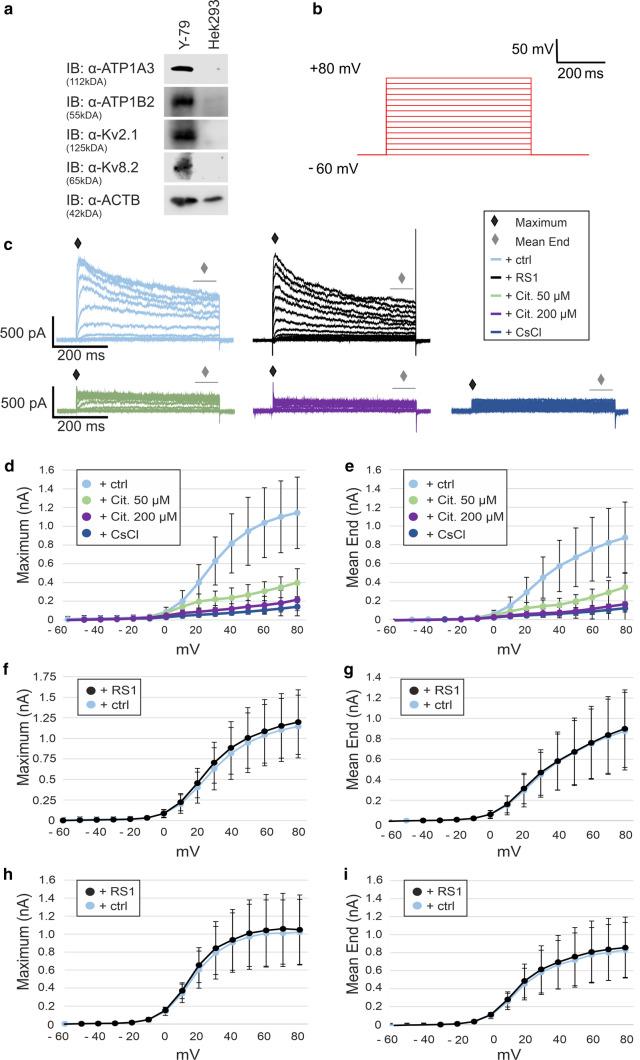
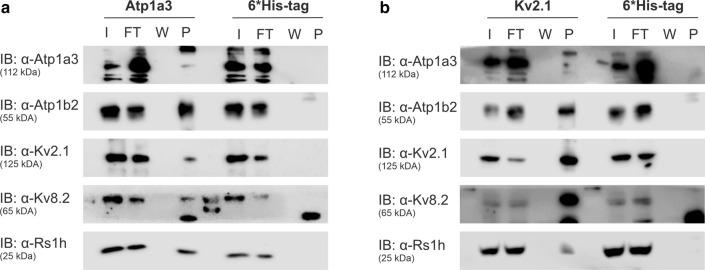
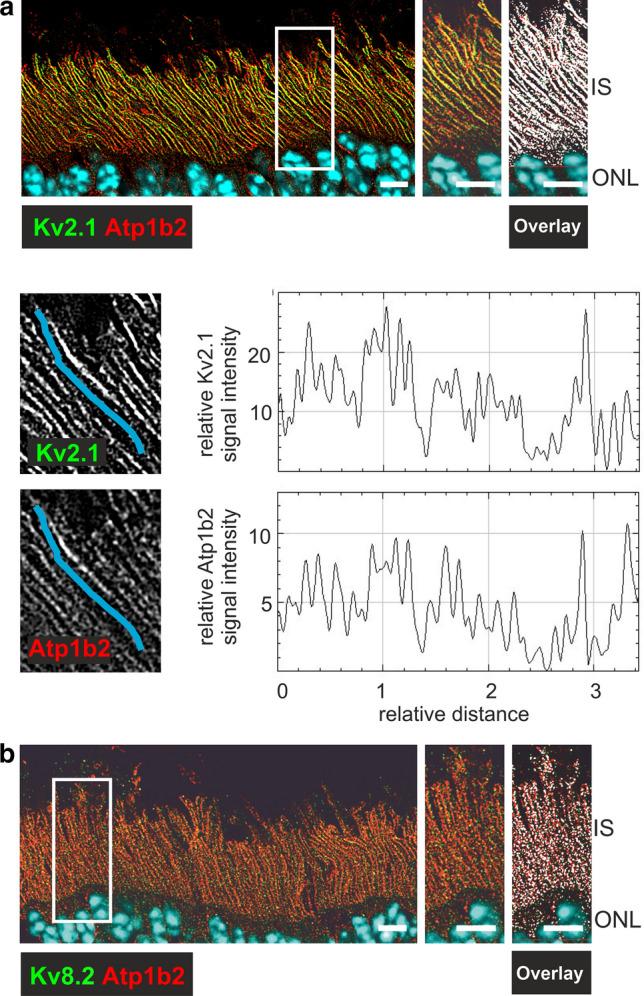
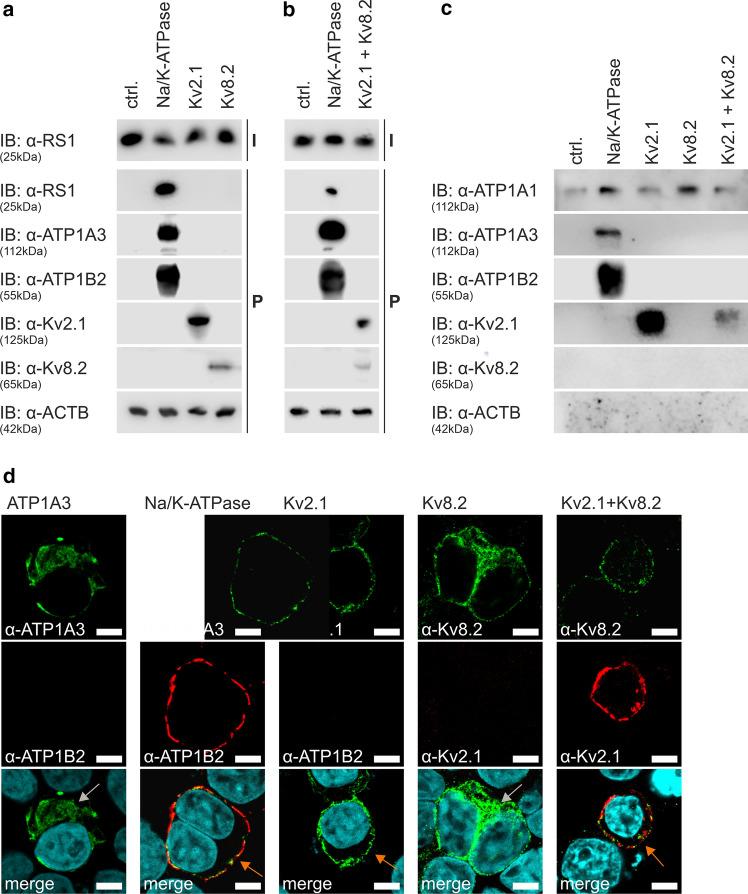
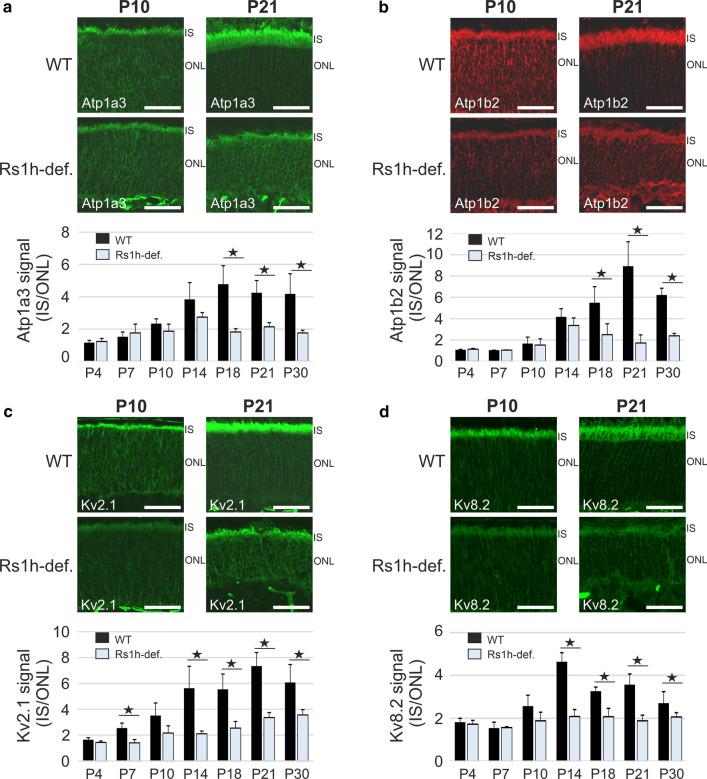
The RS1 gene on Xp 22.13 encodes retinoschisin which is known to directly interact with the retinal Na/K-ATPase at the photoreceptor inner segments. Pathologic mutations in RS1 cause X-linked juvenile retinoschisis (XLRS), a hereditary retinal dystrophy in young males. To further delineate the retinoschisin-Na/K-ATPase complex, co-immunoprecipitation was performed with porcine and murine retinal lysates targeting the ATP1A3 subunit. This identified the voltage-gated potassium (Kv) channel subunits Kv2.1 and Kv8.2 as direct interaction partners of the retinal Na/K-ATPase. Colocalization of the individual components of the complex was demonstrated at the membrane of photoreceptor inner segments. We further show that retinoschisin-deficiency, a frequent consequence of molecular pathology in XLRS, causes mislocalization of the macromolecular complex during postnatal retinal development with a simultaneous reduction of Kv2.1 and Kv8.2 protein expression, while the level of retinal Na/K-ATPase expression remains unaffected. Patch-clamp analysis revealed no effect of retinoschisin-deficiency on Kv channel mediated potassium ion currents in vitro. Together, our data suggest that Kv2.1 and Kv8.2 together with retinoschisin and the retinal Na/K-ATPase are integral parts of a macromolecular complex at the photoreceptor inner segments. Defective compartmentalization of this complex due to retinoschisin-deficiency may be a crucial step in initial XLRS pathogenesis.
Xp22.13 上的 RS1 基因编码视紫质,已知其与光感受器内节的视网膜 Na/K-ATP 酶直接相互作用。RS1 的病理性突变导致 X 连锁青少年性视网膜劈裂症(XLRS),这是一种年轻男性的遗传性视网膜变性。为了进一步描绘视紫质-Na/K-ATP 酶复合物,用针对 ATP1A3 亚基的猪和鼠视网膜裂解物进行了共免疫沉淀。这鉴定出电压门控钾 (Kv) 通道亚基 Kv2.1 和 Kv8.2 为视网膜 Na/K-ATP 酶的直接相互作用伙伴。复合物的各个成分在光感受器内节的膜上显示出共定位。我们进一步表明,视紫质缺失是 XLRS 分子病理学的常见后果,它导致出生后视网膜发育过程中大分子复合物的定位错误,同时 Kv2.1 和 Kv8.2 蛋白表达减少,而视网膜 Na/K-ATP 酶的表达水平不受影响。膜片钳分析显示视紫质缺失对体外 Kv 通道介导的钾离子电流没有影响。总之,我们的数据表明,Kv2.1 和 Kv8.2 与视紫质和视网膜 Na/K-ATP 酶一起是光感受器内节处大分子复合物的组成部分。由于视紫质缺失导致该复合物的隔室化缺陷可能是 XLRS 发病机制的初始关键步骤。

 Zotero 插件