
硫化氢通过抑制cGAS-STING-NLRP3炎性小体途径改善高胆碱诱导的心脏功能障碍。
Hydrogen Sulfide Ameliorated High Choline-Induced Cardiac Dysfunction by Inhibiting cGAS-STING-NLRP3 Inflammasome Pathway.
作者信息
Bai Lu, Dai Jing, Xia Yuxuan, He Kaichuan, Xue Hongmei, Guo Qi, Tian Danyang, Xiao Lin, Zhang Xiangjian, Teng Xu, Wu Yuming, Jin Sheng
机构信息
Department of Physiology, Hebei Medical University, Hebei 050017, China.
Department of Clinical Diagnostics, Hebei Medical University, Hebei 050017, China.
出版信息
Oxid Med Cell Longev. 2022 Jul 22;2022:1392896. doi: 10.1155/2022/1392896. eCollection 2022.
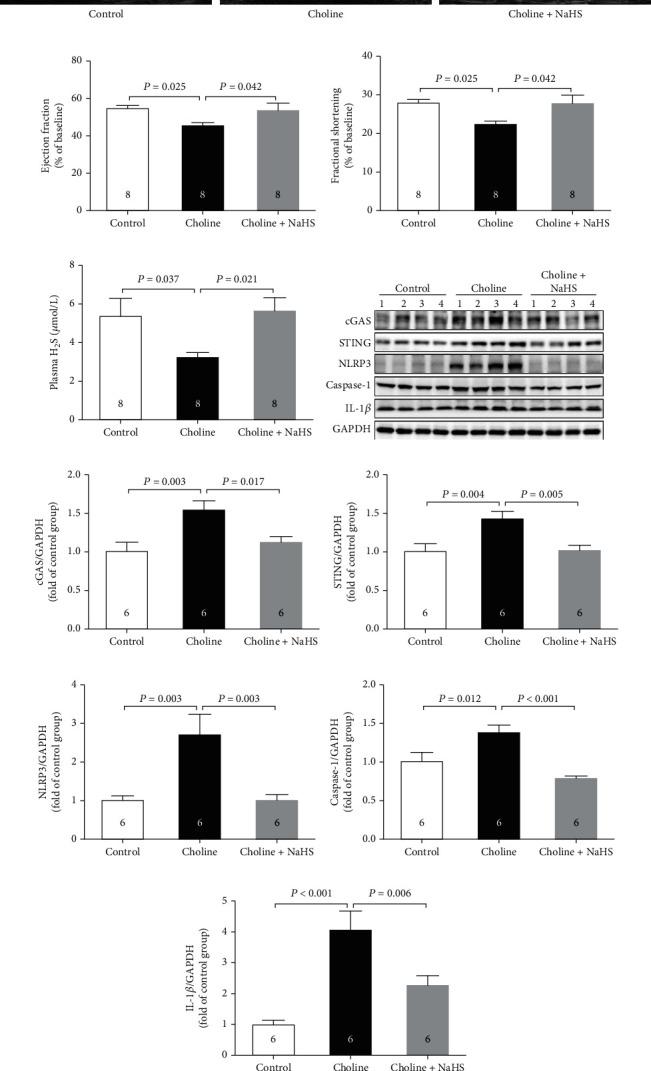
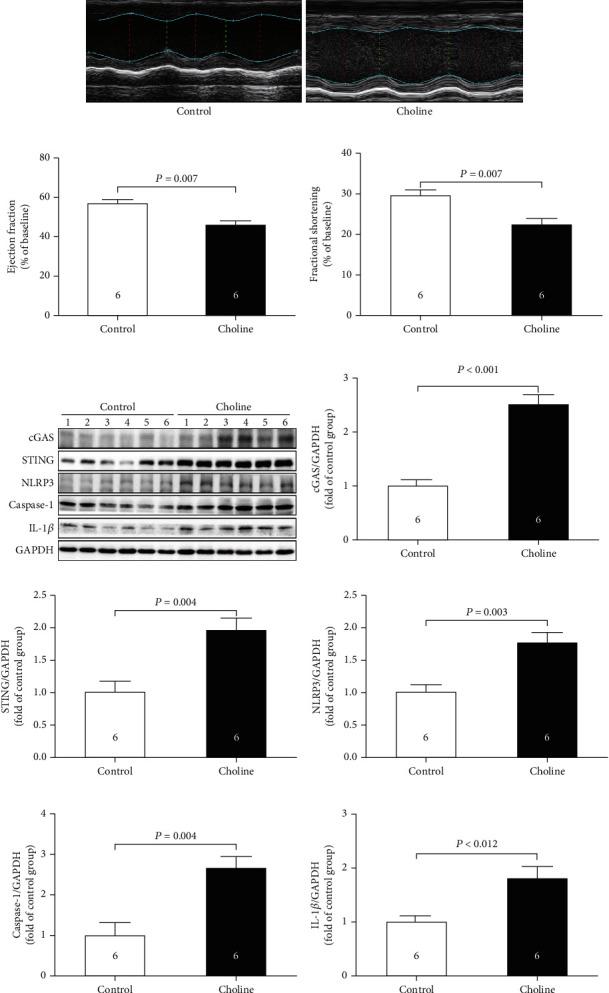
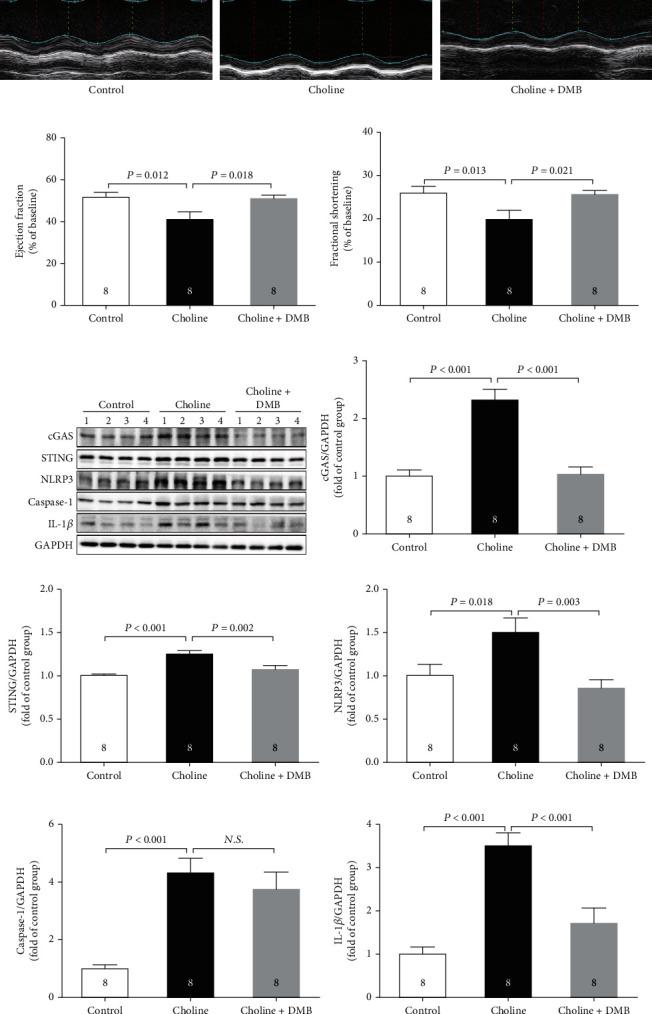
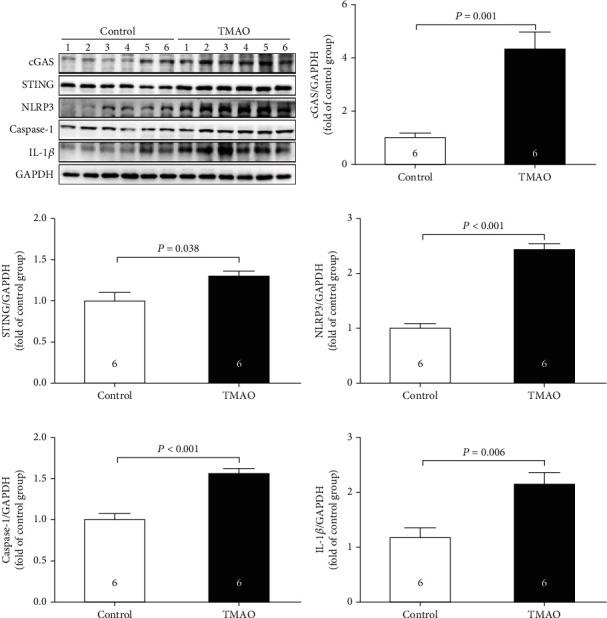
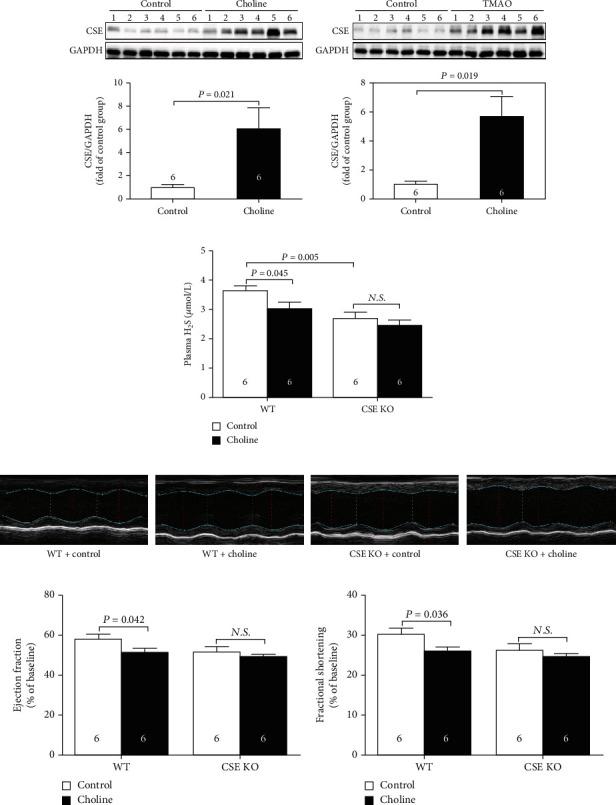
Although it is an essential nutrient, high choline intake directly or indirectly via its metabolite is associated with increased risk of cardiovascular disease, the mechanism of which remains to be elucidated. The present study was performed to investigate whether hydrogen sulfide (HS) was involved in high choline-induced cardiac dysfunction and explore the potential mechanisms. We found that ejection fraction (EF) and fractional shortening (FS), the indicators of cardiac function measured by echocardiography, were significantly decreased in mice fed a diet containing 1.3% choline for 4 months as compared to the control, while applying 3,3-dimethyl-1-butanol (DMB) to suppress trimethylamine N-oxide (TMAO, a metabolite of choline) generation ameliorated the cardiac function. Subsequently, we found that feeding choline or TMAO significantly increased the protein levels of cyclic GMP-AMP (cGAMP) synthase (cGAS), stimulator of interferon genes (STING), NOD-like receptor protein 3 (NLRP3), caspase-1, and interleukin-1 (IL-1) as compared to the control, which indicated the activation of cGAS-STING-NLRP3 inflammasome axis. Moreover, the protein expression of cystathionine -lyase (CSE), the main enzyme for HS production in the cardiovascular system, was significantly increased after dietary supplementation with choline, but the plasma HS levels were significantly decreased. To observe the effect of endogenous HS, CSE knockout (KO) mice were used, and we found that the EF, FS, and plasma HS levels in WT mice were significantly decreased after dietary supplementation with choline, while there was no difference between CSE KO + control and CSE KO + choline group. To observe the effect of exogenous HS, mice were intraperitoneally injected with sodium hydrosulfide (NaHS, a HS donor) for 4 months, and we found that NaHS improved the cardiac function and reduced the protein levels of cGAS, STING, NLRP3, caspase-1, and IL-1 in mice receiving dietary choline. In conclusion, our studies revealed that high choline diet decreased plasma HS levels and induced cardiac dysfunction via cGAS-STING-NLRP3 inflammasome axis while HS treatment could restore the cardiac function by inhibiting cGAS-STING-NLRP3 inflammasome axis.
尽管胆碱是一种必需营养素,但通过其代谢产物直接或间接摄入高剂量胆碱与心血管疾病风险增加有关,其机制尚待阐明。本研究旨在探讨硫化氢(HS)是否参与高胆碱诱导的心脏功能障碍,并探索其潜在机制。我们发现,与对照组相比,喂食含1.3%胆碱的饮食4个月的小鼠,通过超声心动图测量的心脏功能指标射血分数(EF)和缩短分数(FS)显著降低,而应用3,3-二甲基-1-丁醇(DMB)抑制三甲胺N-氧化物(TMAO,胆碱的一种代谢产物)生成可改善心脏功能。随后,我们发现与对照组相比,喂食胆碱或TMAO显著增加了环磷酸鸟苷-腺苷酸(cGAMP)合酶(cGAS)、干扰素基因刺激因子(STING)、NOD样受体蛋白3(NLRP3)、半胱天冬酶-1和白细胞介素-1(IL-1)的蛋白水平,这表明cGAS-STING-NLRP3炎性小体轴被激活。此外,饮食补充胆碱后,心血管系统中产生HS的主要酶胱硫醚-γ-裂解酶(CSE)的蛋白表达显著增加,但血浆HS水平显著降低。为了观察内源性HS的作用,我们使用了CSE基因敲除(KO)小鼠,发现喂食胆碱后,野生型小鼠的EF、FS和血浆HS水平显著降低,而CSE KO+对照组和CSE KO+胆碱组之间没有差异。为了观察外源性HS的作用,小鼠腹腔注射硫化氢钠(NaHS,一种HS供体)4个月,我们发现NaHS改善了喂食胆碱小鼠的心脏功能,并降低了cGAS、STING、NLRP3、半胱天冬酶-1和IL-1的蛋白水平。总之,我们的研究表明,高胆碱饮食通过cGAS-STING-NLRP3炎性小体轴降低血浆HS水平并诱导心脏功能障碍,而HS治疗可通过抑制cGAS-STING-NLRP3炎性小体轴恢复心脏功能。
 Zotero 插件