
新型SARS-CoV-2气溶胶检测平台:基于特异性磁性纳米颗粒吸附采样和数字液滴PCR检测
Novel aerosol detection platform for SARS‑CoV‑2: Based on specific magnetic nanoparticles adsorption sampling and digital droplet PCR detection.
作者信息
Chen Hui, Ma Xinye, Zhang Xinyu, Hu Gui, Deng Yan, Li Song, Chen Zhu, He Nongyue, Wu Yanqi, Jiang Zhihong
机构信息
Hunan Key Laboratory of Biomedical Nanomaterials and Devices, Hunan University of Technology, Zhuzhou 412007, China.
State Key Laboratory of Bioelectronics, National Demonstration Center for Experimental Biomedical Engineering Education, School of Biological Science and Medical Engineering, Southeast University, Nanjing 210096, China.
出版信息
Chin Chem Lett. 2023 Jan;34(1):107701. doi: 10.1016/j.cclet.2022.07.044. Epub 2022 Jul 23.
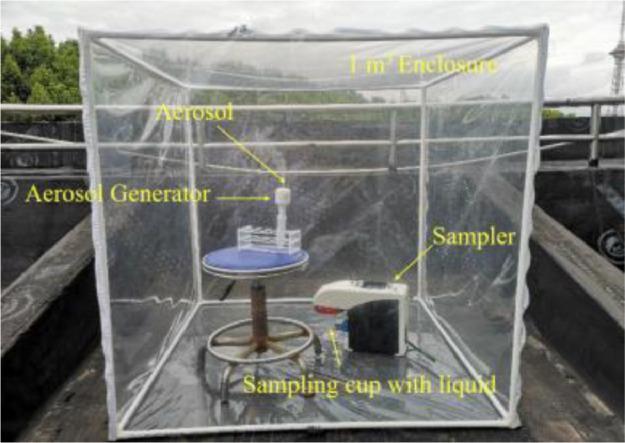
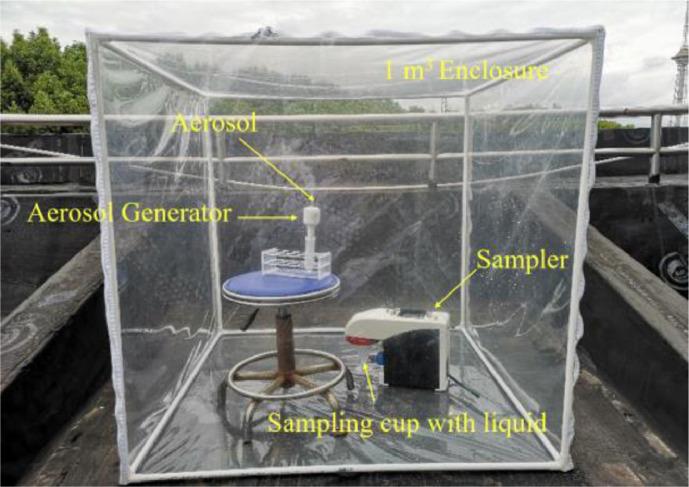
The SARS‑CoV‑2 virus is released from an infectious source (such as a sick person) and adsorbed on aerosols, which can form pathogenic microorganism aerosols, which can affect human health through airborne transmission. Efficient sampling and accurate detection of microorganisms in aerosols are the premise and basis for studying their properties and evaluating their hazard. In this study, we built a set of sub-micron aerosol detection platform, and carried out a simulation experiment on the SARS‑CoV‑2 aerosol in the air by wet-wall cyclone combined with immunomagnetic nanoparticle adsorption sampling and ddPCR. The feasibility of the system in aerosol detection was verified, and the influencing factors in the detection process were experimentally tested. As a result, the sampling efficiency was 29.77%, and extraction efficiency was 98.57%. The minimum detection limit per unit volume of aerosols was 250 copies (10 copies/mL, concentration factor 2.5).
严重急性呼吸综合征冠状病毒2(SARS-CoV-2)病毒从传染源(如病人)释放出来并吸附在气溶胶上,形成致病性微生物气溶胶,可通过空气传播影响人类健康。对气溶胶中的微生物进行高效采样和准确检测是研究其特性和评估其危害的前提和基础。在本研究中,我们构建了一套亚微米气溶胶检测平台,并通过湿壁旋风分离器结合免疫磁性纳米颗粒吸附采样和数字滴式聚合酶链反应(ddPCR)对空气中的SARS-CoV-2气溶胶进行了模拟实验。验证了该系统在气溶胶检测中的可行性,并对检测过程中的影响因素进行了实验测试。结果表明,采样效率为29.77%,提取效率为98.57%。每单位体积气溶胶的最低检测限为250拷贝(10拷贝/毫升,浓缩系数2.5)。



 Zotero 插件