
基于深度学习工作流程评估宫颈癌调强放疗计划结构的自动勾画。
Evaluation of auto-segmentation for EBRT planning structures using deep learning-based workflow on cervical cancer.
机构信息
Department of Radiation Oncology, Women's Hospital, School of Medicine, Zhejiang University, Hangzhou, 310006, Zhejiang, China.
出版信息
Sci Rep. 2022 Aug 11;12(1):13650. doi: 10.1038/s41598-022-18084-0.
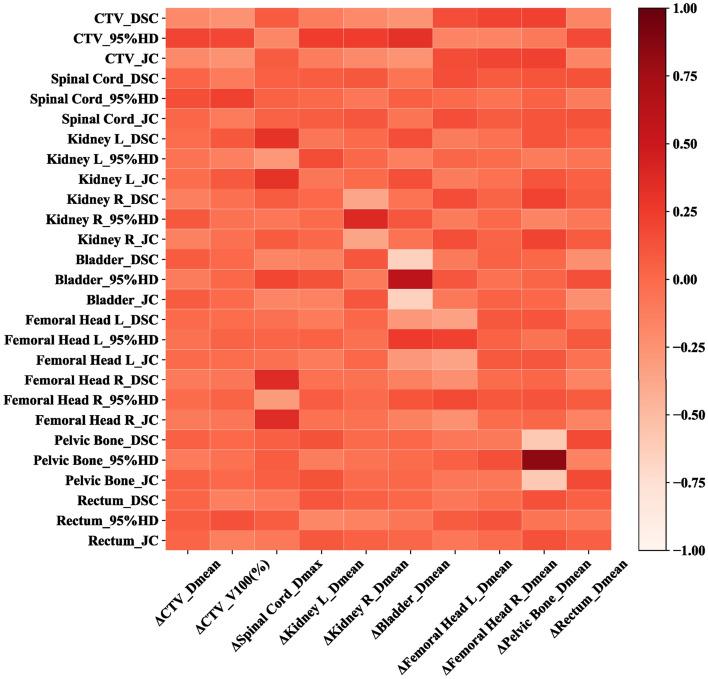
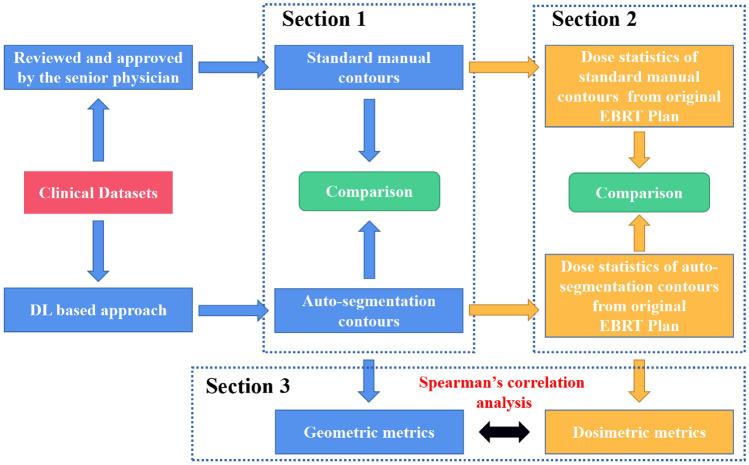
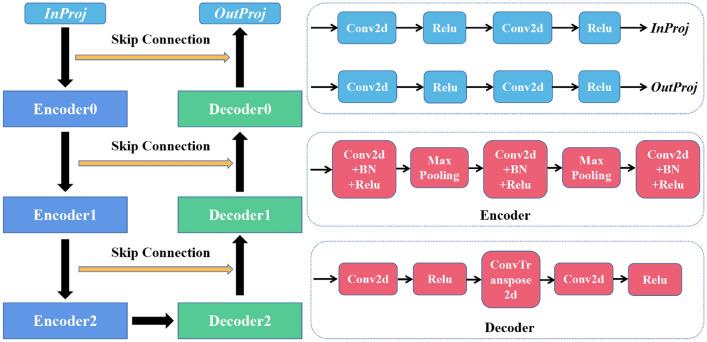
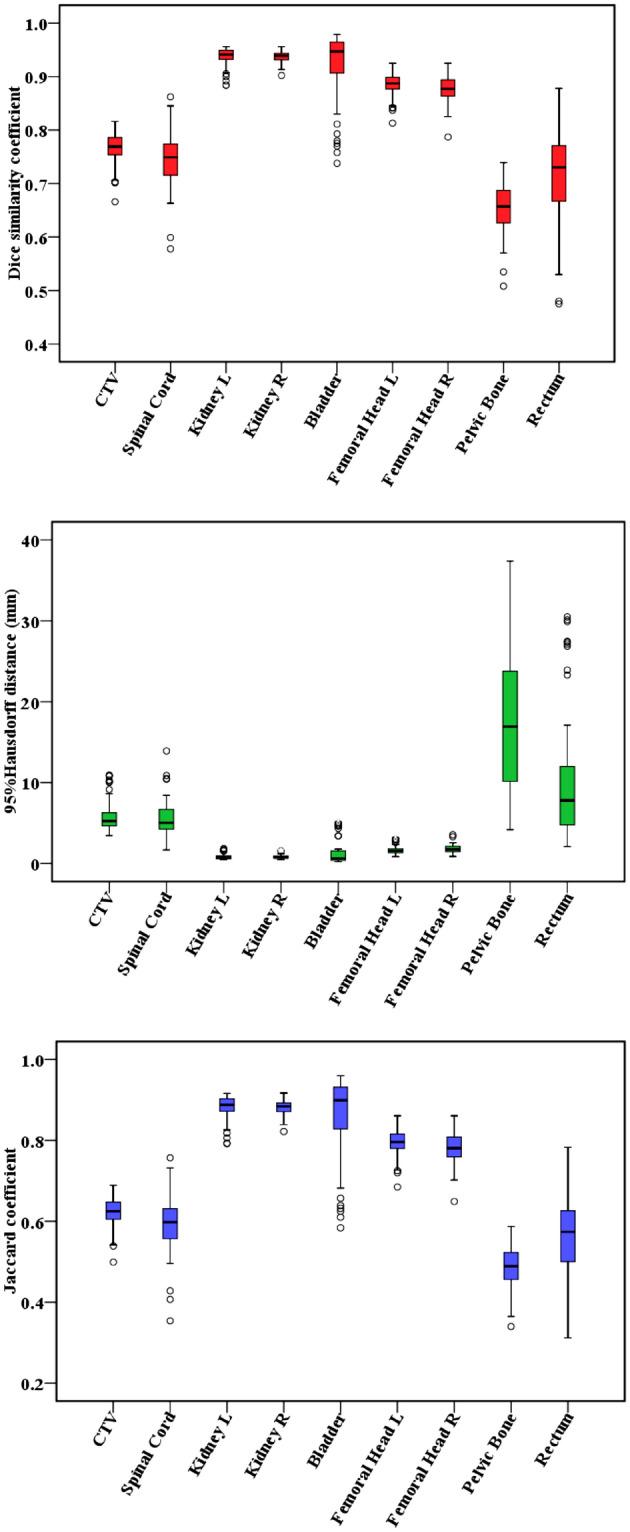
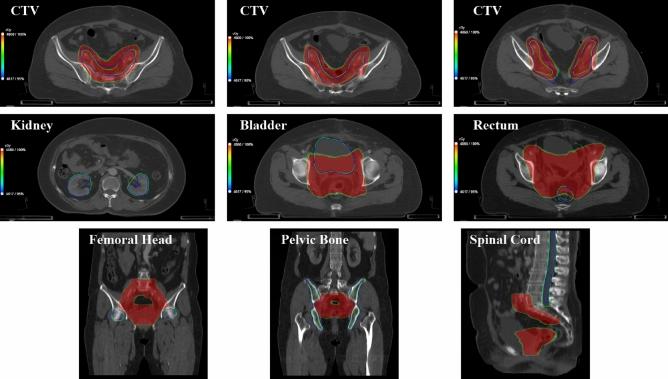
Deep learning (DL) based approach aims to construct a full workflow solution for cervical cancer with external beam radiation therapy (EBRT) and brachytherapy (BT). The purpose of this study was to evaluate the accuracy of EBRT planning structures derived from DL based auto-segmentation compared with standard manual delineation. Auto-segmentation model based on convolutional neural networks (CNN) was developed to delineate clinical target volumes (CTVs) and organs at risk (OARs) in cervical cancer radiotherapy. A total of 300 retrospective patients from multiple cancer centers were used to train and validate the model, and 75 independent cases were selected as testing data. The accuracy of auto-segmented contours were evaluated using geometric and dosimetric metrics including dice similarity coefficient (DSC), 95% hausdorff distance (95%HD), jaccard coefficient (JC) and dose-volume index (DVI). The correlation between geometric metrics and dosimetric difference was performed by Spearman's correlation analysis. The right and left kidney, bladder, right and left femoral head showed superior geometric accuracy (DSC: 0.88-0.93; 95%HD: 1.03 mm-2.96 mm; JC: 0.78-0.88), and the Bland-Altman test obtained dose agreement for these contours (P > 0.05) between manual and DL based methods. Wilcoxon's signed-rank test indicated significant dosimetric differences in CTV, spinal cord and pelvic bone (P < 0.001). A strong correlation between the mean dose of pelvic bone and its 95%HD (R = 0.843, P < 0.001) was found in Spearman's correlation analysis, and the remaining structures showed weak link between dosimetric difference and all of geometric metrics. Our auto-segmentation achieved a satisfied agreement for most EBRT planning structures, although the clinical acceptance of CTV was a concern. DL based auto-segmentation was an essential component in cervical cancer workflow which would generate the accurate contouring.
基于深度学习(DL)的方法旨在为宫颈癌的外照射放射治疗(EBRT)和近距离放射治疗(BT)构建完整的工作流程解决方案。本研究的目的是评估基于 DL 的自动分割技术得出的 EBRT 计划结构的准确性,与标准手动勾画相比。基于卷积神经网络(CNN)的自动分割模型用于勾画宫颈癌放射治疗的临床靶区(CTV)和危及器官(OAR)。共使用来自多个癌症中心的 300 例回顾性患者进行模型训练和验证,选择 75 例独立病例作为测试数据。使用几何和剂量学指标(包括 Dice 相似系数(DSC)、95%hausdorff 距离(95%HD)、Jaccard 系数(JC)和剂量-体积指数(DVI))评估自动勾画轮廓的准确性。通过 Spearman 相关分析评估几何指标和剂量学差异之间的相关性。右肾、左肾、膀胱、右股骨头和左股骨头显示出较高的几何精度(DSC:0.88-0.93;95%HD:1.03mm-2.96mm;JC:0.78-0.88),Bland-Altman 检验表明手动和基于 DL 的方法之间这些轮廓的剂量一致(P>0.05)。Wilcoxon 符号秩检验表明 CTV、脊髓和骨盆的剂量学差异有统计学意义(P<0.001)。Spearman 相关分析表明骨盆的平均剂量与其 95%HD 之间存在很强的相关性(R=0.843,P<0.001),其余结构的剂量学差异与所有几何指标之间存在弱相关性。我们的自动分割技术在大多数 EBRT 计划结构中取得了令人满意的一致性,尽管 CTV 的临床接受度是一个关注点。基于 DL 的自动分割是宫颈癌工作流程的重要组成部分,它将生成准确的轮廓。

 Zotero 插件