
建立和验证胰腺导管腺癌中与 ADCP 相关的预后标志物。
Establishing and validating an ADCP-related prognostic signature in pancreatic ductal adenocarcinoma.
机构信息
Department of Gastroenterology, Changhai Hospital, Shanghai, China.
Department of Gastroenterology, The First Affiliated Hospital of Zhengzhou University, China.
出版信息
Aging (Albany NY). 2022 Aug 12;14(15):6299-6315. doi: 10.18632/aging.204221.
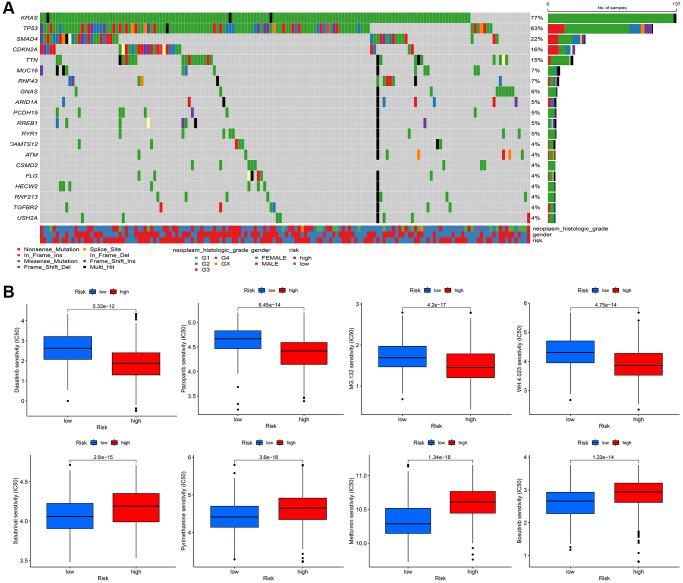
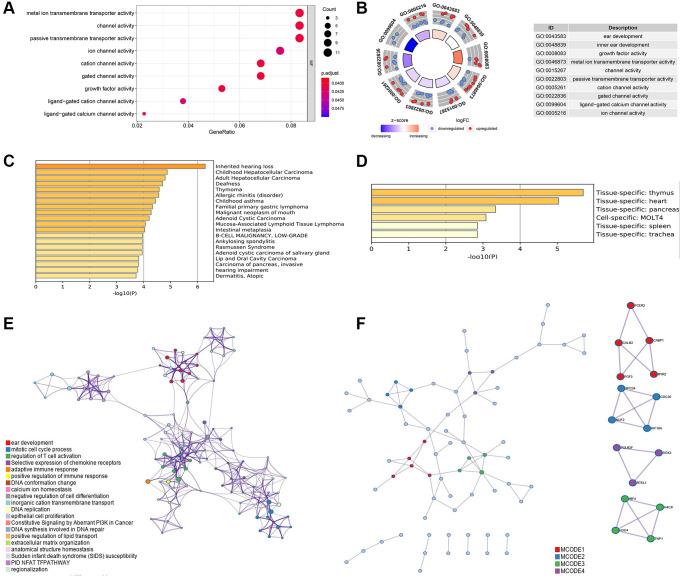
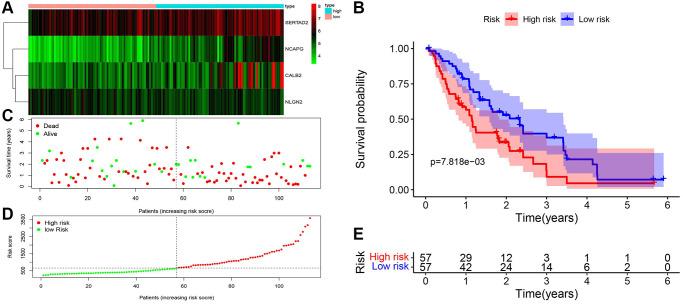
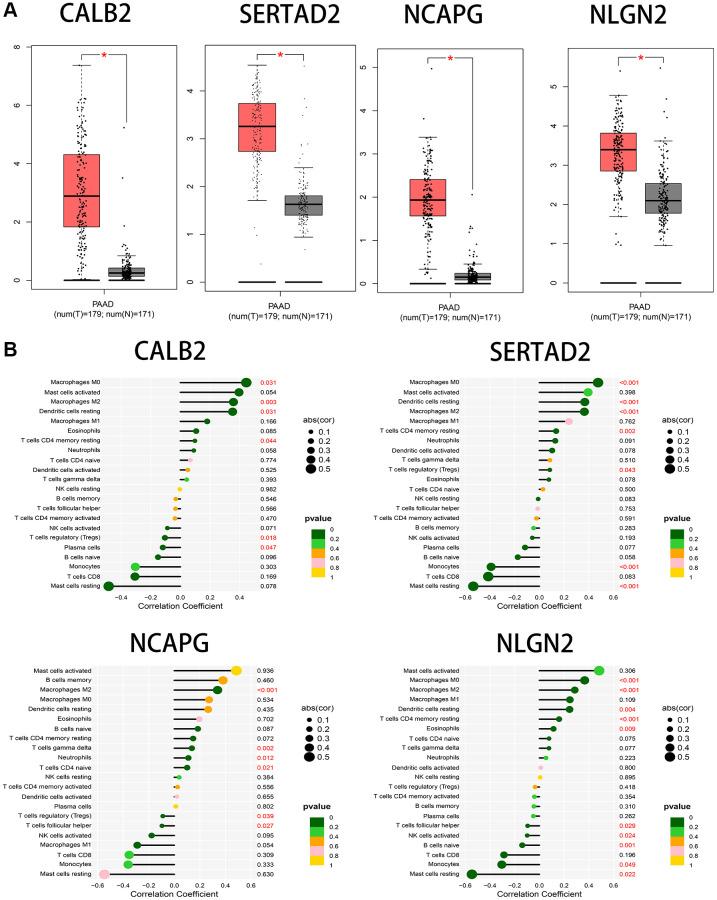
With the progress of precision medicine treatment in pancreatic ductal adenocarcinoma (PDAC), individualized cancer-related examination and prediction is of great importance in this high malignant tumor, and antibody-dependent cell phagocytosis (ADCP) with changed pathways highly enrolled in the carcinogenesis of PDAC. High-throughput data of pancreatic ductal adenocarcinoma were downloaded and 160 differentially expressed ADCP-related genes (ARGs) were obtained. Secondly, GO and KEGG enrichment analyses show that ADCP is a pivotal biologic process in pancreatic carcinogenesis. Next, CALB2, NLGN2, NCAPG and SERTAD2 are identified through multivariate Cox regression. These 4 genes are confirmed with significant prognostic value in PDAC. Then, a risk score formula is constructed and tested in PDAC samples. Finally, the correlation between these 4 genes and M2 macrophage polarization was screened. Some pivotal differentially expressed ADCP-related genes and biologic processes, four pivotal subgroup was among identified in the protein-protein network, and hub genes was found in these sub group. Then, an ADCP-related formula was set: CALB2* 0.355526 + NLGN2* -0.86862 + NCAPG* 0.932348 + SERTAD2* 1.153568. Additionally, the significant correlation between M2 macrophage-infiltration and the expression of each genes in PDAC samples was identified. Finally, the somatic mutation landscape and sensitive chemotherapy drug between high risk group and low risk group was explored. This study provides a potential prognostic signature for predicting prognosis of PDAC patients and molecular insights of ADCP in PDAC, and the formula focusing on the prognosis of PDAC can be effective. These findings will contribute to the precision medicine of pancreatic ductal adenocarcinoma treatment.
随着精准医学治疗在胰腺导管腺癌 (PDAC) 中的进展,在这种高恶性肿瘤中,个体化癌症相关检查和预测非常重要,并且改变途径的抗体依赖性细胞吞噬 (ADCP) 高度参与 PDAC 的发生。下载了胰腺导管腺癌的高通量数据,并获得了 160 个差异表达的 ADCP 相关基因 (ARGs)。其次,GO 和 KEGG 富集分析表明 ADCP 是胰腺发生癌变的关键生物学过程。接下来,通过多变量 Cox 回归鉴定出 CALB2、NLGN2、NCAPG 和 SERTAD2。这 4 个基因在 PDAC 中具有显著的预后价值。然后,构建了风险评分公式并在 PDAC 样本中进行了测试。最后,筛选了这 4 个基因与 M2 巨噬细胞极化的相关性。在蛋白质-蛋白质网络中筛选出一些关键的差异表达的 ADCP 相关基因和生物学过程,确定了 4 个关键亚组,并在这些亚组中发现了枢纽基因。然后,建立了一个 ADCP 相关公式:CALB20.355526+NLGN2-0.86862+NCAPG0.932348+SERTAD21.153568。此外,还鉴定了 PDAC 样本中 M2 巨噬细胞浸润与每个基因表达之间的显著相关性。最后,探讨了高危组和低危组之间的体细胞突变景观和敏感化疗药物。本研究为预测 PDAC 患者的预后提供了一个有潜力的预后标志物,为 PDAC 中的 ADCP 提供了分子见解,并且该关注 PDAC 预后的公式可以是有效的。这些发现将有助于胰腺导管腺癌治疗的精准医学。






 Zotero 插件