
携带定义性营养因子的人骨髓间充质基质细胞共培养物通过改善血管生成和动态募集 M2 样巨噬细胞促进糖尿病大鼠皮肤伤口愈合。
Pooled human bone marrow-derived mesenchymal stromal cells with defined trophic factors cargo promote dermal wound healing in diabetic rats by improved vascularization and dynamic recruitment of M2-like macrophages.
机构信息
Institute of Transfusion Medicine and Immunology, Medical Faculty Mannheim, Heidelberg University, German Red Cross Blood Donor Service Baden-Württemberg - Hessen, Mannheim, Germany.
Institute for Anatomy, University of Veterinary Medicine Hannover, Hannover, Germany.
出版信息
Front Immunol. 2022 Aug 19;13:976511. doi: 10.3389/fimmu.2022.976511. eCollection 2022.
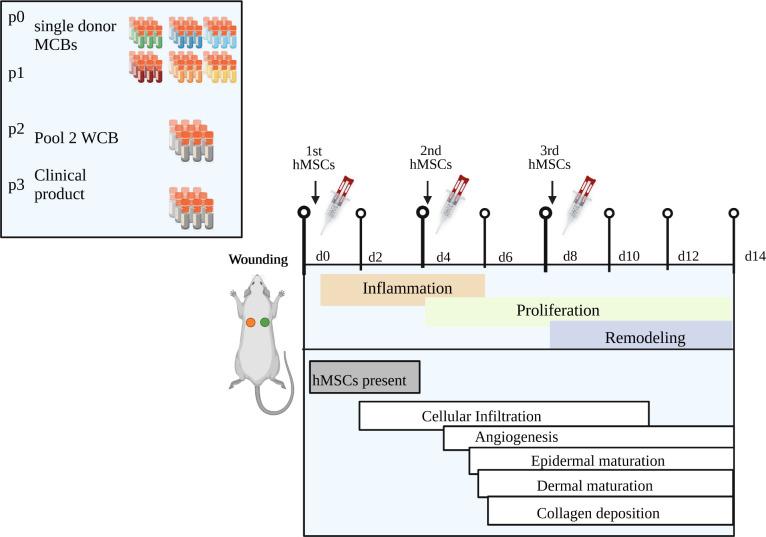
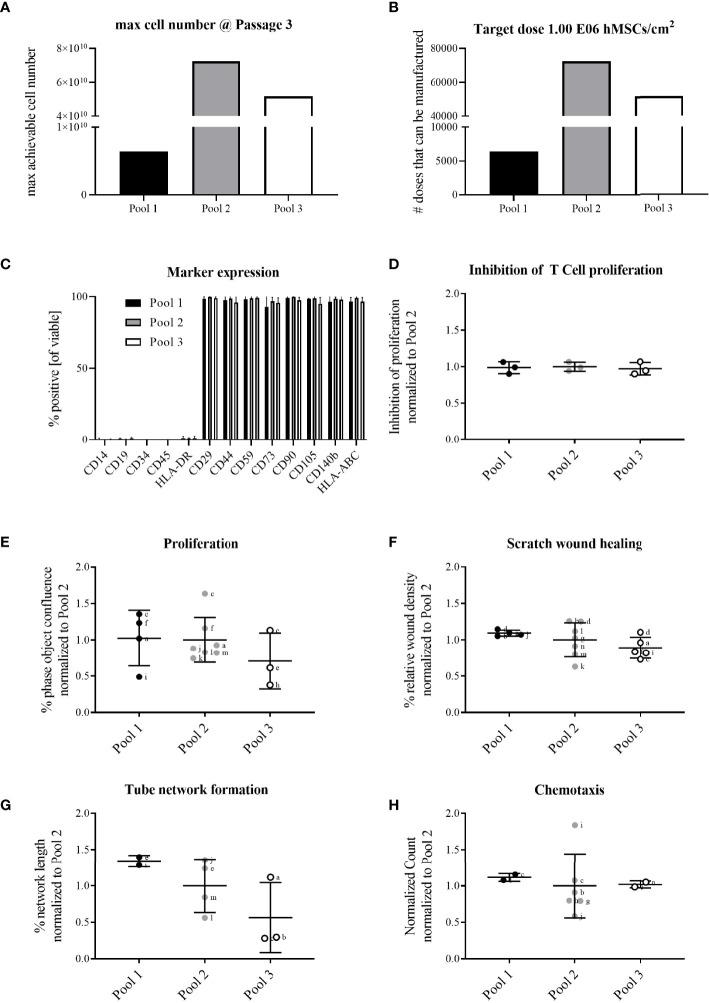
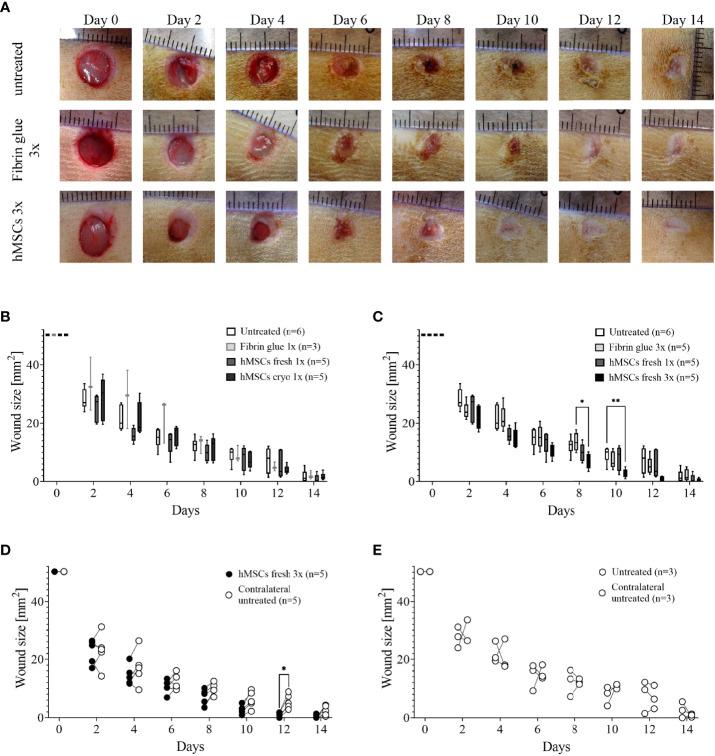
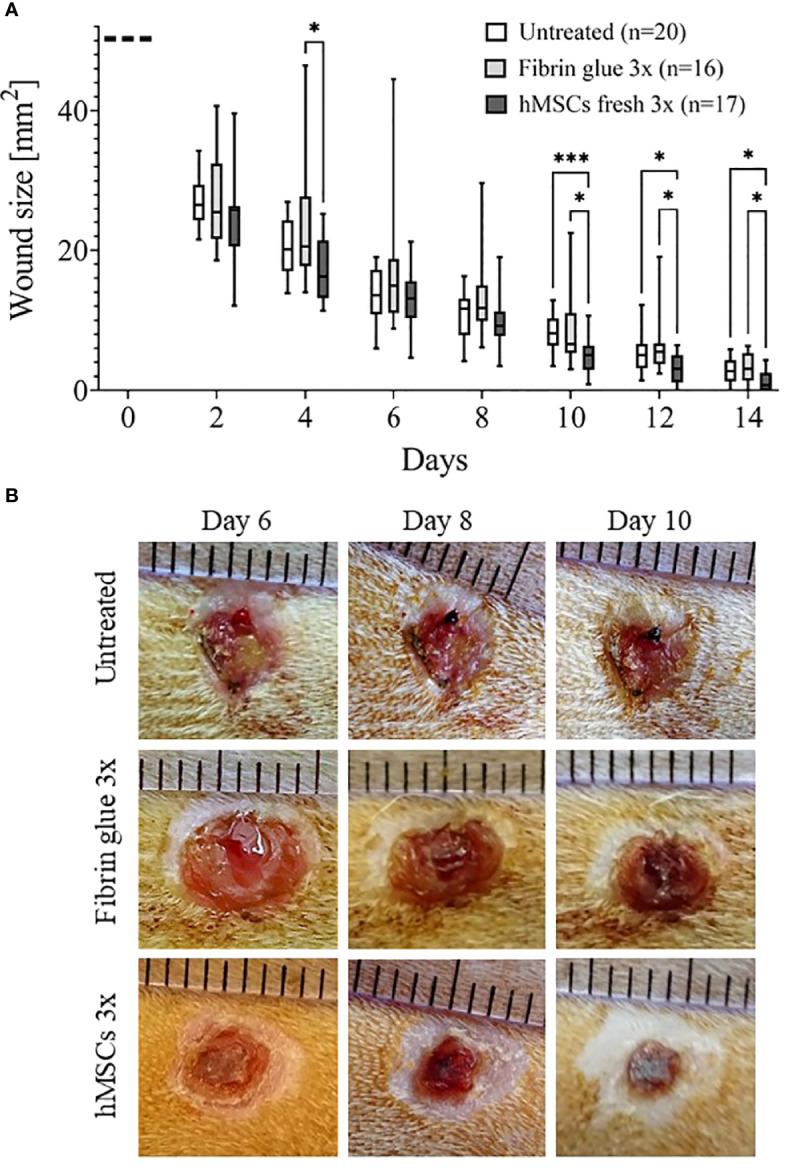
Human Mesenchymal Stromal Cells (hMSCs) are a promising source for cell-based therapies. Yet, transition to phase III and IV clinical trials is remarkably slow. To mitigate donor variabilities and to obtain robust and valid clinical data, we aimed first to develop a manufacturing concept balancing large-scale production of pooled hMSCs in a minimal expansion period, and second to test them for key manufacture and efficacy indicators in the clinically highly relevant indication wound healing. Our novel clinical-scale manufacturing concept is comprised of six single donor hMSCs master cell banks that are pooled to a working cell bank from which an extrapolated number of 70,000 clinical doses of 1x10 hMSCs/cm wound size can be manufactured within only three passages. The pooled hMSC batches showed high stability of key manufacture indicators such as morphology, immune phenotype, proliferation, scratch wound healing, chemotactic migration and angiogenic support. Repeated topical hMSCs administration significantly accelerated the wound healing in a diabetic rat model by delivering a defined growth factor cargo (specifically BDNF, EGF, G-CSF, HGF, IL-1α, IL-6, LIF, osteopontin, VEGF-A, FGF-2, TGF-β, PGE-2 and IDO after priming) at the specific stages of wound repair, namely inflammation, proliferation and remodeling. Specifically, the hMSCs mediated epidermal and dermal maturation and collagen formation, improved vascularization, and promoted cell infiltration. Kinetic analyses revealed transient presence of hMSCs until day (d)4, and the dynamic recruitment of macrophages infiltrating from the wound edges (d3) and basis (d9), eventually progressing to the apical wound on d11. In the wounds, the hMSCs mediated M2-like macrophage polarization starting at d4, peaking at d9 and then decreasing to d11. Our study establishes a standardized, scalable and pooled hMSC therapeutic, delivering a defined cargo of trophic factors, which is efficacious in diabetic wound healing by improving vascularization and dynamic recruitment of M2-like macrophages. This decision-making study now enables the validation of pooled hMSCs as treatment for impaired wound healing in large randomized clinical trials.
人骨髓间充质干细胞(hMSCs)是细胞治疗有前途的来源。然而,向 III 期和 IV 期临床试验的过渡非常缓慢。为了减轻供体变异性,并获得稳健有效的临床数据,我们首先旨在开发一种制造概念,在最小的扩展期内平衡大规模生产汇集的 hMSCs,其次在临床上高度相关的伤口愈合适应症中测试它们的关键制造和疗效指标。我们的新型临床规模制造概念由六个单供体 hMSC 主细胞库组成,这些细胞库汇集到一个工作细胞库中,从该细胞库中可以在仅三个传代的情况下制造出 70,000 个临床剂量的 1x10 hMSCs/cm 伤口大小的细胞。汇集的 hMSC 批次显示出关键制造指标的高度稳定性,例如形态、免疫表型、增殖、划痕伤口愈合、趋化性迁移和血管生成支持。在糖尿病大鼠模型中,重复局部给予 hMSCs 通过在特定的伤口修复阶段(即炎症、增殖和重塑)递送特定的生长因子货物(特别是 BDNF、EGF、G-CSF、HGF、IL-1α、IL-6、LIF、骨桥蛋白、VEGF-A、FGF-2、TGF-β、PGE-2 和 IDO 在启动后),显著加速了伤口愈合。具体而言,hMSCs 介导表皮和真皮成熟以及胶原形成,改善血管生成,并促进细胞浸润。动力学分析显示 hMSCs 直到第 4 天(d)短暂存在,并且从伤口边缘(d3)和基础(d9)浸润的巨噬细胞动态募集,最终在第 11 天(d11)进展到顶部伤口。在伤口中,hMSCs 介导从第 4 天开始的 M2 样巨噬细胞极化,在第 9 天达到峰值,然后在第 11 天下降。我们的研究建立了一种标准化、可扩展和汇集的 hMSC 治疗方法,递送了一种定义的营养因子货物,通过改善血管生成和动态募集 M2 样巨噬细胞,在糖尿病伤口愈合中有效。这项决策研究现在使汇集的 hMSCs 能够验证为治疗大随机临床试验中受损的伤口愈合。




 Zotero 插件