
TIMP1 通过 FAK/Akt 信号通路促进右侧结肠癌的细胞增殖和侵袭能力。
TIMP1 promotes cell proliferation and invasion capability of right-sided colon cancers via the FAK/Akt signaling pathway.
机构信息
Department of Gastroenterology and Oncology, Institute of Biomedical Sciences, Tokushima University Graduate School, Tokushima, Japan.
Department of Surgery, Institute of Biomedical Sciences, Tokushima University Graduate School, Tokushima, Japan.
出版信息
Cancer Sci. 2022 Dec;113(12):4244-4257. doi: 10.1111/cas.15567. Epub 2022 Sep 21.
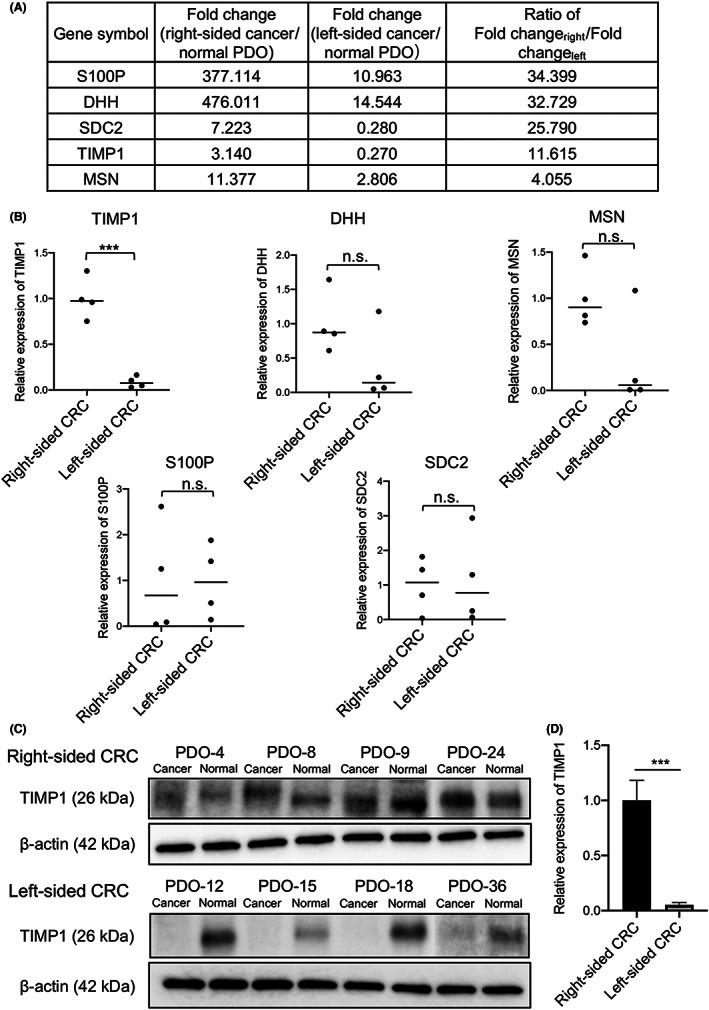
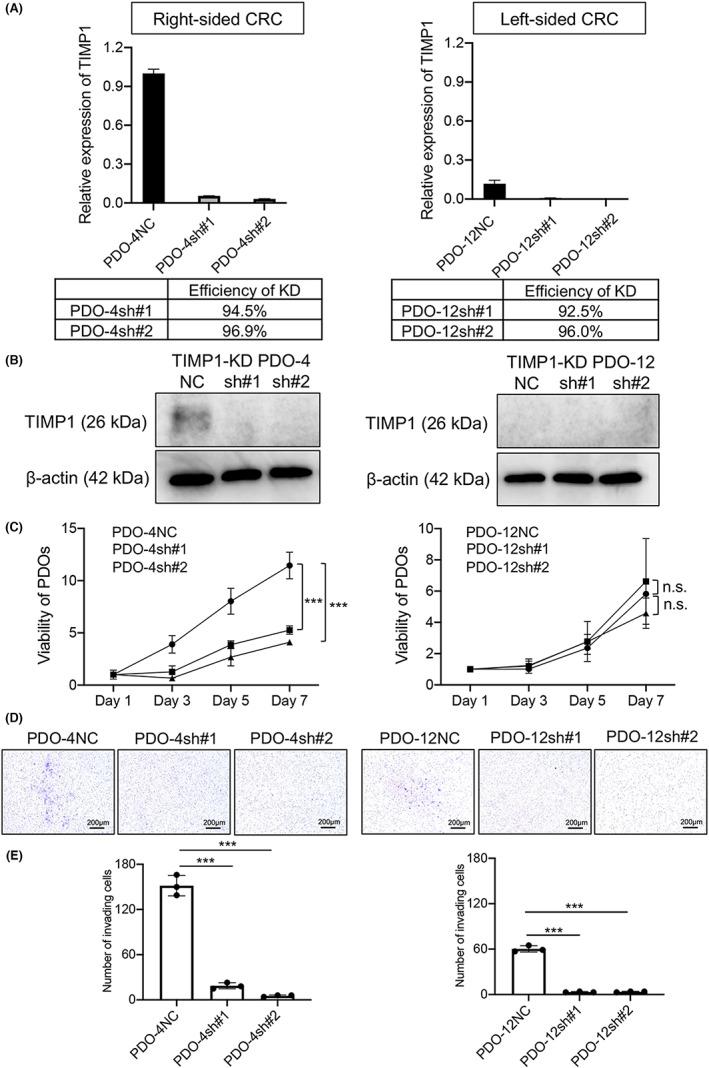
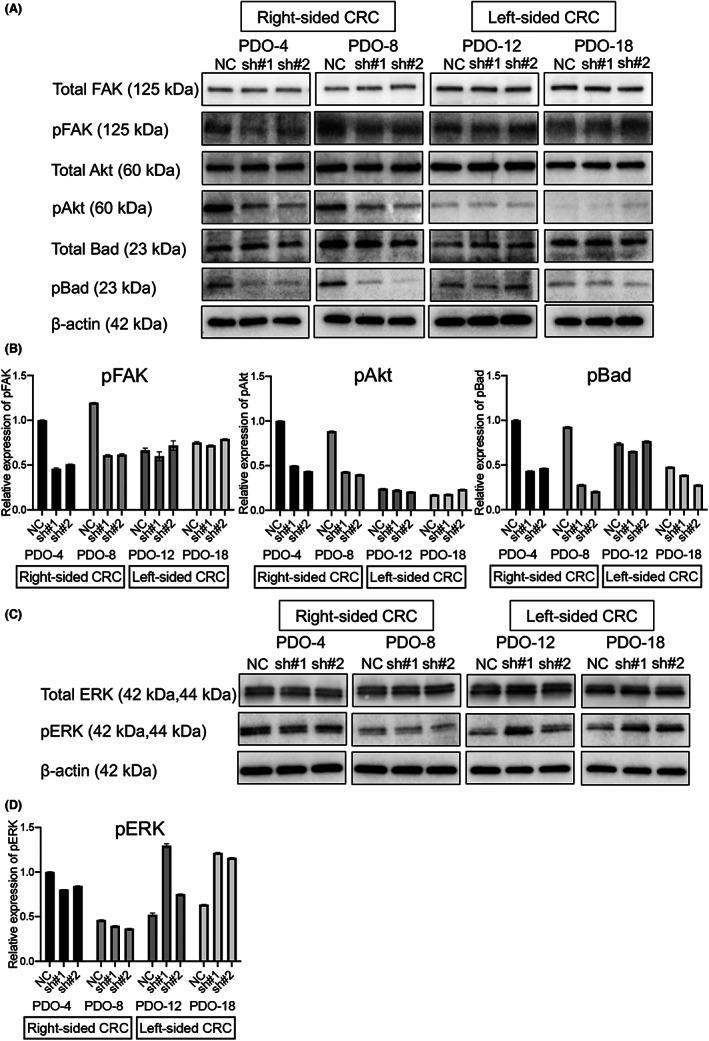
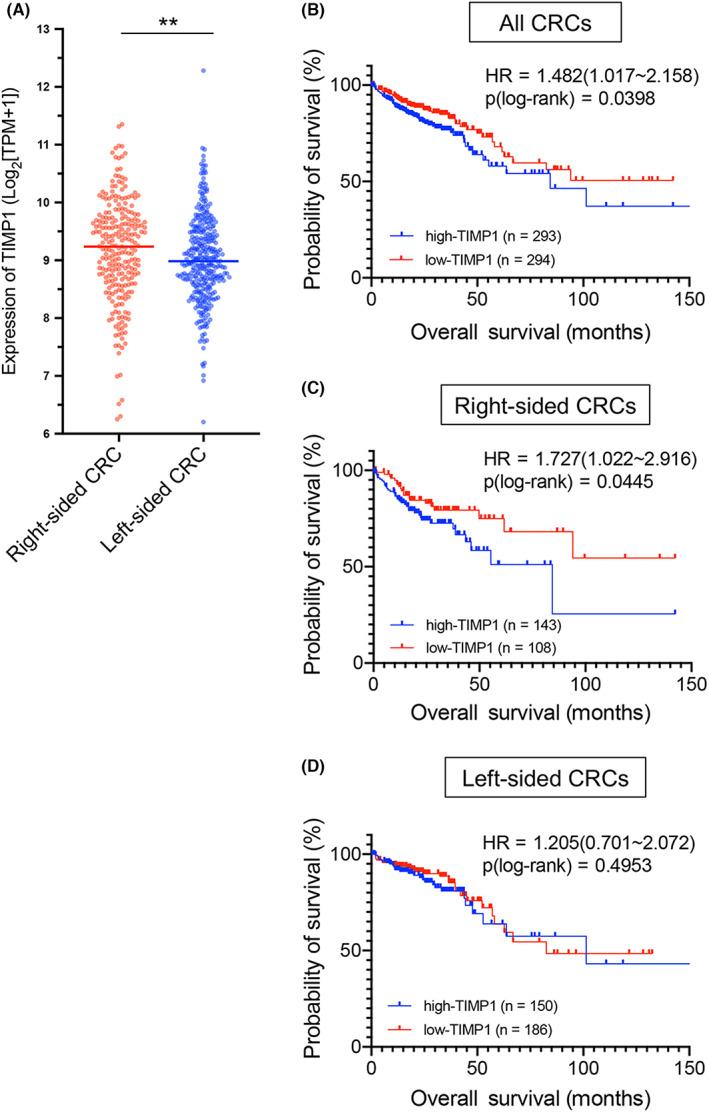
Although right-sided colorectal cancer (CRC) shows a worse prognosis than left-sided CRC, the underlying mechanism remains unclear. We established patient-derived organoids (PDOs) from left- and right-sided CRCs and directly compared cell proliferation and invasion capability between them. We then analyzed the expression of numerous genes in signal transduction pathways to clarify the mechanism of the differential prognosis. Cell proliferation activity and invasion capability in right-sided cancer PDOs were significantly higher than in left-sided cancer PDOs and normal PDOs, as revealed by Cell Titer Glo and transwell assays, respectively. We then used quantitative RT-PCR to compare 184 genes in 30 pathways among right-sided and left-sided cancer and normal PDOs and found that the TIMP1 mRNA level was highest in right-sided PDOs. TIMP1 protein levels were upregulated in right-sided PDOs compared with normal PDOs but was downregulated in left-sided PDOs. TIMP1 knockdown with shRNA significantly decreased cell proliferation activity and invasion capability in right-sided PDOs but not in left-sided PDOs. Moreover, TIMP1 knockdown significantly decreased pFAK and pAkt expression levels in right-sided PDOs but not in left-sided PDOs. A database analysis of The Cancer Genome Atlas revealed that TIMP1 expression in right-sided CRCs was significantly higher than in left-sided CRCs. Kaplan-Meier survival analysis showed significantly shorter overall survival in high-TIMP1 patients versus low-TIMP1 patients with right-sided CRCs but not left-sided CRCs. Our data suggest that TIMP1 is overexpressed in right-sided CRCs and promotes cell proliferation and invasion capability through the TIMP1/FAK/Akt pathway, leading to a poor prognosis. The TIMP1/FAK/Akt pathway can be a target for therapeutic agents in right-sided CRCs.
虽然右侧结直肠癌 (CRC) 的预后比左侧差,但潜在机制尚不清楚。我们从左侧和右侧 CRC 中建立了患者来源的类器官 (PDO),并直接比较了它们之间的细胞增殖和侵袭能力。然后,我们分析了信号转导通路中许多基因的表达,以阐明差异预后的机制。通过 Cell Titer Glo 和 transwell 测定,分别显示右侧癌症 PDO 的细胞增殖活性和侵袭能力明显高于左侧癌症 PDO 和正常 PDO。然后,我们使用定量 RT-PCR 比较了 30 种通路中的 184 个基因,发现 TIMP1 mRNA 水平在右侧 PDO 中最高。与正常 PDO 相比,右侧 PDO 中的 TIMP1 蛋白水平上调,但在左侧 PDO 中下调。用 shRNA 敲低 TIMP1 显著降低了右侧 PDO 的细胞增殖活性和侵袭能力,但对左侧 PDO 没有影响。此外,TIMP1 敲低显著降低了右侧 PDO 中 pFAK 和 pAkt 的表达水平,但对左侧 PDO 没有影响。The Cancer Genome Atlas 的数据库分析显示,右侧 CRC 中的 TIMP1 表达明显高于左侧 CRC。Kaplan-Meier 生存分析显示,高 TIMP1 患者的总生存期明显短于低 TIMP1 患者,且仅限于右侧 CRC 患者,而左侧 CRC 患者则没有。我们的数据表明,TIMP1 在右侧 CRC 中过度表达,并通过 TIMP1/FAK/Akt 通路促进细胞增殖和侵袭能力,导致预后不良。TIMP1/FAK/Akt 通路可能成为右侧 CRC 治疗药物的靶点。


 Zotero 插件