
南亚部分国家五岁以下儿童营养政策与贫血状况:1950-2016 年。
Nutritional policies and anaemia among under-five children in selected south Asian countries: 1950-2016.
机构信息
Department of Migration and Urban Studies, Post-Doctoral Fellow, International Institute for Population Sciences, Mumbai, Maharashtra, Pin: 400088, India.
Department of Social Sciences, Research Scholar, University of Warsaw, Warsaw, Poland.
出版信息
BMC Pediatr. 2022 Sep 12;22(1):540. doi: 10.1186/s12887-022-03597-4.
BACKGROUND
Despite policies and social development, childhood malnutrition remains a significant public health and social challenge in many south Asian countries. Also, there is a lack of study for a comparative understanding between the nutrition policies and nutritional status of under-5 children in south Asian countries. In this context, the present study aims to understand the comparative evolution of nutritional policies and programs in south Asian countries between 1950 to 2016 and assess current nutritional status of children under the age of 5 in Bangladesh, India, Nepal, and Pakistan.
METHODS
This study obtained yearly anaemia data from the Global Health Observatory Data Repository (World Health Statistics) from 1990 to 2016 for comparative analysis. The most recent Demographic Health Survey (DHS) rounds have been taken for four south Asian nations. Bivariate analysis and classical figures have been utilised to demonstrate the findings.
RESULTS
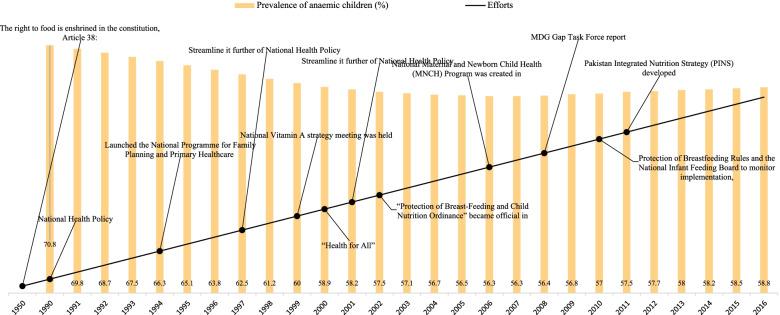
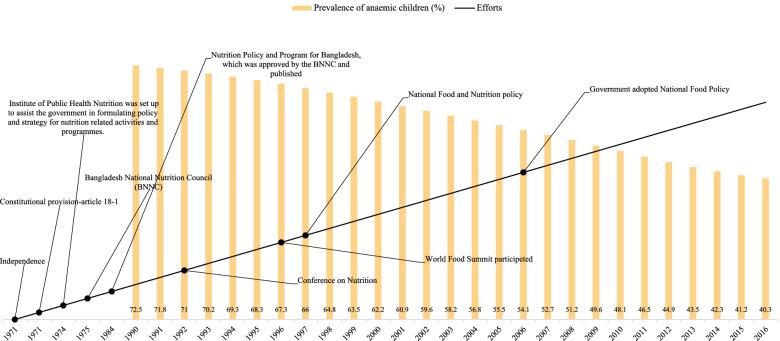
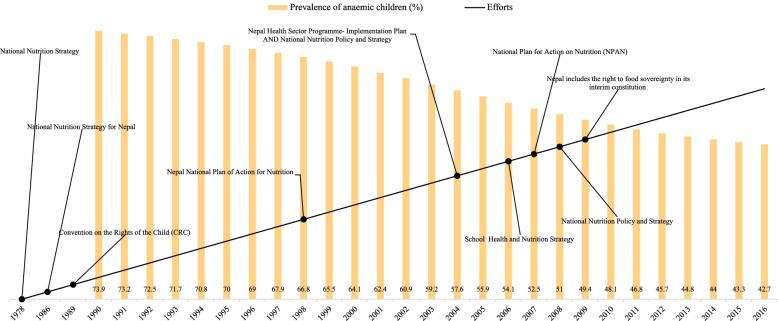
In Bangladesh, Nepal, India, and Pakistan, the prevalence of anaemia decreased by 33%, 31%, 20%, and 12% from 1990 to 2016, respectively. While analysis of the policy and programs, the problem of under-nutrition in all selected countries stems from the lack of serious implementation of National Nutrition Policies.
CONCLUSION
This study suggests that the national nutrition programs require inter-sectoral coordination between central ministries within countries to reduce the anaemia level. In light of Sustainable Development Goals (SDG), a multi-faceted policy should be implemented to prevent and control malnutrition problems in these countries.
背景
尽管有政策和社会发展,儿童营养不良仍然是许多南亚国家的一个重大公共卫生和社会挑战。此外,对于南亚国家营养政策和 5 岁以下儿童营养状况之间的比较研究还很缺乏。在这种情况下,本研究旨在了解 1950 年至 2016 年南亚国家营养政策和方案的比较演变,并评估孟加拉国、印度、尼泊尔和巴基斯坦 5 岁以下儿童的当前营养状况。
方法
本研究从全球卫生观测站数据知识库(世界卫生统计)中获取了 1990 年至 2016 年每年的贫血数据进行比较分析。还利用了最近的四次南亚国家人口健康调查(DHS)数据。采用双变量分析和经典图表来展示研究结果。
结果
在孟加拉国、尼泊尔、印度和巴基斯坦,1990 年至 2016 年期间,贫血患病率分别下降了 33%、31%、20%和 12%。虽然对政策和方案进行了分析,但所有选定国家的营养不足问题都源于国家营养政策没有得到认真执行。
结论
本研究表明,国家营养方案需要各国中央部委之间进行跨部门协调,以降低贫血水平。鉴于可持续发展目标(SDG),应该实施多方面的政策来预防和控制这些国家的营养不良问题。

 Zotero 插件