
代谢/缺氧轴预测乳腺癌对他莫昔芬的耐药性。
Metabolic/hypoxial axis predicts tamoxifen resistance in breast cancer.
机构信息
Department of Pharmacology and Toxicology, Faculty of Pharmacy, Heliopolis University, Cairo, Egypt.
Department of Biochemistry, Faculty of Pharmacy, Ain Shams University, Cairo, Egypt.
出版信息
Sci Rep. 2022 Sep 27;12(1):16118. doi: 10.1038/s41598-022-19977-w.
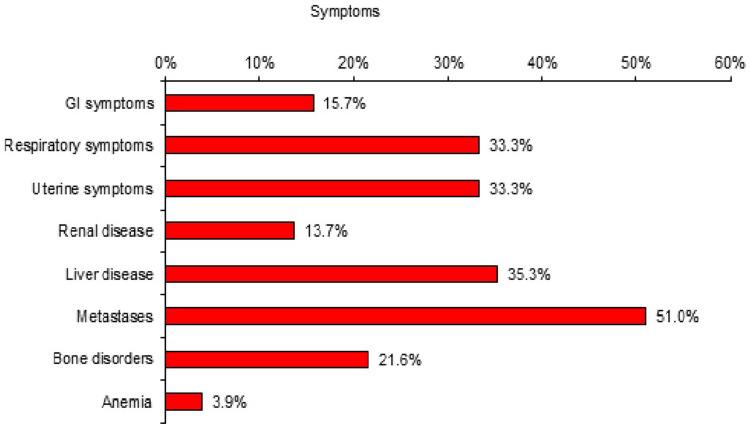
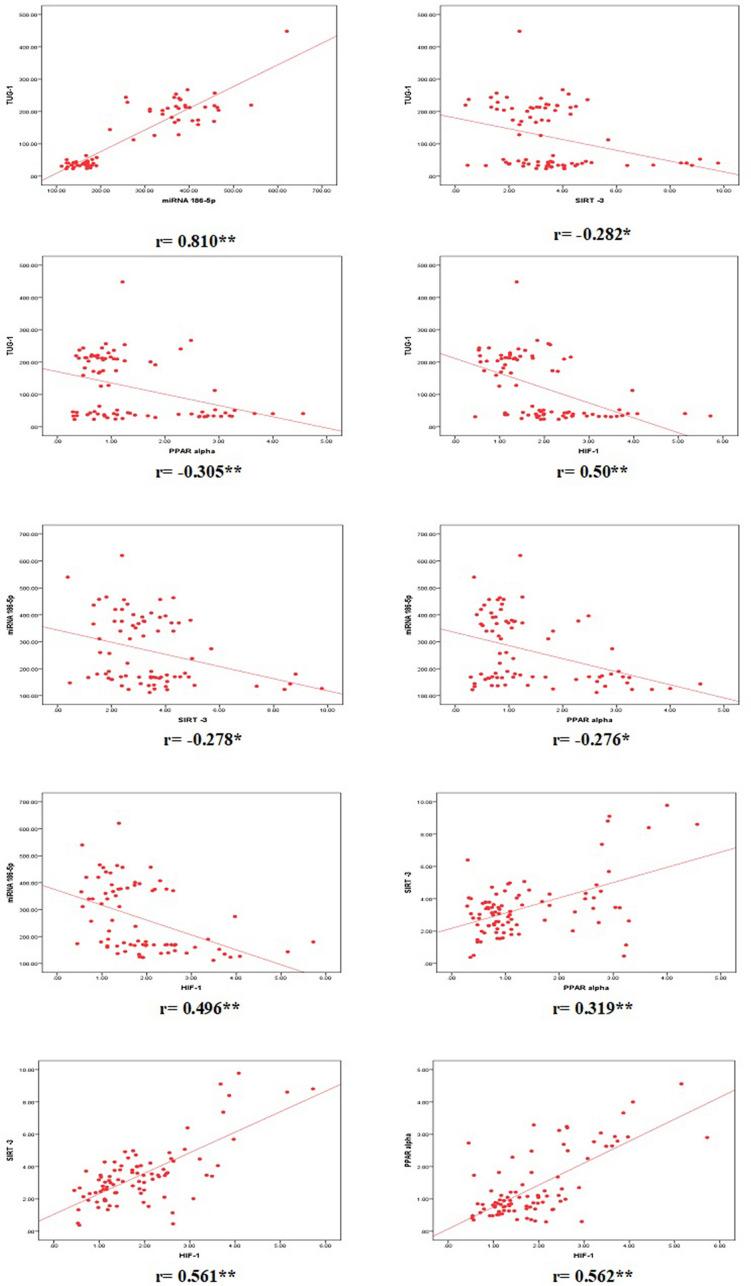
We sought in our cross-sectional study to investigate the role of metabolic/hypoxial axis in the development of tamoxifen (TMX) resistance in BC patients. Quantification of plasma LncRNA Taurine upregulated-1 (TUG-1), miRNA 186-5p (miR-186), serum Sirtuin-3 (SIRT3), Peroxisome Proliferator Activator Receptor alpha (PPAR-1 α) and Hypoxia Inducible Factor-1 (HIF-1α) was done in a cohort of patients divided into TMX-sensitive and TMX-resistant candidates. Multiple logistic regression and Receiver Operating Characteristic curve were developed for significant predictors. Plasma TUG-1 and miR-186 were significantly elevated in TMX resistant patients. Serum proteins SIRT3, PPAR-1 α and HIF-1α were deficient in TMX resistant patients compared to TMX sensitive patients, respectively. miR-186 was associated with respiratory symptoms, while, HIF-1α was associated with metastases in TMX resistant patients. Strong correlations were found between all parameters. A predictive model was constructed with TUG-1 and HIF-1α to estimate TMX resistance in BC patients with 88.3% sensitivity and 91.6% specificity. Hypoxia and metabolic dysregulations play important role in the development of TMX resistance in BC patients. Correlation between hypoxia, carcinogenesis and patient's mortality have led to more aggressive phenotypes, increased risk of metastasis and resistance to TMX.
我们在这项横断面研究中旨在探究代谢/缺氧轴在乳腺癌患者他莫昔芬(TMX)耐药中的作用。我们对患者血浆长链非编码 RNA 牛磺酸上调 1(TUG-1)、miRNA 186-5p(miR-186)、血清 Sirtuin-3(SIRT3)、过氧化物酶体增殖物激活受体 alpha(PPAR-1α)和缺氧诱导因子 1(HIF-1α)进行了定量检测,这些患者被分为 TMX 敏感和 TMX 耐药候选者。采用多变量逻辑回归和受试者工作特征曲线分析了显著预测因子。与 TMX 敏感患者相比,TMX 耐药患者的血浆 TUG-1 和 miR-186 显著升高。与 TMX 敏感患者相比,TMX 耐药患者血清蛋白 SIRT3、PPAR-1α 和 HIF-1α 分别缺乏。miR-186 与 TMX 耐药患者的呼吸系统症状相关,而 HIF-1α 与 TMX 耐药患者的转移相关。所有参数之间均存在强相关性。我们构建了一个包含 TUG-1 和 HIF-1α 的预测模型,该模型能够以 88.3%的敏感性和 91.6%的特异性来估计乳腺癌患者对 TMX 的耐药性。缺氧和代谢紊乱在乳腺癌患者 TMX 耐药的发展中起着重要作用。缺氧、癌变与患者死亡率之间的相关性导致了更具侵袭性的表型、转移风险增加以及对 TMX 的耐药性。




 Zotero 插件