
广谱中和抗体对 SARS-CoV-2 和其他人类冠状病毒。
Broadly neutralizing antibodies to SARS-CoV-2 and other human coronaviruses.
机构信息
State Key Laboratory of Genetic Engineering, Shanghai Institute of Infectious Disease and Biosecurity, School of Life Sciences, Fudan University, Shanghai, China.
Department of Microbiology, Grossman School of Medicine, New York University, New York, NY, USA.
出版信息
Nat Rev Immunol. 2023 Mar;23(3):189-199. doi: 10.1038/s41577-022-00784-3. Epub 2022 Sep 27.
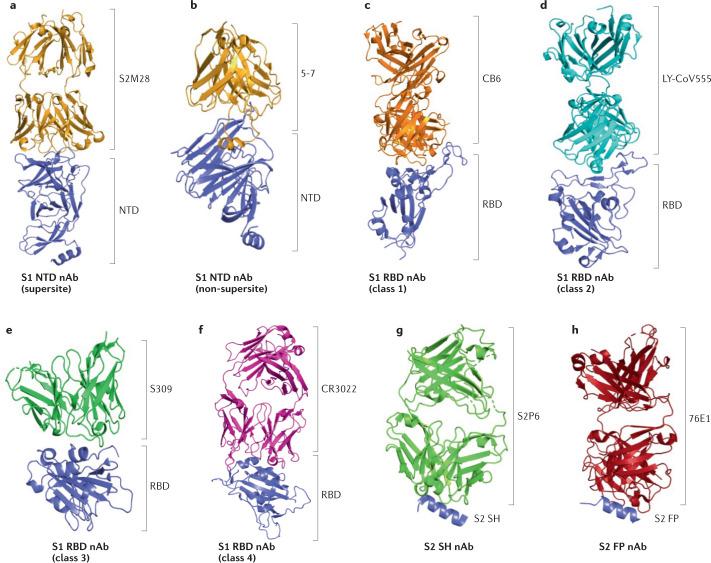
Severe acute respiratory syndrome coronavirus 2 (SARS-CoV-2) is a recently emerged pathogenic human coronavirus that belongs to the sarbecovirus lineage of the genus Betacoronavirus. The ancestor strain has evolved into a number of variants of concern, with the Omicron variant of concern now having many distinct sublineages. The ongoing COVID-19 pandemic caused by SARS-CoV-2 has caused serious damage to public health and the global economy, and one strategy to combat COVID-19 has been the development of broadly neutralizing antibodies for prophylactic and therapeutic use. Many are in preclinical and clinical development, and a few have been approved for emergency use. Here we summarize neutralizing antibodies that target four key regions within the SARS-CoV-2 spike (S) protein, namely the N-terminal domain and the receptor-binding domain in the S1 subunit, and the stem helix region and the fusion peptide region in the S2 subunit. Understanding the characteristics of these broadly neutralizing antibodies will accelerate the development of new antibody therapeutics and provide guidance for the rational design of next-generation vaccines.
严重急性呼吸综合征冠状病毒 2(SARS-CoV-2)是一种新近出现的致病性人类冠状病毒,属于β属冠状病毒属的sarbecovirus 谱系。原始株已进化成若干种关切变异株,目前关切的奥密克戎变异株有许多不同的亚谱系。由 SARS-CoV-2 引起的持续的 COVID-19 大流行对公共卫生和全球经济造成了严重破坏,应对 COVID-19 的一种策略是开发用于预防和治疗用途的广泛中和抗体。许多正在进行临床前和临床开发,少数已获准紧急使用。在这里,我们总结了针对 SARS-CoV-2 刺突(S)蛋白四个关键区域的中和抗体,即 S1 亚单位的 N 端结构域和受体结合域,以及 S2 亚单位的茎螺旋区和融合肽区。了解这些广泛中和抗体的特性将加速新抗体治疗药物的开发,并为下一代疫苗的合理设计提供指导。

 Zotero 插件