
一氧化碳在人支气管上皮细胞氧化应激诱导衰老中的作用。
Role of Carbon Monoxide in Oxidative Stress-Induced Senescence in Human Bronchial Epithelium.
机构信息
School of Biomedical Sciences, The Chinese University of Hong Kong, N.T., Hong Kong, China.
Department of Paediatrics, The Chinese University of Hong Kong, N.T., Hong Kong, China.
出版信息
Oxid Med Cell Longev. 2022 Sep 24;2022:5199572. doi: 10.1155/2022/5199572. eCollection 2022.
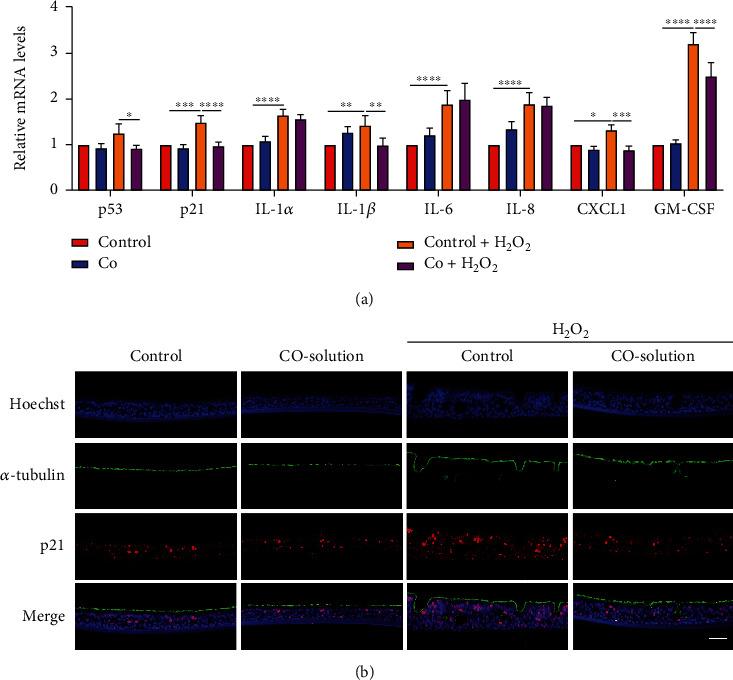
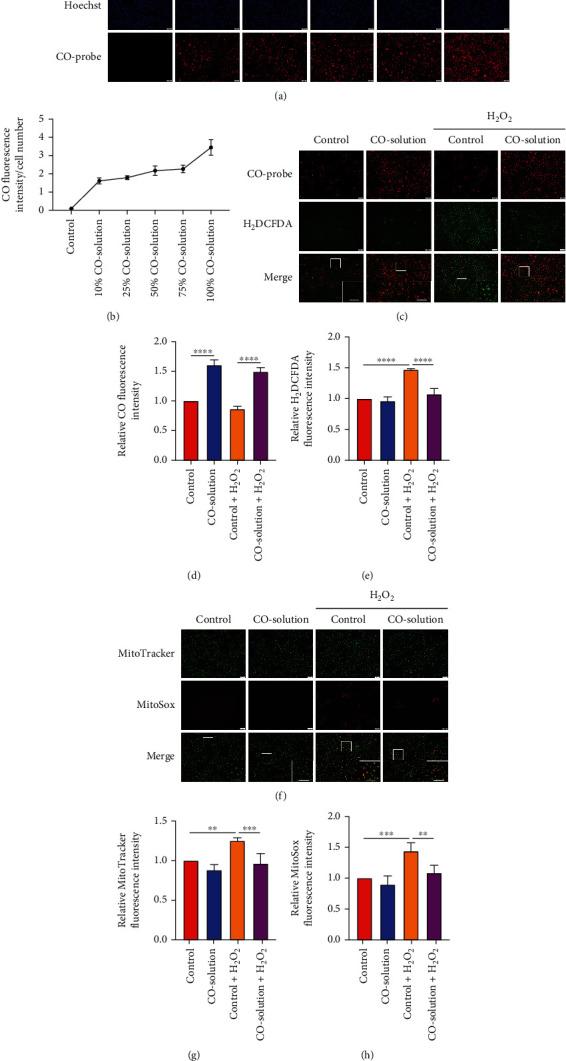
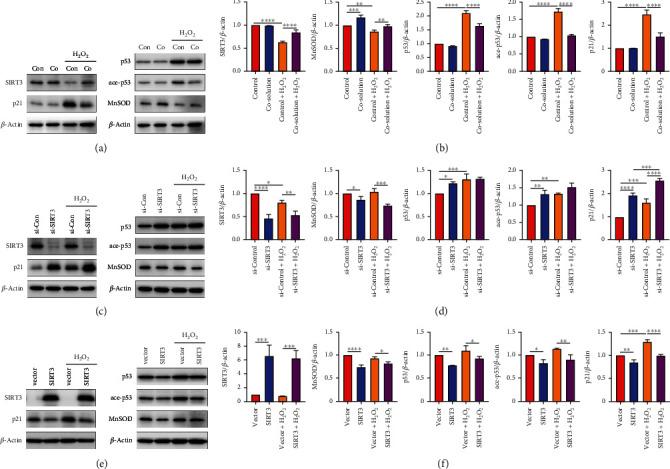
Prolonged or excessive stimulation from inhaled toxins may cause oxidative stress and DNA damage that can lead to stress-induced senescence in epithelial cells, which can contribute to several airway diseases. Mounting evidence has shown carbon monoxide (CO) confers cytoprotective effects. We investigated the effects of CO on oxidative stress-induced senescence in human airway epithelium and elucidated the underlying molecular mechanisms. Here, CO pretreatment reduced HO-mediated increases in total reactive oxygen species (ROS) production and mitochondrial superoxide in a human bronchial epithelial cell line (BEAS-2B). HO treatment triggered a premature senescence-like phenotype with enlarged and flattened cell morphology accompanied by increased SA--gal activity, cell cycle arrest in G0/G1, reduced cell viability, and increased transcription of senescence-associated secretory phenotype (SASP) genes. Additionally, exposure to HO increased protein levels of cellular senescence markers (p53 and p21), reduced Sirtuin 3 (SIRT3) and manganese superoxide dismutase (MnSOD) levels, and increased p53 K382 acetylation. These HO-mediated effects were attenuated by pretreatment with a CO-containing solution. SIRT3 silencing induced mitochondrial superoxide production and triggered a senescence-like phenotype, whereas overexpression decreased mitochondrial superoxide production and alleviated the senescence-like phenotype. Air-liquid interface (ALI) culture of primary human bronchial cells, which becomes a fully differentiated pseudostratified mucociliary epithelium, was used as a model. We found that apical and basolateral exposure to HO induced a vacuolated structure that impaired the integrity of ALI cultures, increased goblet cell numbers, decreased SCGB1A1+ club cell numbers, increased p21 protein levels, and increased SASP gene transcription, consistent with our observations in BEAS-2B cells. These effects were attenuated in the apical presence of a CO-containing solution. In summary, we revealed that CO has a pivotal role in epithelial senescence by regulating ROS production via the SIRT3/MnSOD/p53/p21 pathway. This may have important implications in the prevention and treatment of age-associated respiratory pathologies.
吸入毒素的时间过长或过度刺激可能导致氧化应激和 DNA 损伤,从而导致上皮细胞应激诱导的衰老,这可能导致几种气道疾病。越来越多的证据表明一氧化碳 (CO) 具有细胞保护作用。我们研究了 CO 对人呼吸道上皮细胞氧化应激诱导衰老的影响,并阐明了其潜在的分子机制。在这里,CO 预处理可降低人支气管上皮细胞系 (BEAS-2B) 中 HO 介导的总活性氧 (ROS) 产生和线粒体超氧化物的增加。HO 处理引发了类似衰老的表型,细胞形态增大且扁平,同时 SA--gal 活性增加,细胞周期停滞在 G0/G1,细胞活力降低,以及衰老相关分泌表型 (SASP) 基因的转录增加。此外,暴露于 HO 会增加细胞衰老标志物 (p53 和 p21) 的蛋白水平,降低 Sirtuin 3 (SIRT3) 和锰超氧化物歧化酶 (MnSOD) 水平,并增加 p53 K382 乙酰化。这些 HO 介导的作用可通过用含 CO 的溶液预处理来减弱。SIRT3 沉默诱导线粒体超氧化物的产生并引发类似衰老的表型,而过表达则减少线粒体超氧化物的产生并减轻类似衰老的表型。原代人支气管细胞的气液界面 (ALI) 培养,可形成完全分化的假复层纤毛上皮,作为模型。我们发现,HO 的顶端和基底暴露会诱导形成空泡结构,破坏 ALI 培养物的完整性,增加杯状细胞数量,减少 SCGB1A1+ 分泌细胞数量,增加 p21 蛋白水平,并增加 SASP 基因转录,与我们在 BEAS-2B 细胞中的观察结果一致。在顶端存在含 CO 的溶液时,这些作用会减弱。总之,我们揭示了 CO 通过调节 SIRT3/MnSOD/p53/p21 途径调节 ROS 产生,在调节上皮细胞衰老中起关键作用。这可能对预防和治疗与年龄相关的呼吸道疾病具有重要意义。


 Zotero 插件