
靶向放射肿瘤学中K-Ras介导的DNA损伤反应:现状、挑战与未来展望
Targeting K-Ras-mediated DNA damage response in radiation oncology: Current status, challenges and future perspectives.
作者信息
Toulany Mahmoud
机构信息
Division of Radiobiology & Molecular Environmental Research, Department of Radiation Oncology, University of Tuebingen, Roentgenweg 11, 72076 Tuebingen, Germany.
出版信息
Clin Transl Radiat Oncol. 2022 Oct 17;38:6-14. doi: 10.1016/j.ctro.2022.10.004. eCollection 2023 Jan.
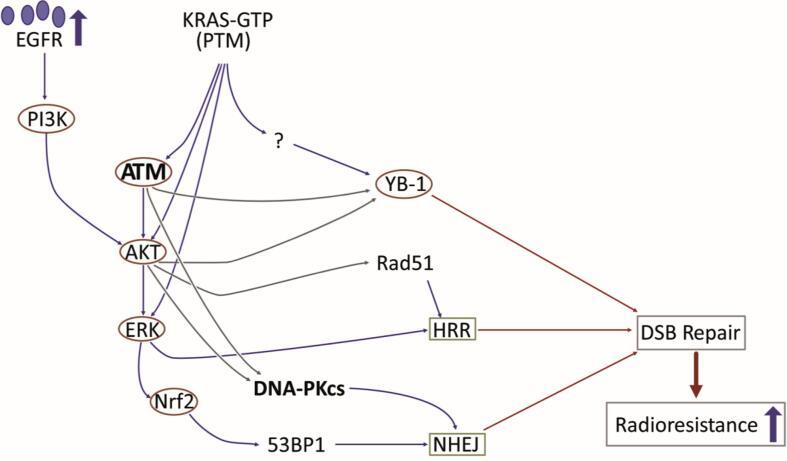
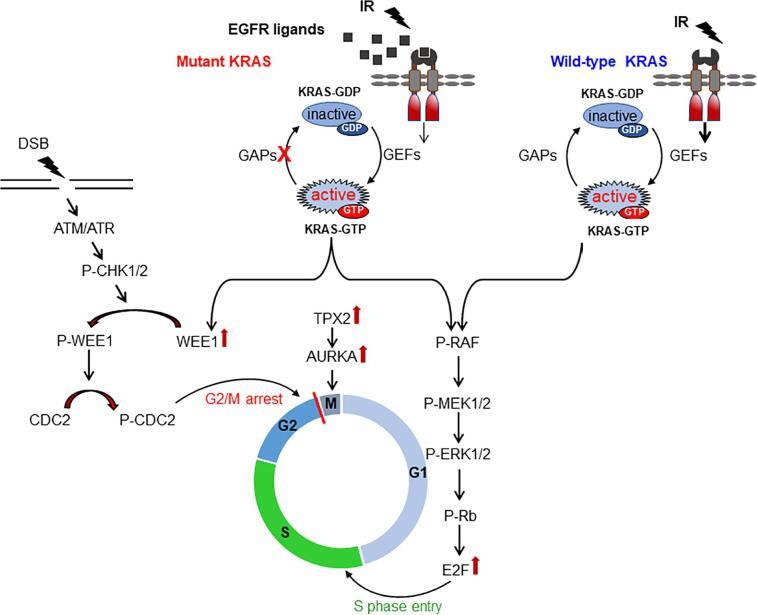
Approximately 60% of cancer patients receive curative or palliative radiation. Despite the significant role of radiotherapy (RT) as a curative approach for many solid tumors, tumor recurrence occurs, partially because of intrinsic radioresistance. Accumulating evidence indicates that the success of RT is hampered by activation of the DNA damage response (DDR). The intensity of DDR signaling is affected by multiple parameters, loss-of-function mutations in tumor suppressor genes, gain-of-function mutations in protooncogenes as well as radiation-induced alterations in signal-transduction pathways. Therefore, the response to irradiation differs in tumors of different types, which makes the individualization of RT as a rational but challenging goal. One contributor to tumor cell radiation survival is signaling through the Ras pathway. Three RAS genes encode 4 Ras isoforms: K-Ras4A, K-Ras4B, H-Ras, and N-Ras. RAS family members are found to be mutated in approximately 19% of human cancers. Mutations in RAS lead to constitutive activation of the gene product and activation of multiple Ras-dependent signal-transduction cascades. Preclinical studies have shown that the expression of mutant KRAS affects DDR and increases cell survival after irradiation. Approximately 70% of RAS mutations occur in KRAS. Thus, applying targeted therapies directly against K-Ras as well as K-Ras upstream activators and downstream effectors might be a tumor-specific approach to overcome K-Ras-mediated RT resistance. In this review, the role of K-Ras in the activation of DDR signaling will be summarized. Recent progress in targeting DDR in KRAS-mutated tumors in combination with radiochemotherapy will be discussed.
约60%的癌症患者接受根治性或姑息性放疗。尽管放射治疗(RT)作为许多实体瘤的根治性方法发挥着重要作用,但肿瘤仍会复发,部分原因是内在的放射抗性。越来越多的证据表明,DNA损伤反应(DDR)的激活阻碍了放疗的成功。DDR信号的强度受多个参数影响,包括肿瘤抑制基因的功能丧失突变、原癌基因的功能获得突变以及辐射诱导的信号转导途径改变。因此,不同类型肿瘤对放疗的反应不同,这使得放疗个体化成为一个合理但具有挑战性的目标。肿瘤细胞放射存活的一个因素是通过Ras途径的信号传导。三个RAS基因编码4种Ras异构体:K-Ras4A、K-Ras4B、H-Ras和N-Ras。在约19%的人类癌症中发现RAS家族成员发生突变。RAS突变导致基因产物的组成性激活和多个Ras依赖性信号转导级联反应的激活。临床前研究表明,突变型KRAS的表达会影响DDR并增加照射后的细胞存活。约70%的RAS突变发生在KRAS中。因此,直接针对K-Ras及其上游激活剂和下游效应器应用靶向治疗可能是克服K-Ras介导的放疗抗性的肿瘤特异性方法。在本综述中,将总结K-Ras在DDR信号激活中的作用。还将讨论在KRAS突变肿瘤中靶向DDR联合放化疗的最新进展。
 Zotero 插件