
接种 COVID-19 疫苗可降低死胎和早产发生率:一项关于疫苗接种率和围产期结局的多中心队列研究。
Reductions in stillbirths and preterm birth in COVID-19-vaccinated women: a multicenter cohort study of vaccination uptake and perinatal outcomes.
机构信息
Department of Obstetrics and Gynaecology, Melbourne Medical School, The University of Melbourne, Melbourne, Australia; Reproductive Epidemiology Group, Murdoch Children's Research Institute, Melbourne, Australia; Department of Obstetrics and Gynaecology, Mercy Hospital for Women, Mercy Health, Melbourne, Australia; Department of Obstetrics and Gynaecology, The Northern Hospital, Northern Health, Melbourne, Australia.
Department of Obstetrics and Gynaecology, Melbourne Medical School, The University of Melbourne, Melbourne, Australia; Reproductive Epidemiology Group, Murdoch Children's Research Institute, Melbourne, Australia; Center for Alcohol Policy Research, La Trobe University, Melbourne, Australia.
出版信息
Am J Obstet Gynecol. 2023 May;228(5):585.e1-585.e16. doi: 10.1016/j.ajog.2022.10.040. Epub 2022 Nov 3.
BACKGROUND
COVID-19 infection in pregnancy is associated with a higher risk of progression to severe disease, but vaccine uptake by pregnant women is hindered by persistent safety concerns. COVID-19 vaccination in pregnancy has been shown to reduce stillbirth, but its relationship with preterm birth is uncertain.
OBJECTIVE
This study aimed to measure the rate of COVID-19 vaccine uptake among women giving birth in Melbourne, Australia, and to compare perinatal outcomes by vaccination status.
STUDY DESIGN
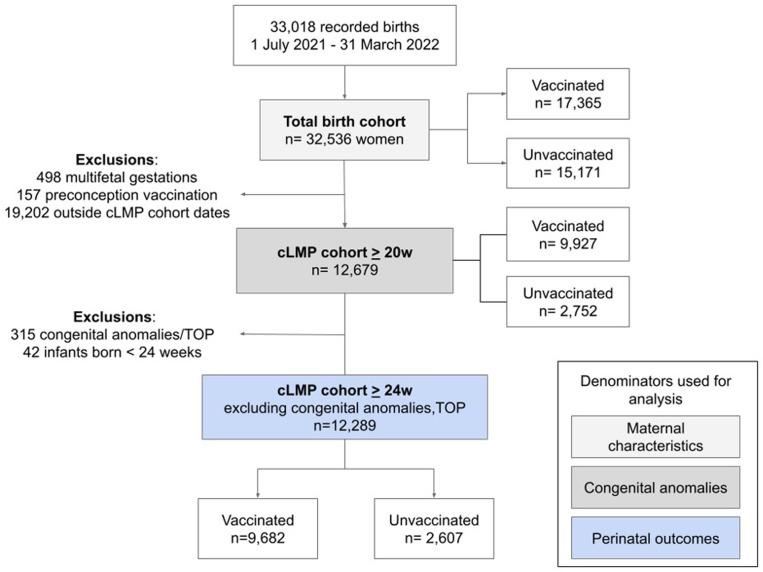
This was a retrospective multicenter cohort study conducted after the June 2021 government recommendations for messenger RNA COVID-19 vaccination during pregnancy. Routinely collected data from all 12 public maternity hospitals in Melbourne were extracted on births at ≥20 weeks' gestation from July 1, 2021 to March 31, 2022. Maternal sociodemographic characteristics were analyzed from the total birth cohort. Perinatal outcomes were compared between vaccinated and unvaccinated women for whom weeks 20 to 43 of gestation fell entirely within the 9-month data collection period. The primary outcomes were the rates of stillbirth and preterm birth (spontaneous and iatrogenic) in singleton pregnancies of at least 24 weeks' gestation, after exclusion of congenital anomalies. Secondary perinatal outcomes included the rate of congenital anomalies among infants born at ≥20 weeks' gestation and birthweight ≤third centile and newborn intensive care unit admissions among infants born without congenital anomalies at ≥24 weeks' gestation. We calculated the adjusted odds ratio of perinatal outcomes among vaccinated vs unvaccinated women using inverse propensity score-weighting regression adjustment with multiple covariates; P<.05 was considered statistically significant.
RESULTS
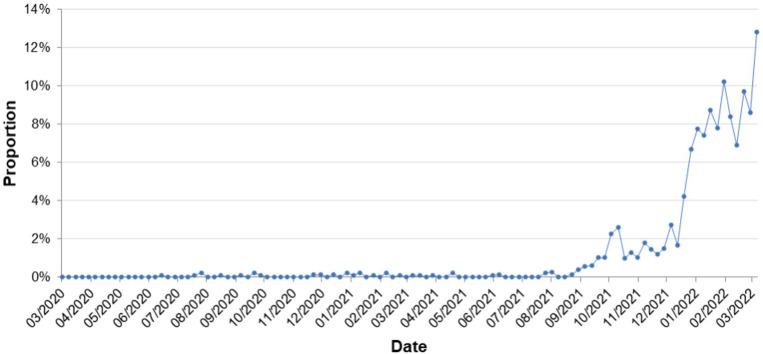
Births from 32,536 women were analyzed: 17,365 (53.4%) were vaccinated and 15,171 (47.6%) were unvaccinated. Vaccinated women were more likely to be older, nulliparous, nonsmoking, not requiring an interpreter, of higher socioeconomic status, and vaccinated against pertussis and influenza. Vaccination status also varied by region of birth. Vaccinated women had a significantly lower rate of stillbirth compared with unvaccinated women (0.2% vs 0.8%; adjusted odds ratio, 0.18; 95% confidence interval, 0.09-0.37; P<.001). Vaccination was associated with a significant reduction in total preterm births at <37 weeks (5.1% vs 9.2%; adjusted odds ratio, 0.60; 95% confidence interval, 0.51-0.71; P<.001), spontaneous preterm birth (2.4% vs 4.0%; adjusted odds ratio, 0.73; 95% confidence interval, 0.56-0.96; P=.02), and iatrogenic preterm birth (2.7% vs 5.2%; adjusted odds ratio, 0.52; 95% confidence interval, 0.41-0.65; P<.001). Infants born to vaccinated mothers also had lower rates of admission to the neonatal intensive care unit. There was no significant increase in the rate of congenital anomalies or birthweight ≤3rd centile in vaccinated women. Vaccinated women were significantly less likely to have an infant with a major congenital anomaly compared with the unvaccinated group (2.4% vs 3.0%; adjusted odds ratio, 0.72; 95% confidence interval, 0.56-0.94; P=.02). This finding remained significant even when the analysis was restricted to women vaccinated before 20 weeks' gestation.
CONCLUSION
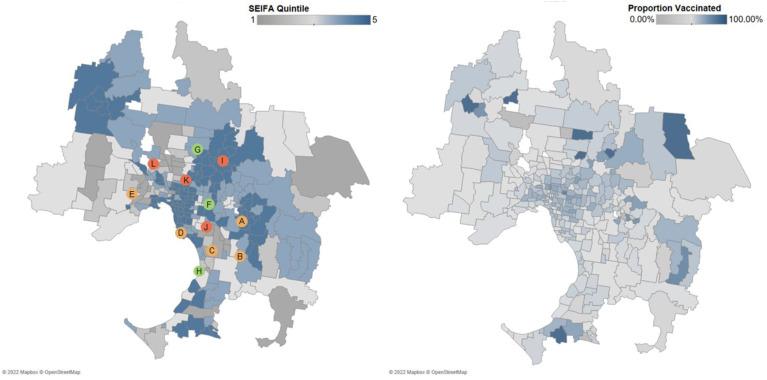
COVID-19 vaccination during pregnancy was associated with a reduction in stillbirth and preterm birth, and not associated with any adverse impact on fetal growth or development. Vaccine coverage was substantially influenced by known social determinants of health.
背景
COVID-19 感染在妊娠期间与进展为严重疾病的风险增加相关,但由于持续存在安全问题,孕妇接种疫苗的情况受到阻碍。COVID-19 疫苗接种在妊娠期间已被证明可降低死产,但与早产的关系尚不确定。
目的
本研究旨在测量在澳大利亚墨尔本分娩的妇女 COVID-19 疫苗接种率,并比较疫苗接种状况的围产期结局。
研究设计
这是一项回顾性多中心队列研究,在 2021 年 6 月政府建议在妊娠期间接种信使 RNA COVID-19 疫苗后进行。从 2021 年 7 月 1 日至 2022 年 3 月 31 日,提取了墨尔本所有 12 家公立妇产医院≥20 周妊娠分娩的常规收集数据。从总分娩队列中分析了产妇的社会人口统计学特征。对于在妊娠 20 至 43 周完全处于 9 个月数据收集期间的孕妇,比较了接种和未接种疫苗的孕妇的围产期结局。主要结局是至少 24 周妊娠的单胎妊娠的死产和早产(自发性和医源性)率,排除先天性异常。次要围产期结局包括在≥20 周妊娠出生的婴儿中先天性异常的发生率和出生体重≤第三百分位,以及在≥24 周妊娠出生且无先天性异常的婴儿中新生儿重症监护病房的入院率。我们使用逆概率评分加权回归调整了多种协变量,计算了接种与未接种疫苗的孕妇的围产期结局的调整比值比;P<.05 被认为具有统计学意义。
结果
对 32536 名妇女的分娩进行了分析:17365 名(53.4%)接种了疫苗,15171 名(47.6%)未接种疫苗。接种疫苗的孕妇更可能年龄较大、初产妇、不吸烟、不需要翻译、社会经济地位较高,并且接种过百日咳和流感疫苗。疫苗接种状况也因分娩地区而异。与未接种疫苗的妇女相比,接种疫苗的妇女的死产率显著降低(0.2%比 0.8%;调整比值比,0.18;95%置信区间,0.09-0.37;P<.001)。接种疫苗与总早产(<37 周)(5.1%比 9.2%;调整比值比,0.60;95%置信区间,0.51-0.71;P<.001)、自发性早产(2.4%比 4.0%;调整比值比,0.73;95%置信区间,0.56-0.96;P=.02)和医源性早产(2.7%比 5.2%;调整比值比,0.52;95%置信区间,0.41-0.65;P<.001)显著降低。接种疫苗的母亲所生的婴儿入住新生儿重症监护病房的比例也较低。接种疫苗的妇女中,先天性异常或出生体重≤第三百分位的发生率没有显著增加。与未接种疫苗的妇女相比,接种疫苗的妇女的婴儿中患有主要先天性异常的比例显著降低(2.4%比 3.0%;调整比值比,0.72;95%置信区间,0.56-0.94;P=.02)。即使将分析仅限于妊娠 20 周前接种疫苗的妇女,这一发现仍然具有统计学意义。
结论
妊娠期间接种 COVID-19 疫苗与降低死产和早产有关,与胎儿生长或发育的任何不良影响无关。疫苗接种率受到已知的健康社会决定因素的极大影响。





 Zotero 插件