
β淀粉样蛋白与衰老和阿尔茨海默病。
Amyloid Beta in Aging and Alzheimer's Disease.
机构信息
Department of Internal Medicine, Texas Tech University Health Sciences Center, Lubbock, TX 79430, USA.
Nutritional Sciences Department, College of Human Sciences, Texas Tech University, Lubbock, TX 79409, USA.
出版信息
Int J Mol Sci. 2022 Oct 26;23(21):12924. doi: 10.3390/ijms232112924.
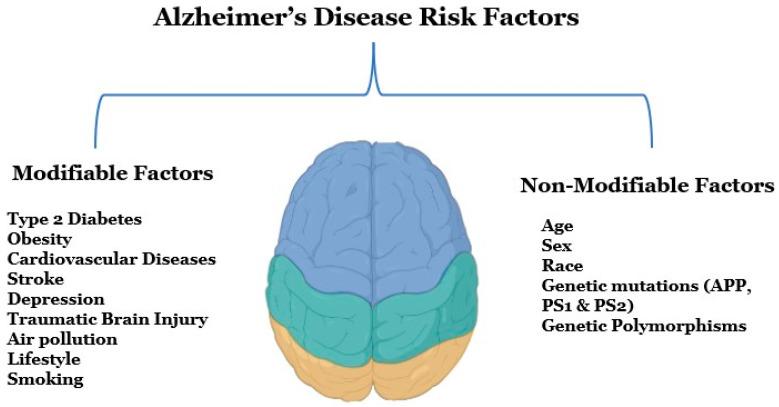
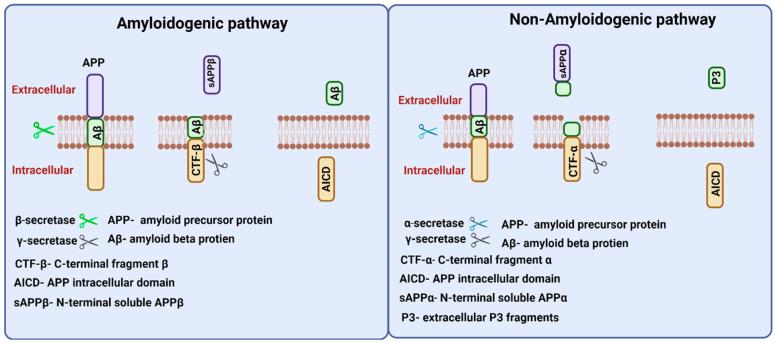
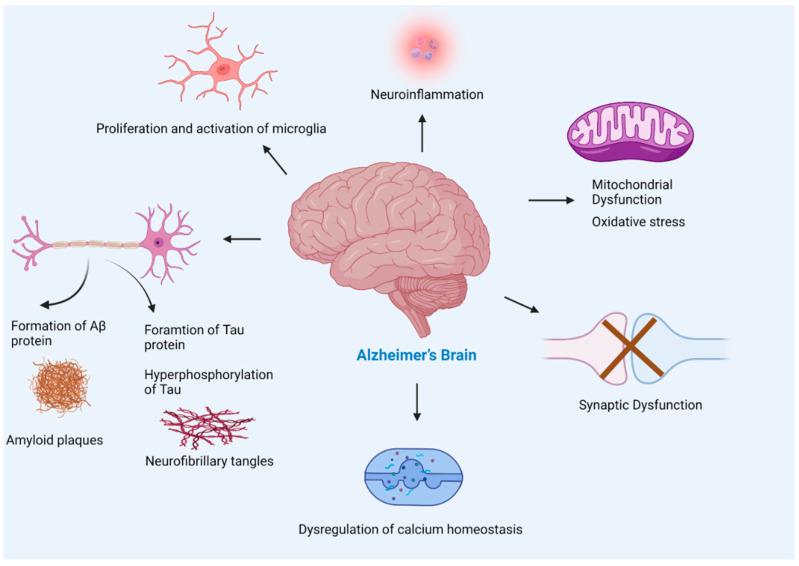
Alzheimer's disease (AD), is a progressive neurodegenerative disease that affects behavior, thinking, learning, and memory in elderly individuals. AD occurs in two forms, early onset familial and late-onset sporadic; genetic mutations in PS1, PS2, and APP genes cause early onset familial AD, and a combination of lifestyle, environment and genetic factors causes the late-onset sporadic form of the disease. However, accelerated disease progression is noticed in patients with familial AD. Disease-causing pathological changes are synaptic damage, and mitochondrial structural and functional changes, in addition to increased production and accumulation of phosphorylated tau (p-tau), and amyloid beta (Aβ) in the affected brain regions in AD patients. Aβ is a peptide derived from amyloid precursor protein (APP) by proteolytic cleavage of beta and gamma secretases. APP is a glycoprotein that plays a significant role in maintaining neuronal homeostasis like signaling, neuronal development, and intracellular transport. Aβ is reported to have both protective and toxic effects in neurons. The purpose of our article is to summarize recent developments of Aβ and its association with synapses, mitochondria, microglia, astrocytes, and its interaction with p-tau. Our article also covers the therapeutic strategies that reduce Aβ toxicities in disease progression and discusses the reasons for the failures of Aβ therapeutics.
阿尔茨海默病(AD)是一种进行性神经退行性疾病,会影响老年人的行为、思维、学习和记忆。AD 有两种形式,早发性家族性和晚发性散发性;PS1、PS2 和 APP 基因中的遗传突变导致早发性家族性 AD,而生活方式、环境和遗传因素的组合导致疾病的晚发性散发性形式。然而,家族性 AD 患者的疾病进展速度加快。在 AD 患者受影响的大脑区域中,除了磷酸化 tau(p-tau)和淀粉样β(Aβ)的增加和积累外,突触损伤和线粒体结构和功能的变化也是导致疾病的病理性变化。Aβ是由β和γ分泌酶对淀粉样前体蛋白(APP)进行蛋白水解切割产生的肽。APP 是一种糖蛋白,在维持神经元内稳态方面发挥着重要作用,如信号转导、神经元发育和细胞内运输。有报道称 Aβ对神经元既有保护作用,也有毒性作用。我们的文章旨在总结 Aβ及其与突触、线粒体、小胶质细胞、星形胶质细胞的最新研究进展及其与 p-tau 的相互作用。我们的文章还涵盖了减少疾病进展中 Aβ毒性的治疗策略,并讨论了 Aβ治疗失败的原因。



 Zotero 插件