
肝细胞核因子4α的调控减轻了非酒精性脂肪性肝病中的脂毒性,但增加了胆汁酸毒性。
Regulation of Hepatocyte Nuclear Factor 4α Attenuated Lipotoxicity but Increased Bile Acid Toxicity in Non-Alcoholic Fatty Liver Disease.
作者信息
Roh Yoon Jin, Kim Yun, Lee Jae Sun, Oh Ju Hee, Lee Seung Min, Yoon Eileen Laurel, Lee Sung Ryol, Jun Dae Won
机构信息
Department of Dermatology, Chung-Ang University Hospital, Seoul 04763, Korea.
Hanyang Medicine-Engineering-Bio Collaborative & Comprehensive Center for Drug Development, Hanyang University, Seoul 04763, Korea.
出版信息
Life (Basel). 2022 Oct 22;12(11):1682. doi: 10.3390/life12111682.
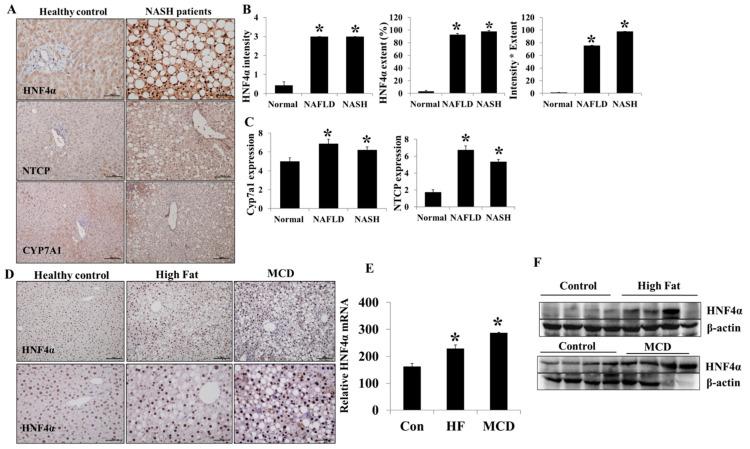
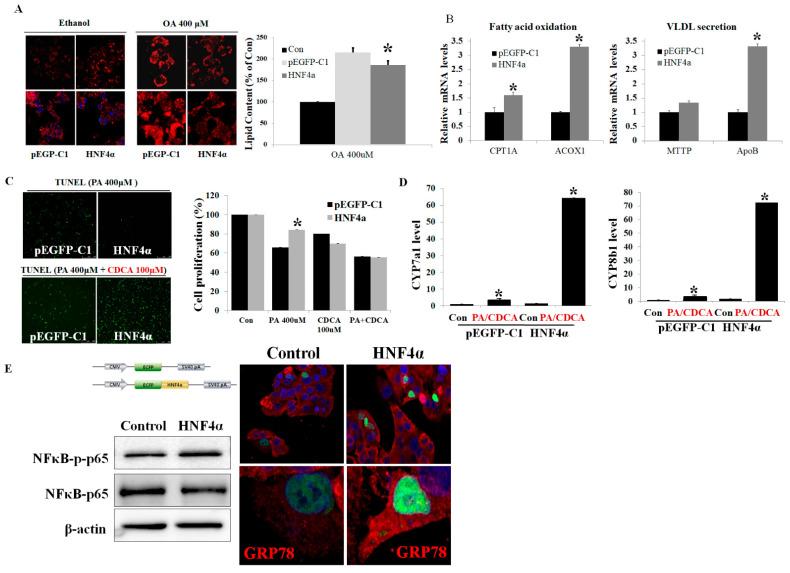
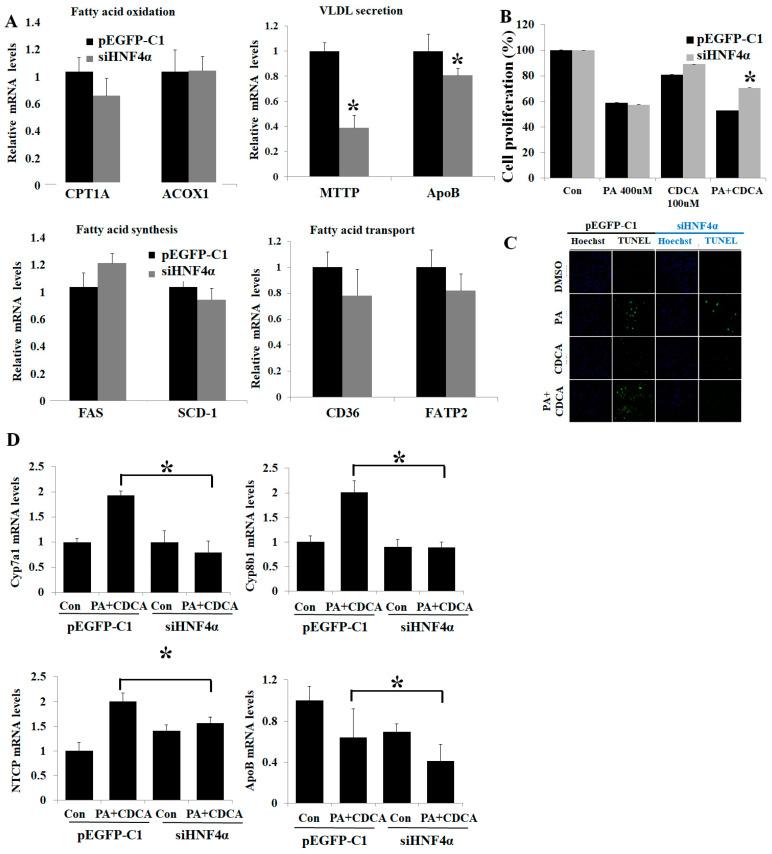
Hepatocyte nuclear factor 4 alpha (HNF4α) is a key master transcriptional factor for hepatic fat and bile acid metabolic pathways. We aimed to investigate the role of HNF4α in non-alcoholic fatty liver disease (NAFLD). The role of HNF4α was evaluated in free fatty acid-induced lipotoxicity and chenodeoxycholic acid (CDCA)-induced bile acid toxicity. Furthermore, the role of HNF4α was evaluated in a methionine choline deficiency (MCD)-diet-induced NAFLD model. The overexpression of HNF4α reduced intracellular lipid contents and attenuated palmitic acid (PA)-induced lipotoxicity. However, the protective effects of HNF4α were reversed when CDCA was used in a co-treatment with PA. HNF4α knockdown recovered cell death from bile acid toxicity. The inhibition of HNF4α decreased intrahepatic inflammation and the NAFLD activity score in the MCD model. Hepatic HNF4α inhibition can attenuate bile acid toxicity and be more effective as a therapeutic strategy in NAFLD patients; however, it is necessary to study the optimal timing of HNF4α inhibition.
肝细胞核因子4α(HNF4α)是肝脏脂肪和胆汁酸代谢途径的关键主转录因子。我们旨在研究HNF4α在非酒精性脂肪性肝病(NAFLD)中的作用。在游离脂肪酸诱导的脂毒性和鹅去氧胆酸(CDCA)诱导的胆汁酸毒性中评估了HNF4α的作用。此外,在蛋氨酸胆碱缺乏(MCD)饮食诱导的NAFLD模型中评估了HNF4α的作用。HNF4α的过表达降低了细胞内脂质含量,并减轻了棕榈酸(PA)诱导的脂毒性。然而,当CDCA与PA联合使用时,HNF4α的保护作用被逆转。HNF4α基因敲低可使细胞从胆汁酸毒性中恢复。在MCD模型中,HNF4α的抑制降低了肝内炎症和NAFLD活动评分。肝内HNF4α抑制可减轻胆汁酸毒性,作为NAFLD患者的治疗策略更有效;然而,有必要研究HNF4α抑制的最佳时机。

 Zotero 插件