
一种氧化还原开关调节 AcrIIC1 的组装和抗 CRISPR 活性。
A redox switch regulates the assembly and anti-CRISPR activity of AcrIIC1.
机构信息
School of Life Science and Technology, Harbin Institute of Technology, Harbin, 150080, China.
Interdisciplinary Research Center on Biology and Chemistry, Shanghai institute of Organic Chemistry, Chinese Academy of Sciences, Shanghai, 201210, China.
出版信息
Nat Commun. 2022 Nov 18;13(1):7071. doi: 10.1038/s41467-022-34551-8.
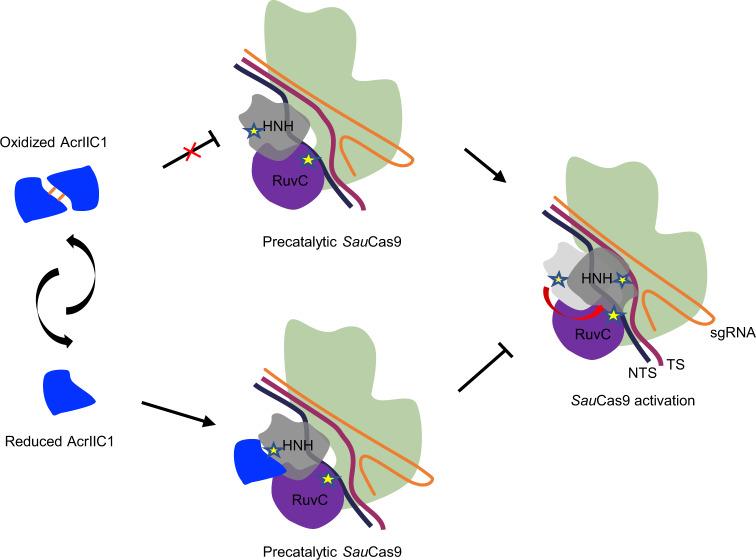
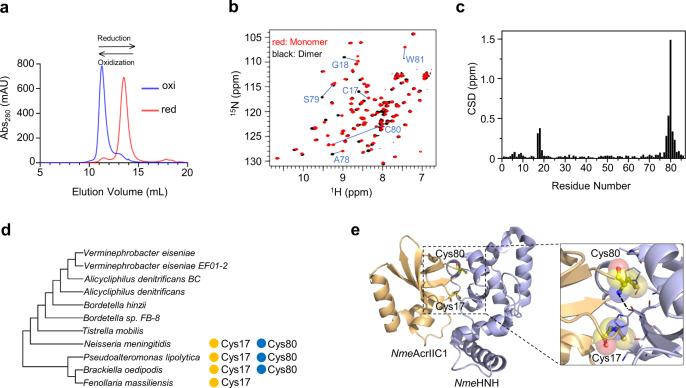
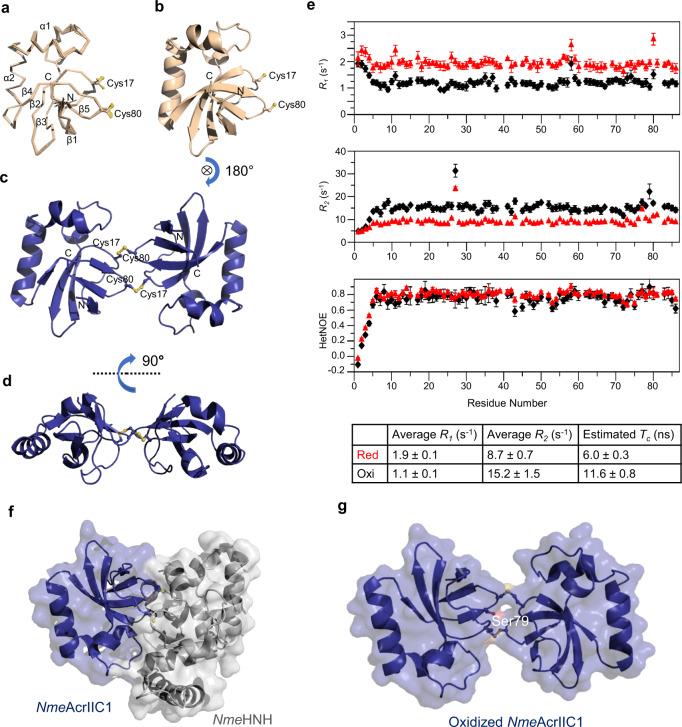
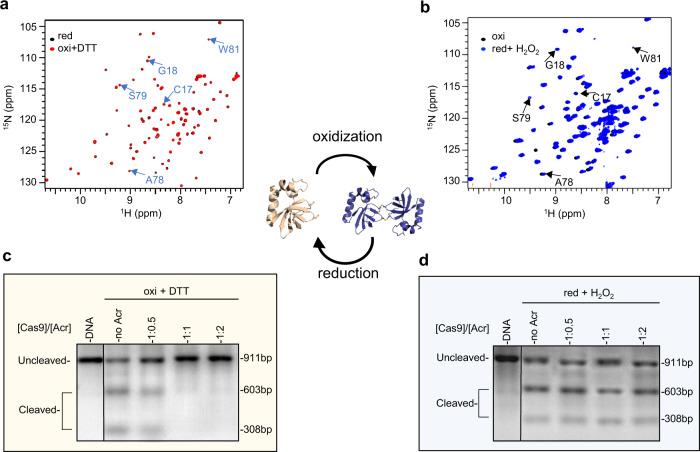
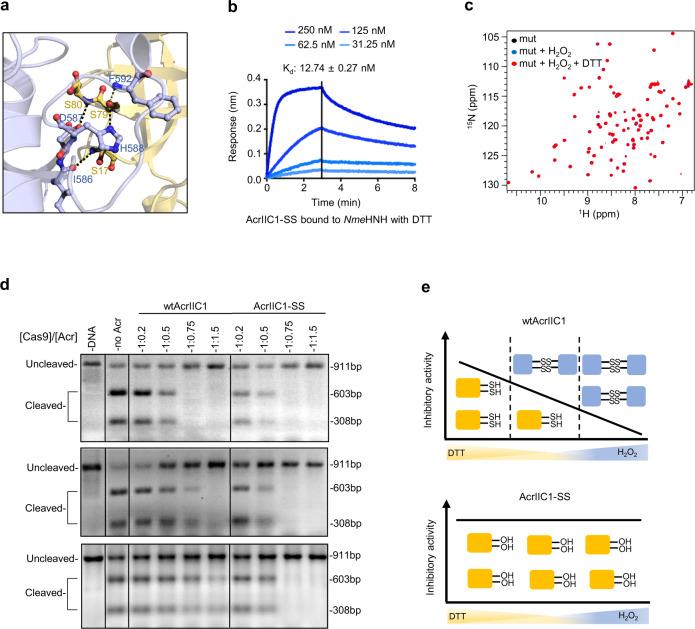
Anti-CRISPRs (Acrs) are natural inhibitors of bacteria's CRISPR-Cas systems, and have been developed as a safeguard to reduce the off-target effects of CRISPR gene-editing technology. Acrs can directly bind to CRISPR-Cas complexes and inhibit their activities. However, whether this process is under regulation in diverse eukaryotic cellular environments is poorly understood. In this work, we report the discovery of a redox switch for NmeAcrIIC1, which regulates NmeAcrIIC1's monomer-dimer interconversion and inhibitory activity on Cas9. Further structural studies reveal that a pair of conserved cysteines mediates the formation of inactive NmeAcrIIC1 dimer and directs the redox cycle. The redox switch also applies to the other two AcrIIC1 orthologs. Moreover, by replacing the redox-sensitive cysteines, we generated a robust AcrIIC1 variant that maintains potent inhibitory activity under various redox conditions. Our results reveal a redox-dependent regulation mechanism of Acr, and shed light on the design of superior Acr for CRISPR-Cas systems.
抗 CRISPR 蛋白(Acrs)是细菌 CRISPR-Cas 系统的天然抑制剂,已被开发为一种保障措施,以降低 CRISPR 基因编辑技术的脱靶效应。Acrs 可以直接与 CRISPR-Cas 复合物结合并抑制其活性。然而,在不同的真核细胞环境中,这一过程是否受到调控还知之甚少。在这项工作中,我们报告了 NmeAcrIIC1 的氧化还原开关的发现,该开关调节 NmeAcrIIC1 的单体-二聚体转化和对 Cas9 的抑制活性。进一步的结构研究表明,一对保守的半胱氨酸介导了无活性的 NmeAcrIIC1 二聚体的形成,并指导了氧化还原循环。该氧化还原开关也适用于另外两种 AcrIIC1 同源物。此外,通过替换氧化还原敏感的半胱氨酸,我们生成了一种强大的 AcrIIC1 变体,在各种氧化还原条件下都能保持强大的抑制活性。我们的结果揭示了 Acr 的一种依赖于氧化还原的调节机制,并为 CRISPR-Cas 系统设计更优越的 Acr 提供了线索。


 Zotero 插件