
弓形虫 ME49 衍生株对青蒿素衍生物青蒿琥酯和蒿甲醚耐药的蛋白质组学特征表明,其潜在的作用方式与 ROS 形成无关。
Proteomic characterization of Toxoplasma gondii ME49 derived strains resistant to the artemisinin derivatives artemiside and artemisone implies potential mode of action independent of ROS formation.
机构信息
Institute of Parasitology, University of Bern, Department of Infectious Diseases and Pathobiology, Vetsuisse Faculty, Länggass-Strasse 122, CH-3012, Bern, Switzerland.
Proteomics & Mass Spectrometry Core Facility, Department for BioMedical Research (DBMR), University of Bern, Freiburgstrasse 15, CH-3010, Bern, Switzerland.
出版信息
Int J Parasitol Drugs Drug Resist. 2023 Apr;21:1-12. doi: 10.1016/j.ijpddr.2022.11.005. Epub 2022 Dec 8.
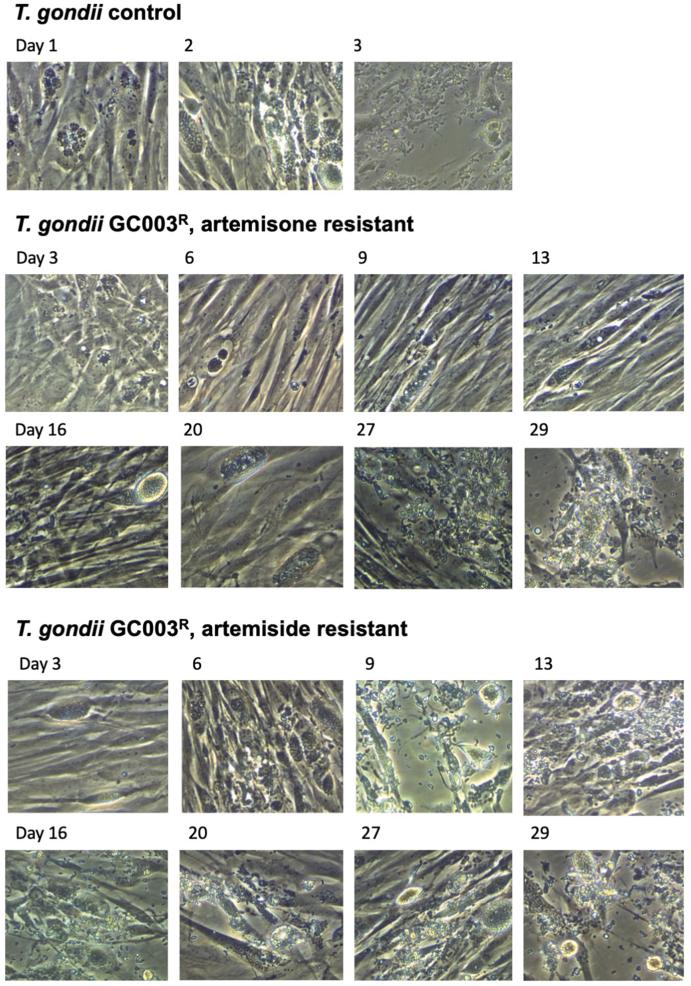
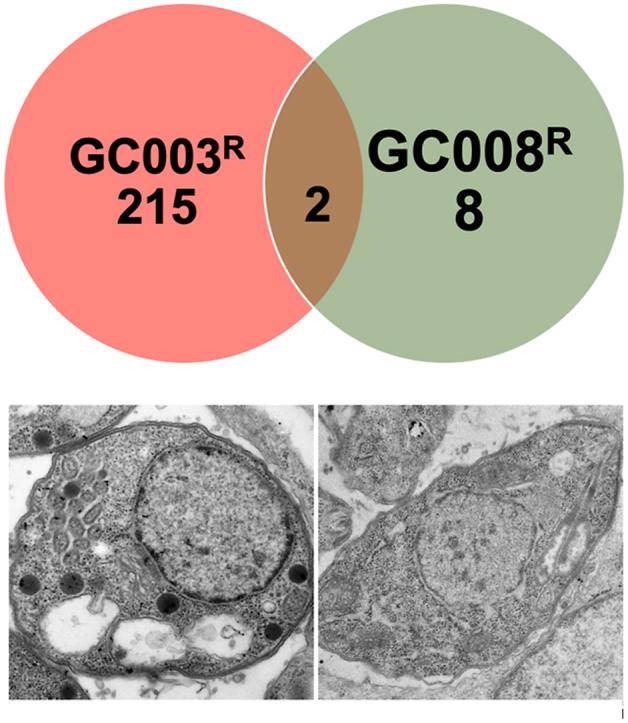
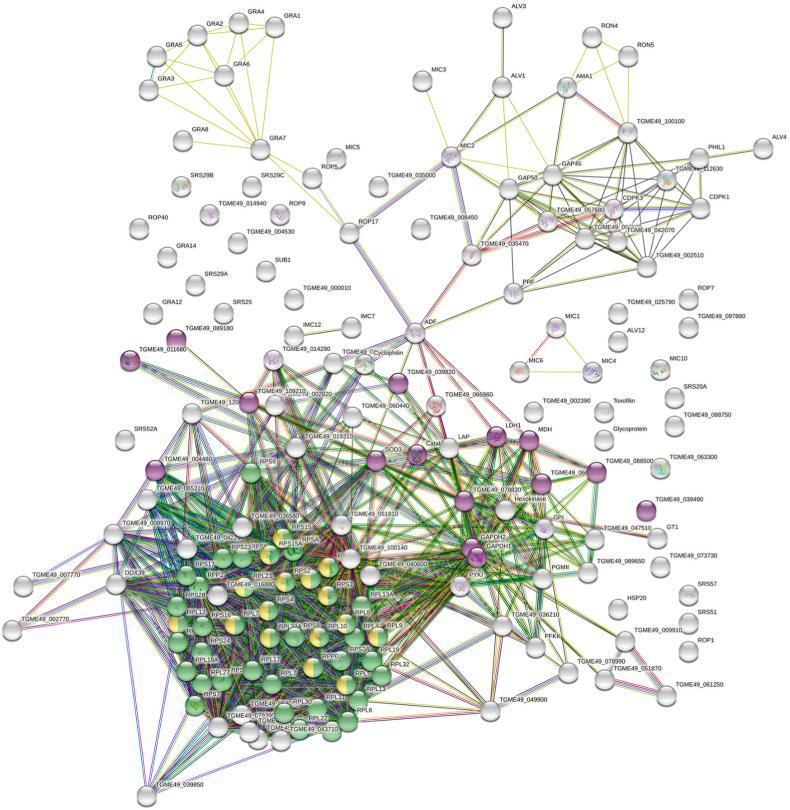
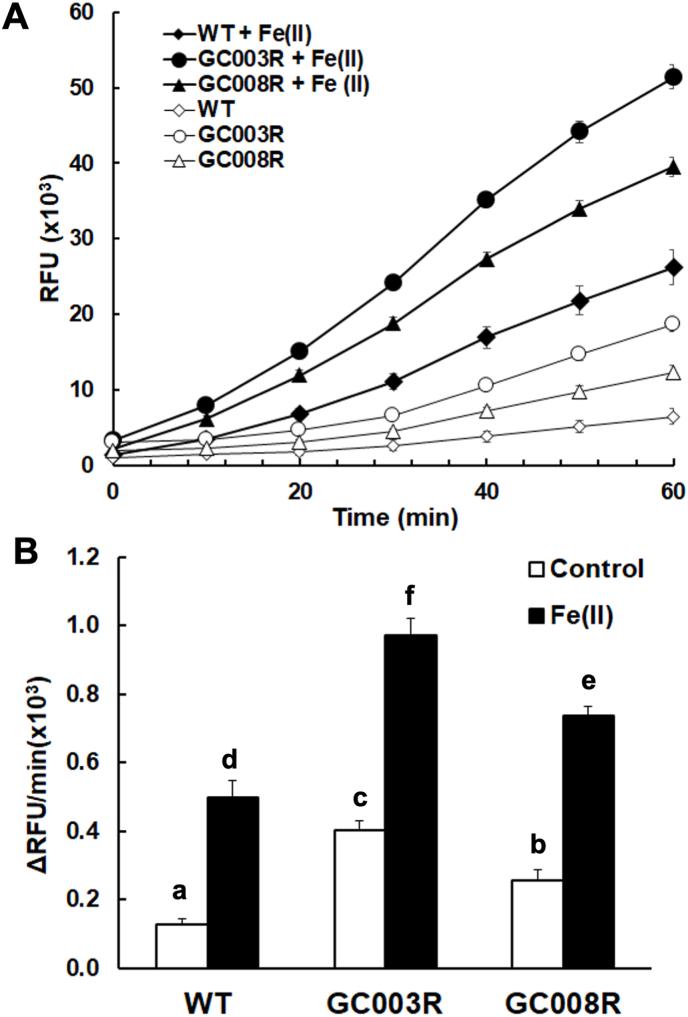
The sesquiterpene lactone artemisinin and its amino-artemisinin derivatives artemiside (GC008) and artemisone (GC003) are potent antimalarials. The mode of action of artemisinins against Plasmodium sp is popularly ascribed to 'activation' of the peroxide group by heme-Fe(II) or labile Fe(II) to generate C-radicals that alkylate parasite proteins. An alternative postulate is that artemisinins elicit formation of reactive oxygen species by interfering with flavin disulfide reductases resposible for maintaining intraparasitic redox homeostasis. However, in contradistinction to the heme-activation mechanism, the amino-artemisinins are effective in vitro against non-heme-degrading apicomplexan parasites including T. gondii, with IC values of 50-70 nM, and induce distinct ultrastructural alterations. However, T. gondii strains readily adapted to increased concentrations (2.5 μM) of these two compounds within few days. Thus, T. gondii strains that were resistant against artemisone and artemiside were generated by treating the T. gondii reference strain ME49 with stepwise increasing amounts of these compounds, yielding the artemisone resistant strain GC003 and the artemiside resistant strain GC008. Differential analyses of the proteomes of these resistant strains compared to the wildtype ME49 revealed that 215 proteins were significantly downregulated in artemisone resistant tachyzoites and only 8 proteins in artemiside resistant tachyzoites as compared to their wildtype. Two proteins, namely a hypothetical protein encoded by ORF TGME49_236950, and the rhoptry neck protein RON2 encoded by ORF TGME49_300100 were downregulated in both resistant strains. Interestingly, eight proteins involved in ROS scavenging including catalase and superoxide dismutase were amongst the differentially downregulated proteins in the artemisone-resistant strain. In parallel, ROS formation was significantly enhanced in isolated tachyzoites from the artemisone resistant strain and - to a lesser extent - in tachyzoites from the artemiside resistant strain as compared to wildtype tachyzoites. These findings suggest that amino-artemisinin derivatives display a mechanism of action in T. gondii distinct from Plasmodium.
倍半萜内酯青蒿素及其氨基酸青蒿素衍生物青蒿琥酯(GC008)和青蒿素(GC003)是有效的抗疟药物。青蒿素类药物对疟原虫的作用模式通常归因于血红素-Fe(II)或不稳定 Fe(II)“激活”过氧化物基团,生成 C-自由基,使寄生虫蛋白烷基化。另一种假设是,青蒿素类药物通过干扰负责维持寄生虫内氧化还原平衡的黄素二硫化物还原酶,诱导线粒体活性氧物质的形成。然而,与血红素激活机制不同,氨基酸青蒿素类药物在体外对非血红素降解的顶复门寄生虫包括刚地弓形虫有效,IC 50 值为 50-70 nM,并诱导明显的超微结构改变。然而,刚地弓形虫株在几天内就能适应这些两种化合物浓度(2.5 μM)的增加。因此,通过用逐步增加的这些化合物处理刚地弓形虫参考株 ME49,生成了对青蒿素和青蒿琥酯具有抗性的刚地弓形虫株 GC003 和 GC008。与野生型 ME49 相比,对这些抗性株的蛋白质组进行差异分析表明,在青蒿素抗性速殖子中有 215 种蛋白质显著下调,而在青蒿琥酯抗性速殖子中仅有 8 种蛋白质下调。两种蛋白,即由 ORF TGME49_236950 编码的假定蛋白和由 ORF TGME49_300100 编码的棒状体颈蛋白 RON2,在两种抗性株中均下调。有趣的是,在青蒿素抗性株中,有 8 种参与 ROS 清除的蛋白,包括过氧化氢酶和超氧化物歧化酶,也属于差异下调蛋白。同时,与野生型速殖子相比,青蒿素抗性速殖子中分离的速殖子和青蒿琥酯抗性速殖子中 ROS 的形成显著增强。这些发现表明,氨基酸青蒿素衍生物在刚地弓形虫中的作用机制与疟原虫不同。





 Zotero 插件