
确定哮喘表型和结局:用现代机器学习方法补充现有临床实践。
Determining asthma endotypes and outcomes: Complementing existing clinical practice with modern machine learning.
机构信息
Division of Pulmonary, Allergy, and Critical Care Medicine, Department of Medicine, University of Pittsburgh School of Medicine, 3459 Fifth Avenue, MUH 628 NW, Pittsburgh, PA 15213, USA; Department of Immunology, University of Pittsburgh School of Medicine, Pittsburgh, PA, USA.
Department of Immunology, University of Pittsburgh School of Medicine, Pittsburgh, PA, USA; Center for Systems Immunology, University of Pittsburgh Medical Center, Pittsburgh, PA, USA.
出版信息
Cell Rep Med. 2022 Dec 20;3(12):100857. doi: 10.1016/j.xcrm.2022.100857.
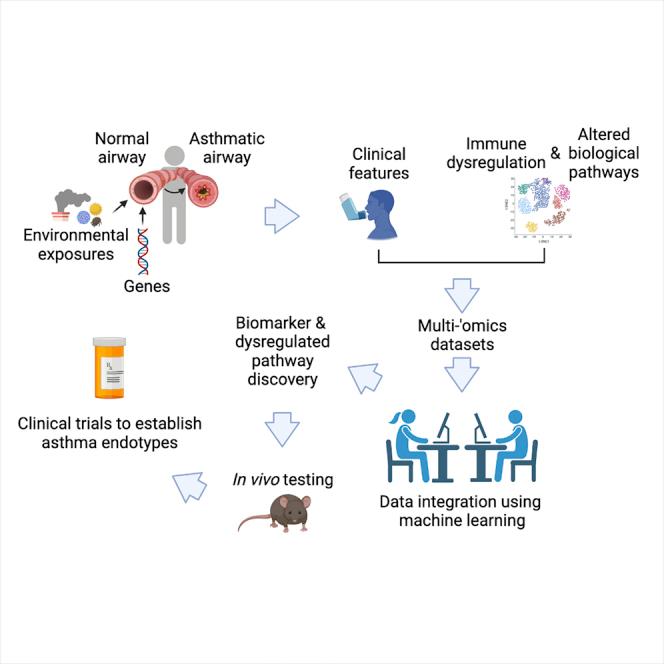
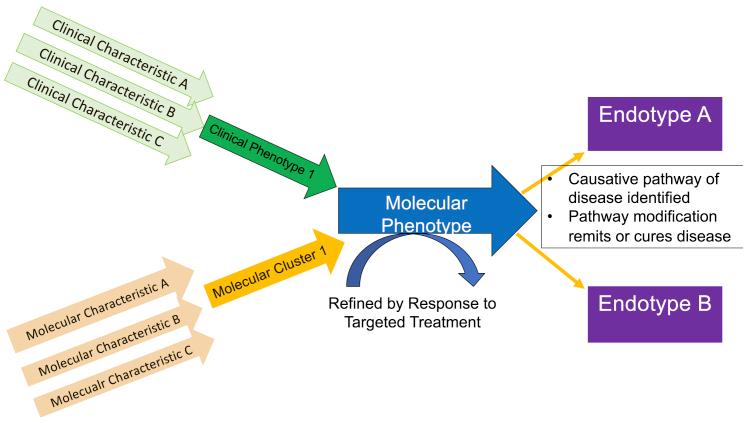
There is unprecedented opportunity to use machine learning to integrate high-dimensional molecular data with clinical characteristics to accurately diagnose and manage disease. Asthma is a complex and heterogeneous disease and cannot be solely explained by an aberrant type 2 (T2) immune response. Available and emerging multi-omics datasets of asthma show dysregulation of different biological pathways including those linked to T2 mechanisms. While T2-directed biologics have been life changing for many patients, they have not proven effective for many others despite similar biomarker profiles. Thus, there is a great need to close this gap to understand asthma heterogeneity, which can be achieved by harnessing and integrating the rich multi-omics asthma datasets and the corresponding clinical data. This article presents a compendium of machine learning approaches that can be utilized to bridge the gap between predictive biomarkers and actual causal signatures that are validated in clinical trials to ultimately establish true asthma endotypes.
利用机器学习将高维分子数据与临床特征相结合,以准确诊断和管理疾病,这是前所未有的机会。哮喘是一种复杂且异质的疾病,不能仅用异常的 2 型(T2)免疫反应来解释。现有的和新兴的哮喘多组学数据集显示,不同的生物学途径失调,包括与 T2 机制相关的途径。虽然针对 T2 的生物制剂已经改变了许多患者的生活,但尽管有相似的生物标志物特征,它们对许多其他患者并不有效。因此,需要缩小这一差距以了解哮喘的异质性,这可以通过利用和整合丰富的哮喘多组学数据集和相应的临床数据来实现。本文介绍了一系列机器学习方法,可以用来弥合预测生物标志物和临床试验中验证的实际因果特征之间的差距,最终确定真正的哮喘表型。

 Zotero 插件