
胶质瘤中的脂质改变:一项系统综述。
Lipid Alterations in Glioma: A Systematic Review.
作者信息
Abdul Rashid Khairunnisa, Ibrahim Kamariah, Wong Jeannie Hsiu Ding, Mohd Ramli Norlisah
机构信息
Department of Biomedical Imaging, Faculty of Medicine, Universiti Malaya, Kuala Lumpur 50603, Malaysia.
Department of Biomedical Science, Faculty of Medicine, Universiti Malaya, Kuala Lumpur 50603, Malaysia.
出版信息
Metabolites. 2022 Dec 16;12(12):1280. doi: 10.3390/metabo12121280.
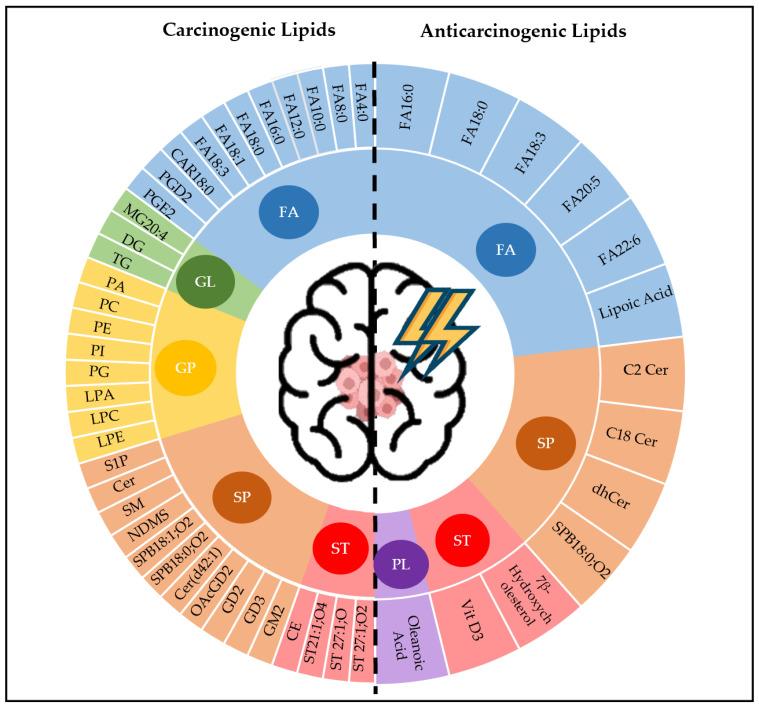
Gliomas are highly lethal tumours characterised by heterogeneous molecular features, producing various metabolic phenotypes leading to therapeutic resistance. Lipid metabolism reprogramming is predominant and has contributed to the metabolic plasticity in glioma. This systematic review aims to discover lipids alteration and their biological roles in glioma and the identification of potential lipids biomarker. This systematic review was conducted using the preferred reporting items for systematic reviews and meta-analyses (PRISMA) guidelines. Extensive research articles search for the last 10 years, from 2011 to 2021, were conducted using four electronic databases, including PubMed, Web of Science, CINAHL and ScienceDirect. A total of 158 research articles were included in this study. All studies reported significant lipid alteration between glioma and control groups, impacting glioma cell growth, proliferation, drug resistance, patients' survival and metastasis. Different lipids demonstrated different biological roles, either beneficial or detrimental effects on glioma. Notably, prostaglandin (PGE2), triacylglycerol (TG), phosphatidylcholine (PC), and sphingosine-1-phosphate play significant roles in glioma development. Conversely, the most prominent anti-carcinogenic lipids include docosahexaenoic acid (DHA), eicosapentaenoic acid (EPA), and vitamin D3 have been reported to have detrimental effects on glioma cells. Furthermore, high lipid signals were detected at 0.9 and 1.3 ppm in high-grade glioma relative to low-grade glioma. This evidence shows that lipid metabolisms were significantly dysregulated in glioma. Concurrent with this knowledge, the discovery of specific lipid classes altered in glioma will accelerate the development of potential lipid biomarkers and enhance future glioma therapeutics.
胶质瘤是具有高度致死性的肿瘤,其特征在于分子特征异质性,会产生各种代谢表型,导致治疗耐药性。脂质代谢重编程占主导地位,并促成了胶质瘤的代谢可塑性。本系统评价旨在发现胶质瘤中脂质的改变及其生物学作用,并鉴定潜在的脂质生物标志物。本系统评价按照系统评价与Meta分析的首选报告项目(PRISMA)指南进行。利用包括PubMed、科学网、护理及健康领域数据库(CINAHL)和ScienceDirect在内的四个电子数据库,对2011年至2021年过去10年的大量研究文章进行了检索。本研究共纳入158篇研究文章。所有研究均报告了胶质瘤组与对照组之间存在显著的脂质改变,这影响了胶质瘤细胞的生长、增殖、耐药性、患者生存和转移。不同的脂质表现出不同的生物学作用,对胶质瘤有有益或有害影响。值得注意的是,前列腺素(PGE2)、三酰甘油(TG)、磷脂酰胆碱(PC)和鞘氨醇-1-磷酸在胶质瘤发展中起重要作用。相反,最突出的抗癌脂质包括二十二碳六烯酸(DHA)、二十碳五烯酸(EPA),并且据报道维生素D3对胶质瘤细胞有有害影响。此外,相对于低级别胶质瘤,在高级别胶质瘤中于0.9和1.3 ppm处检测到高脂质信号。这一证据表明胶质瘤中的脂质代谢显著失调。基于这一认识,发现胶质瘤中改变的特定脂质类别将加速潜在脂质生物标志物的开发,并增强未来的胶质瘤治疗效果。

 Zotero 插件