
通过整合多组学分析揭示 1 型糖尿病中口腔微生物组的改变及其对肠道微生物组的影响。
Alterations of oral microbiota and impact on the gut microbiome in type 1 diabetes mellitus revealed by integrated multi-omic analyses.
机构信息
Luxembourg Centre for Systems Biomedicine, Esch-sur-Alzette, Luxembourg.
Structural and Computational Biology Unit, European Molecular Biology Laboratory, Heidelberg, Germany.
出版信息
Microbiome. 2022 Dec 28;10(1):243. doi: 10.1186/s40168-022-01435-4.
BACKGROUND
Alterations to the gut microbiome have been linked to multiple chronic diseases. However, the drivers of such changes remain largely unknown. The oral cavity acts as a major route of exposure to exogenous factors including pathogens, and processes therein may affect the communities in the subsequent compartments of the gastrointestinal tract. Here, we perform strain-resolved, integrated meta-genomic, transcriptomic, and proteomic analyses of paired saliva and stool samples collected from 35 individuals from eight families with multiple cases of type 1 diabetes mellitus (T1DM).
RESULTS
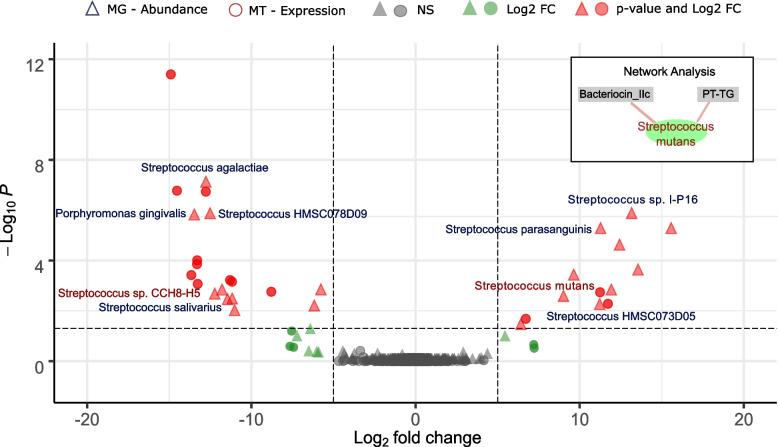
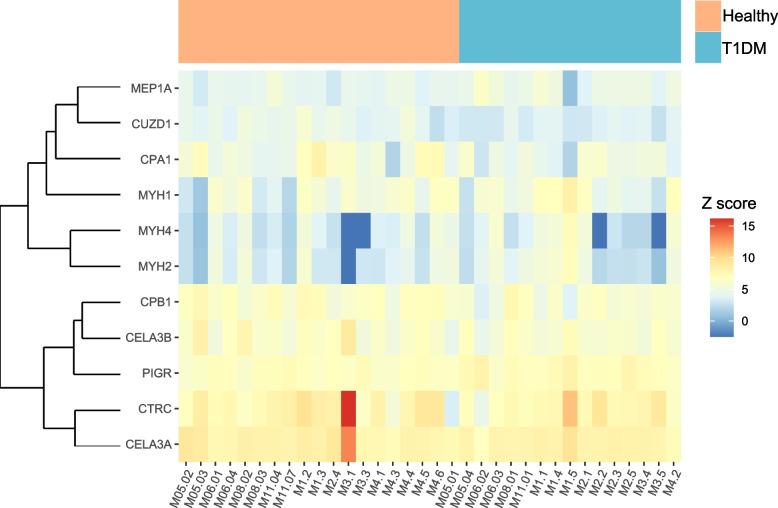
We identified distinct oral microbiota mostly reflecting competition between streptococcal species. More specifically, we found a decreased abundance of the commensal Streptococcus salivarius in the oral cavity of T1DM individuals, which is linked to its apparent competition with the pathobiont Streptococcus mutans. The decrease in S. salivarius in the oral cavity was also associated with its decrease in the gut as well as higher abundances in facultative anaerobes including Enterobacteria. In addition, we found evidence of gut inflammation in T1DM as reflected in the expression profiles of the Enterobacteria as well as in the human gut proteome. Finally, we were able to follow transmitted strain-variants from the oral cavity to the gut at the individual omic levels, highlighting not only the transfer, but also the activity of the transmitted taxa along the gastrointestinal tract.
CONCLUSIONS
Alterations of the oral microbiome in the context of T1DM impact the microbial communities in the lower gut, in particular through the reduction of "mouth-to-gut" transfer of Streptococcus salivarius. Our results indicate that the observed oral-cavity-driven gut microbiome changes may contribute towards the inflammatory processes involved in T1DM. Through the integration of multi-omic analyses, we resolve strain-variant "mouth-to-gut" transfer in a disease context. Video Abstract.
背景
肠道微生物组的改变与多种慢性疾病有关。然而,这种变化的驱动因素在很大程度上仍然未知。口腔是暴露于包括病原体在内的外源性因素的主要途径,其中的过程可能会影响胃肠道后续腔室中的群落。在这里,我们对来自 8 个有多种 1 型糖尿病(T1DM)病例的 35 个人的配对唾液和粪便样本进行了基于菌株的综合宏基因组、转录组和蛋白质组分析。
结果
我们鉴定出了独特的口腔微生物群,这些微生物群主要反映了链球菌种之间的竞争。更具体地说,我们发现 T1DM 个体口腔中共生的唾液链球菌丰度降低,这与其与条件致病菌变形链球菌的明显竞争有关。口腔中唾液链球菌丰度的降低也与其在肠道中的减少以及兼性厌氧菌(包括肠杆菌)丰度的增加有关。此外,我们发现 T1DM 存在肠道炎症的证据,这反映在肠杆菌的表达谱以及人类肠道蛋白质组中。最后,我们能够在个体组学水平上从口腔跟踪到肠道的传播菌株变体,这不仅突出了沿胃肠道的转移,还突出了传播分类群的活性。
结论
T1DM 背景下口腔微生物组的改变会影响下肠道的微生物群落,特别是通过减少唾液链球菌的“口-肠”转移。我们的研究结果表明,观察到的口腔驱动的肠道微生物组变化可能有助于 T1DM 中涉及的炎症过程。通过整合多组学分析,我们在疾病背景下解决了菌株变体的“口-肠”转移。视频摘要。

 Zotero 插件