
基于类p型VO纳米片的室温氨气传感器用于食品变质监测。
Room Temperature Ammonia Gas Sensor Based on p-Type-like VO Nanosheets towards Food Spoilage Monitoring.
作者信息
Van Duy Lai, Nguyet To Thi, Le Dang Thi Thanh, Van Duy Nguyen, Nguyen Hugo, Biasioli Franco, Tonezzer Matteo, Di Natale Corrado, Hoa Nguyen Duc
机构信息
International Training Institute for Materials Science (ITIMS), Hanoi University of Science and Technology (HUST), No. 1, Dai Co Viet Street, Hanoi 10999, Vietnam.
Department of Electronic Engineering, University of Rome Tor Vergata, Via del Politecnico 1, 00133 Rome, Italy.
出版信息
Nanomaterials (Basel). 2022 Dec 28;13(1):146. doi: 10.3390/nano13010146.
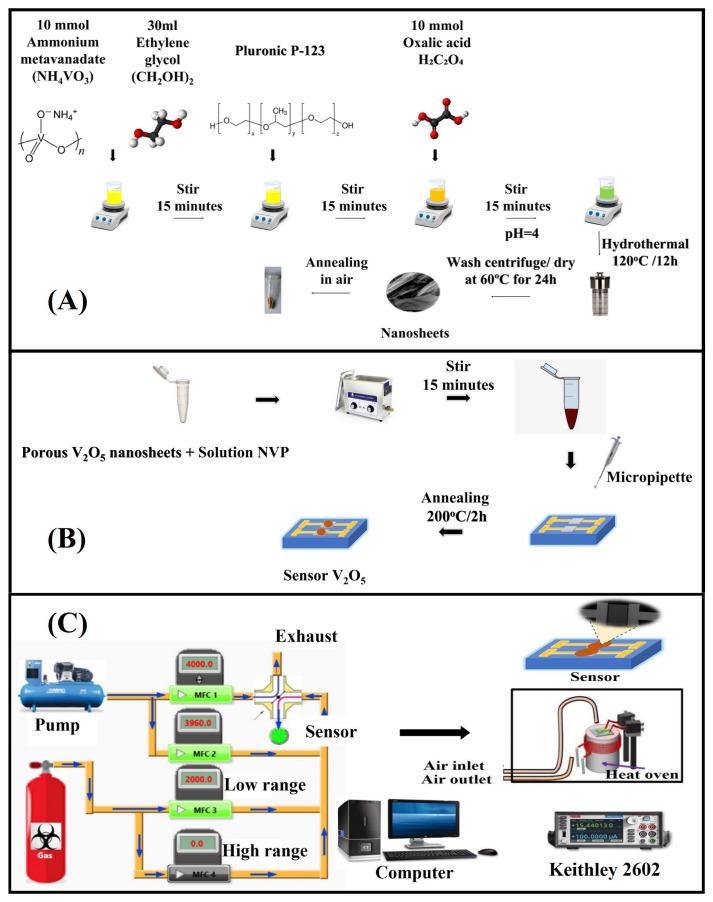
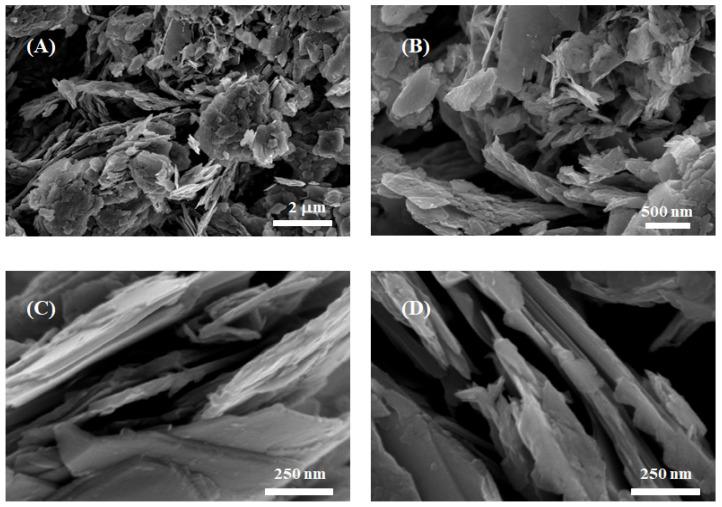
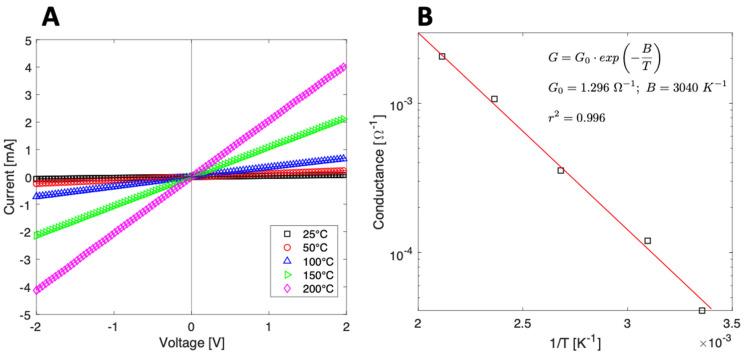
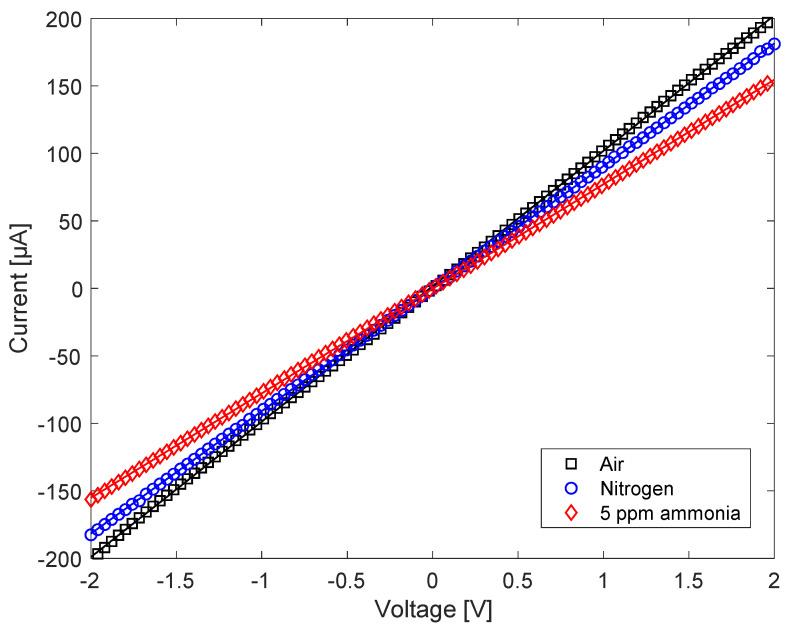
Gas sensors play an important role in many areas of human life, including the monitoring of production processes, occupational safety, food quality assessment, and air pollution monitoring. Therefore, the need for gas sensors to monitor hazardous gases, such as ammonia, at low operating temperatures has become increasingly important in many fields. Sensitivity, selectivity, low cost, and ease of production are crucial characteristics for creating a capillary network of sensors for the protection of the environment and human health. However, developing gas sensors that are not only efficient but also small and inexpensive and therefore integrable into everyday life is a difficult challenge. In this paper, we report on a resistive sensor for ammonia detection based on thin VO nanosheets operating at room temperature. The small thickness and porosity of the VO nanosheets give the sensors good performance for sensing ammonia at room temperature (RT), with a relative change of resistance of 9.4% to 5 ppm ammonia (NH) and an estimated detection limit of 0.4 ppm. The sensor is selective with respect to the seven interferents tested; it is repeatable and stable over the long term (four months). Although VO is generally an n-type semiconductor, in this case the nanosheets show a p-type semiconductor behavior, and thus a possible sensing mechanism is proposed. The device's performance, along with its size, low cost, and low power consumption, makes it a good candidate for monitoring freshness and spoilage along the food supply chain.
气体传感器在人类生活的许多领域发挥着重要作用,包括生产过程监测、职业安全、食品质量评估和空气污染监测。因此,在许多领域,在低温下监测诸如氨等有害气体的气体传感器的需求变得越来越重要。灵敏度、选择性、低成本和易于生产是创建用于保护环境和人类健康的传感器毛细管网络的关键特性。然而,开发不仅高效而且体积小、成本低从而能够集成到日常生活中的气体传感器是一项艰巨的挑战。在本文中,我们报道了一种基于室温下工作的VO纳米薄片的用于氨检测的电阻式传感器。VO纳米薄片的小厚度和孔隙率使传感器在室温下对氨具有良好的传感性能,对5 ppm氨(NH₃)的电阻相对变化为9.4%,估计检测限为0.4 ppm。该传感器对所测试的七种干扰物具有选择性;它具有长期(四个月)的可重复性和稳定性。尽管VO通常是一种n型半导体,但在这种情况下纳米薄片表现出p型半导体行为,因此提出了一种可能的传感机制。该器件的性能,连同其尺寸、低成本和低功耗,使其成为监测食品供应链中新鲜度和变质情况的良好候选者。






 Zotero 插件