
限时进食可改善葡聚糖硫酸钠诱导的结肠炎,减轻肠道炎症。
Time-restricted feeding ameliorates dextran sulfate sodium-induced colitis reducing intestinal inflammation.
作者信息
Song Shuo, Chen Lingling, Bai Meijuan, Wang Shuo, Ye Xiaoyi, Lin Yijun, Luo Xuemei, Li Zixuan, Zhang Lingling, Zhu Xinyu, Wang Zinan, Chen Yan
机构信息
Key Laboratory of Nutrition, Metabolism and Food Safety, Shanghai Institute of Nutrition and Health, University of Chinese Academy of Sciences, Chinese Academy of Sciences (CAS), Shanghai, China.
School of Life Science and Technology, ShanghaiTech University, Shanghai, China.
出版信息
Front Nutr. 2022 Dec 23;9:1043783. doi: 10.3389/fnut.2022.1043783. eCollection 2022.
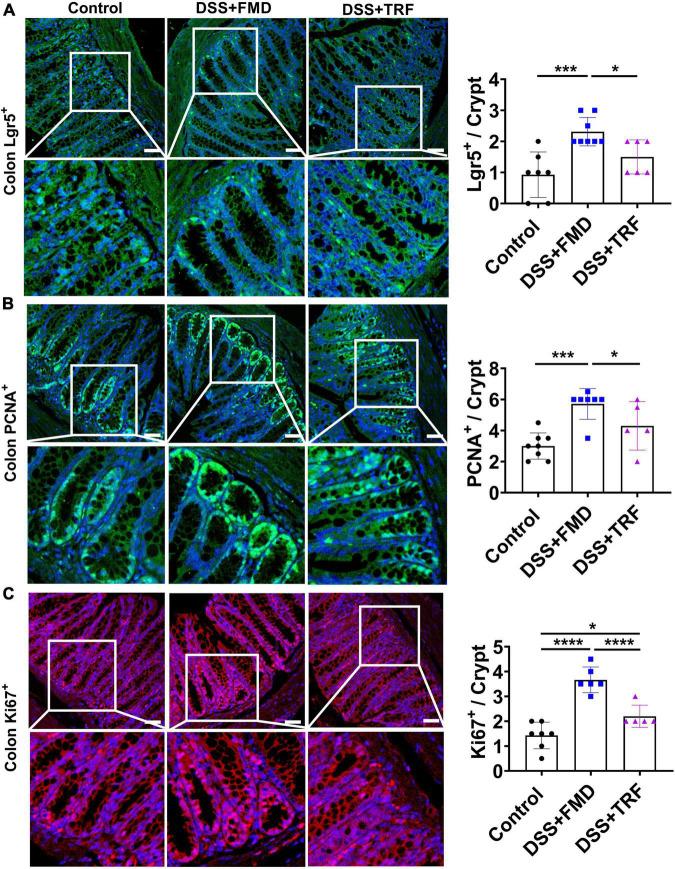
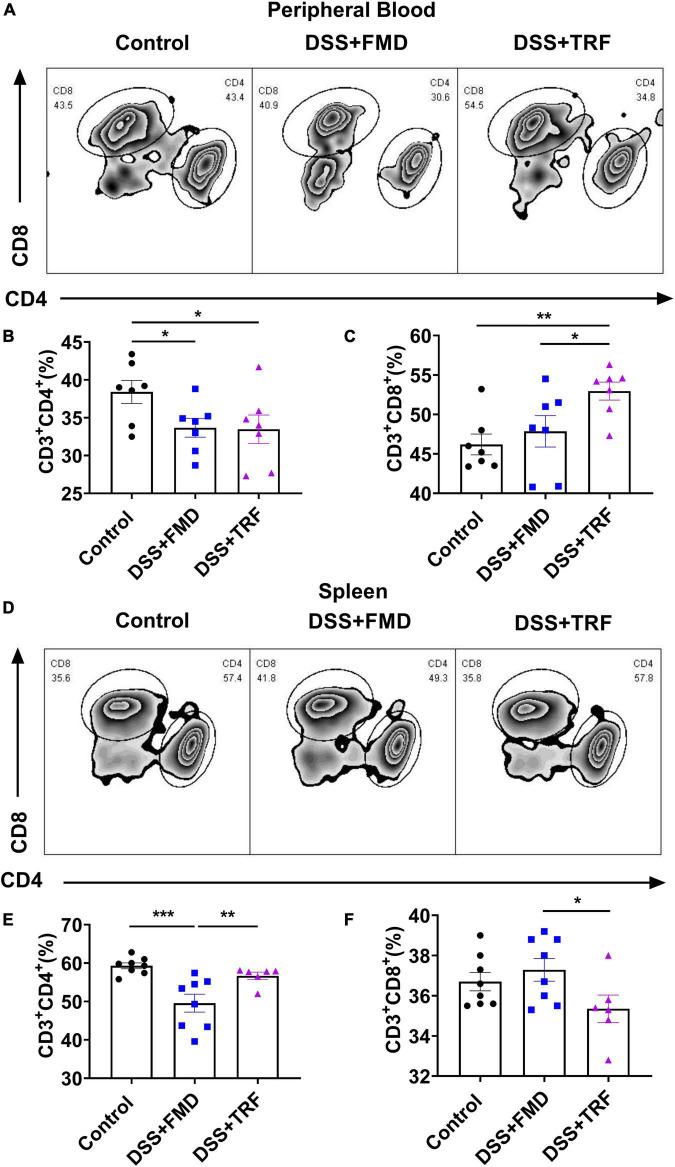
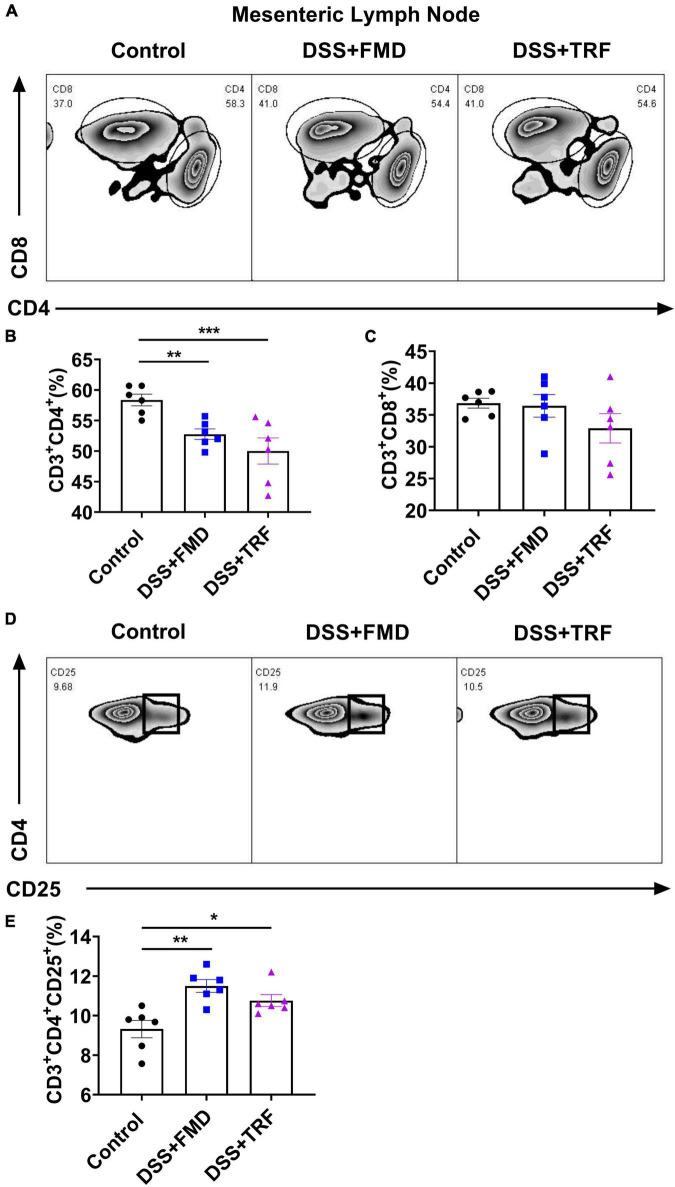
Time-restricted feeding (TRF) is an emerging dietary intervention that improves metabolic disorders such as obesity, insulin resistance and dyslipidemia. Inflammatory bowel disease (IBD) is a chronic inflammatory disorder affecting the gastrointestinal tract, where nutrition plays an important role in its pathogenesis. Although numerous strategies of nutritional intervention have been reported, whether TRF can improve IBD has been elusive. In this study, we investigated the effect of two cycles of 7-day TRF intervention in a dextran sulfate sodium-induced IBD mouse model. We found that TRF was able to reduce the disease activity index and ameliorate the IBD-associated symptoms, as well as increase the number of colonic crypts and decrease the histological score in the colon. Furthermore, TRF lowered the percentage of CD4 T cells in the peripheral blood and mesenteric lymph node, and increased the number of CD4CD25 T cells in the mesenteric lymph nodes. Additionally, TRF reduced the infiltration of leukocytes and macrophages around the crypt base in the colon. However, unlike the intermittent caloric restriction with fasting-mimicking diet, TRF was not able to increase the markers of progenitor and cell proliferation in the colon. Collectively, these results demonstrated that TRF is able to improve IBD in mice via reduction in intestinal inflammation.
限时进食(TRF)是一种新兴的饮食干预方式,可改善肥胖、胰岛素抵抗和血脂异常等代谢紊乱。炎症性肠病(IBD)是一种影响胃肠道的慢性炎症性疾病,营养在其发病机制中起着重要作用。尽管已有众多营养干预策略的报道,但TRF是否能改善IBD仍不明确。在本研究中,我们在葡聚糖硫酸钠诱导的IBD小鼠模型中研究了两个周期的7天TRF干预的效果。我们发现,TRF能够降低疾病活动指数,改善IBD相关症状,增加结肠隐窝数量并降低结肠组织学评分。此外,TRF降低了外周血和肠系膜淋巴结中CD4 T细胞的百分比,并增加了肠系膜淋巴结中CD4CD25 T细胞的数量。另外,TRF减少了结肠隐窝基部周围白细胞和巨噬细胞的浸润。然而,与模拟禁食的间歇性热量限制不同,TRF无法增加结肠中祖细胞和细胞增殖的标志物。总体而言,这些结果表明TRF能够通过减轻肠道炎症来改善小鼠的IBD。



 Zotero 插件