
父母识别抗生素技能对父母使用抗生素技能与儿童不适当使用抗生素之间关系的调节作用:来自中国的证据。
The moderating effect of parental skills for antibiotic identification on the link between parental skills for antibiotic use and inappropriate antibiotic use for children in China.
机构信息
Institute of Social Medicine, School of Medicine, Zhejiang University, Hangzhou, China.
出版信息
BMC Public Health. 2023 Jan 23;23(1):156. doi: 10.1186/s12889-023-15099-8.
BACKGROUND
Inappropriate antibiotic consumption promotes antibiotic resistance. However, findings on the association between antibiotic-related knowledge and behaviors are inconsistent and contradictory, resulting in unjustified guidance of interventions. The mechanisms between the different kinds of antibiotic-related skills contained in knowledge modules in some previous studies are indistinct and rarely studied.
METHODS
A cross-sectional survey was conducted between June 2017 and April 2018 in three Chinese provinces, investigating 9526 parents with children aged 0-13 years old. Data from 1944 parents who self-medicated their children and 2478 respondents whose children sought care were analyzed.
RESULTS
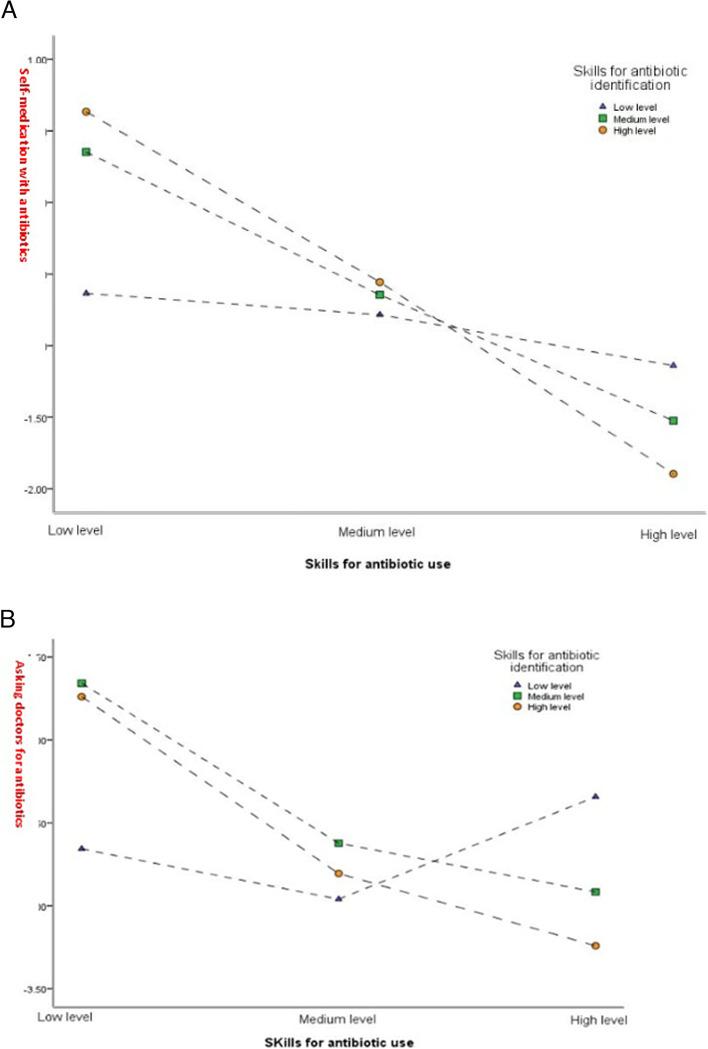
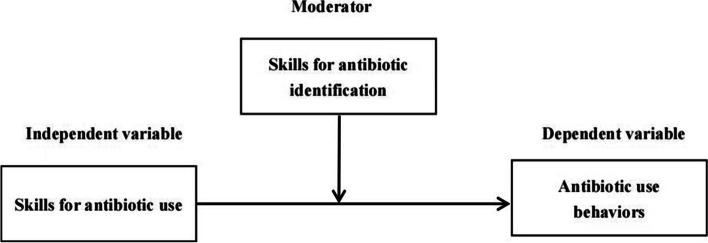
Skills for antibiotic identification were found to be a moderator for the association between skills for antibiotic use and two inappropriate behaviors. Compared with parents with low levels of both skills for antibiotic identification and use, those mastering both skills at either medium (OR = 0.48, 95% CI [0.26-0.88]) or high (OR = 0.15, 95% CI [0.07-0.34]) level were less likely to self-medicate their children with antibiotics. Parents with a medium level of skills for antibiotic identification and high level of skills for antibiotic use (OR = 0.18, 95% CI [0.08-0.44]) and those with a high level of both skills (OR = 0.15, 95% CI [0.05-0.47]) were less likely to ask doctors for antibiotics when seeking care.
CONCLUSION
Parents' high level of skills for antibiotic identification is revealed to promote inappropriate antibiotic use when parents master a low level of skills for antibiotic use. Conversely, based on excellent skills for antibiotic use, better skill for antibiotic identification is associated with a greater reduction in inappropriate behaviors. We recommend future health education to strengthen skills for antibiotic identification along with guidance on antibiotic use.
背景
不合理的抗生素使用会促进抗生素耐药性的产生。然而,抗生素相关知识和行为之间的关联的研究结果并不一致且相互矛盾,导致干预措施的指导缺乏依据。在以前的一些研究中,知识模块中包含的不同种类的抗生素相关技能之间的机制不明确,很少被研究。
方法
本研究于 2017 年 6 月至 2018 年 4 月在三个中国省份进行了一项横断面调查,共调查了 9526 名 0-13 岁儿童的家长。对自行给孩子用药的 1944 名家长和寻求医疗服务的 2478 名受访者的数据进行了分析。
结果
发现抗生素识别技能是抗生素使用技能与两种不适当行为之间关联的调节因素。与抗生素识别和使用技能水平均较低的父母相比,掌握中等(OR=0.48,95%CI[0.26-0.88])或高(OR=0.15,95%CI[0.07-0.34])水平两种技能的父母,更不可能自行给孩子使用抗生素。抗生素识别技能处于中等水平且抗生素使用技能处于高水平的父母(OR=0.18,95%CI[0.08-0.44])和两种技能均处于高水平的父母(OR=0.15,95%CI[0.05-0.47])在寻求医疗服务时,更不可能向医生要求开抗生素。
结论
当父母掌握较低水平的抗生素使用技能时,高水平的抗生素识别技能揭示了其可能会促进不合理的抗生素使用。相反,在具有良好的抗生素使用技能的基础上,更好的抗生素识别技能与不适当行为的更大减少相关。我们建议未来的健康教育加强抗生素识别技能,并同时指导抗生素的使用。
 Zotero 插件