
硒和番茄红素对前列腺癌患者相对于对照组辐射敏感性的影响。
Effect of Selenium and Lycopene on Radiation Sensitivity in Prostate Cancer Patients Relative to Controls.
作者信息
Dhillon Varinderpal S, Deo Permal, Fenech Michael
机构信息
Health and Biomedical Innovation, Clinical and Health Sciences, University of South Australia, Adelaide 5000, Australia.
Genome Health Foundation, North Brighton 5048, Australia.
出版信息
Cancers (Basel). 2023 Feb 3;15(3):979. doi: 10.3390/cancers15030979.
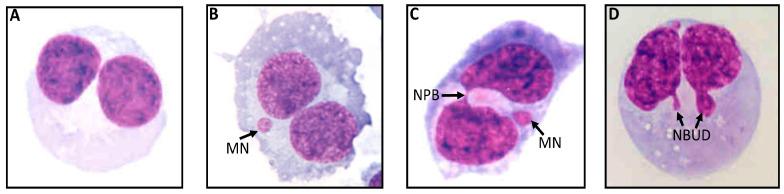
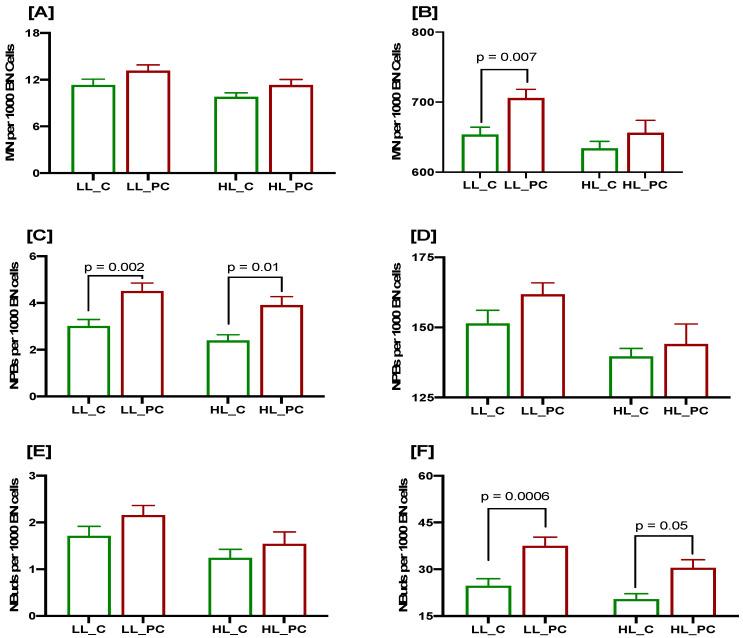
Almost half of prostate cancer (PC) patients receive radiation therapy as primary curative treatment. In spite of advances in our understanding of both nutrition and the genomics of prostate cancer, studies on the effects of nutrients on the radiation sensitivity of PC patients are lacking. We tested the hypothesis that low plasma levels of selenium and lycopene have detrimental effects on ionising radiation-induced DNA damage in prostate cancer patients relative to healthy individuals. The present study was performed in 106 PC patients and 132 age-matched controls. We found that the radiation-induced micronucleus (MN) and nuclear buds (NBuds) frequencies were significantly higher in PC patients with low selenium ( = 0.008 and = 0.0006 respectively) or low lycopene ( = 0.007 and = 0.0006 respectively) levels compared to the controls. The frequency of NBuds was significantly higher ( < 0.0001) in PC patients who had low levels of both selenium and lycopene compared to (i) controls with low levels of both selenium and lycopene and (ii) PC patients with high levels of both selenium and lycopene ( = 0.0001). Our results support the hypothesis that low selenium and lycopene levels increase the sensitivity to radiation-induced DNA damage and suggest that nutrition-based treatment strategies are important to minimise the DNA-damaging effects in PC patients receiving radiotherapy.
几乎一半的前列腺癌(PC)患者接受放射治疗作为主要的根治性治疗。尽管我们对前列腺癌的营养和基因组学的理解有所进步,但关于营养素对PC患者放射敏感性影响的研究仍然缺乏。我们检验了这样一个假设:相对于健康个体,前列腺癌患者血浆中硒和番茄红素水平较低会对电离辐射诱导的DNA损伤产生有害影响。本研究对106例PC患者和132例年龄匹配的对照者进行。我们发现,与对照组相比,低硒(分别为P = 0.008和P = 0.0006)或低番茄红素(分别为P = 0.007和P = 0.0006)水平的PC患者中,辐射诱导的微核(MN)和核芽(NBuds)频率显著更高。与(i)低硒和低番茄红素水平的对照组以及(ii)高硒和高番茄红素水平的PC患者相比,同时具有低硒和低番茄红素水平的PC患者中NBuds频率显著更高(P < 0.0001)(P = 0.0001)。我们的结果支持了低硒和低番茄红素水平会增加对辐射诱导的DNA损伤敏感性这一假设,并表明基于营养的治疗策略对于将接受放疗的PC患者的DNA损伤效应降至最低很重要。


 Zotero 插件