
刚地弓形虫 AP2XII-2 有助于性承诺的转录抑制。
Toxoplasma gondii AP2XII-2 Contributes to Transcriptional Repression for Sexual Commitment.
机构信息
Department of Pharmacology and Toxicology, Indiana University School of Medicine, Indianapolis, Indiana, USA.
Department of Global Health, University of South Florida, Tampa, Florida, USA.
出版信息
mSphere. 2023 Apr 20;8(2):e0060622. doi: 10.1128/msphere.00606-22. Epub 2023 Feb 14.
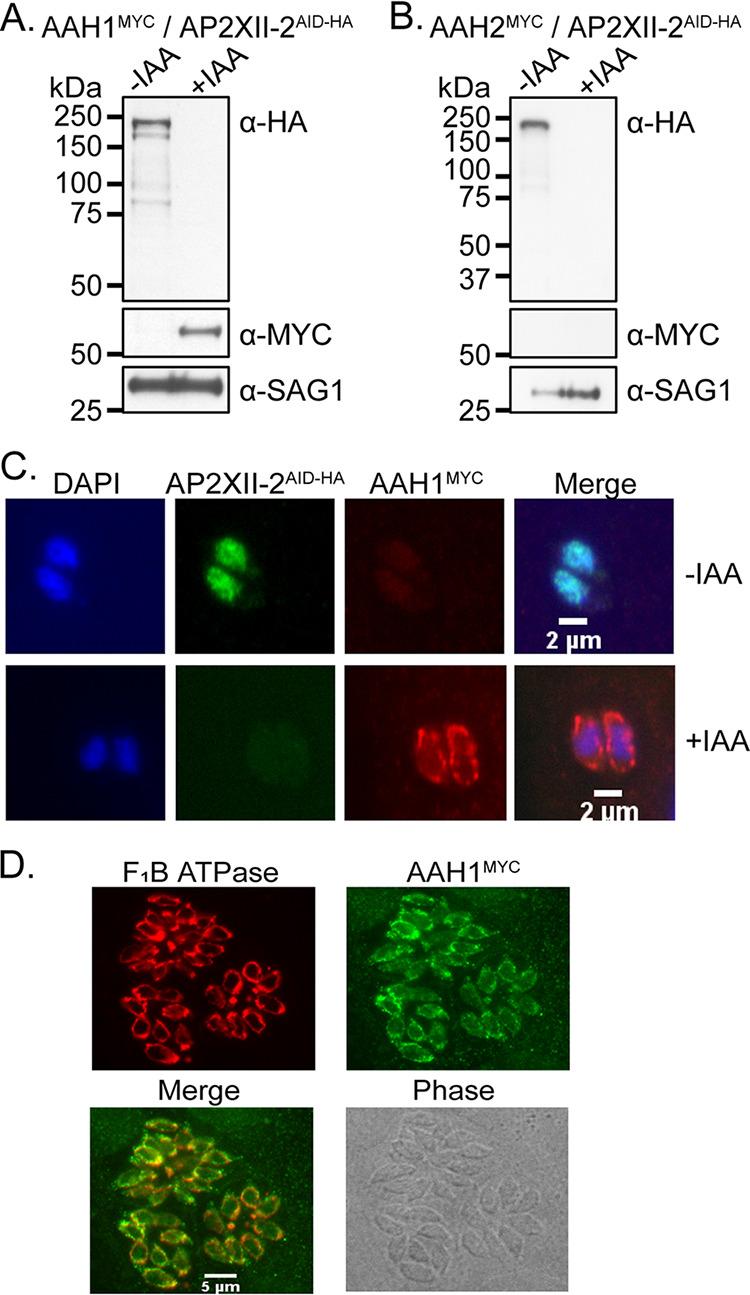
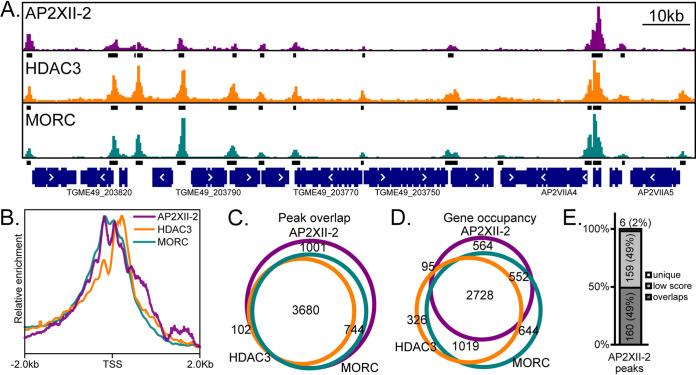
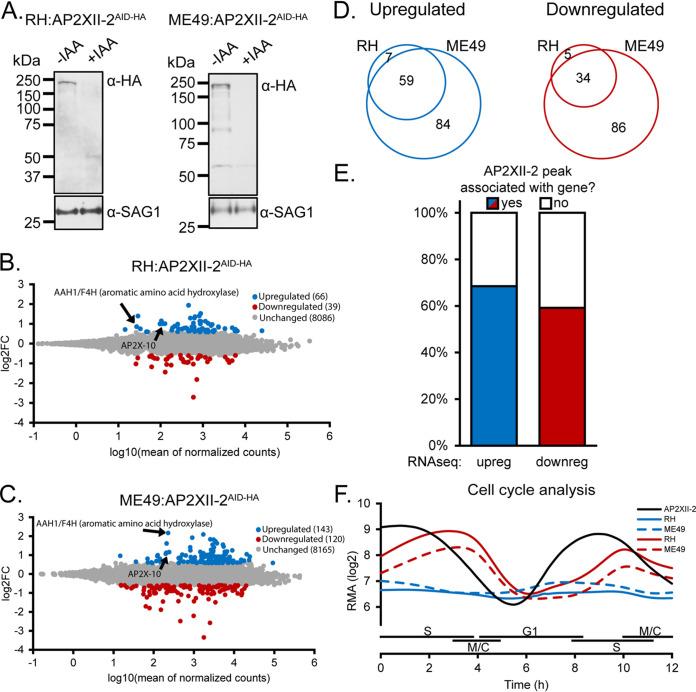
Toxoplasma gondii is a widespread protozoan parasite that has a significant impact on human and veterinary health. The parasite undergoes a complex life cycle involving multiple hosts and developmental stages. How transitions between life cycle stages is poorly understood yet central to controlling transmission. Of particular neglect are the factors that contribute to its sexual development, which takes place exclusively in feline intestines. While epigenetic repressors have been shown to play an important role in silencing the spurious gene expression of sexually committed parasites, the specific factors that recruit this generalized machinery to the appropriate genes remain largely unexplored. Here, we establish that a member of the AP2 transcription factor family, AP2XII-2, is targeted to genomic loci associated with sexually committed parasites along with epigenetic regulators of transcriptional silencing, HDAC3 and MORC. Despite its widespread association with gene promoters, AP2XII-2 is required for the silencing of relatively few genes. Using the CUT&Tag (cleavage under targets and tagmentation) methodology, we identify two major genes associated with sexual development downstream of AP2XII-2 control, AP2X-10 and the amino acid hydroxylase AAH1. Our findings show that AP2XII-2 is a key contributor to the gene regulatory pathways modulating sexual development. Toxoplasma gondii is a parasite that undergoes its sexual stage exclusively in feline intestines, making cats a major source of transmission. A better understanding of the proteins controlling the parasite's life cycle stage transitions is needed for the development of new therapies aimed at treating toxoplasmosis and the transmission of the infection. Genes that regulate the sexual stages need to be turned on and off at the appropriate times, activities that are mediated by specific transcription factors that recruit general machinery to silence or activate gene expression. In this study, we identify a transcription factor called AP2XII-2 as being important for the repression of a subset of sexual stage genes, including a sexual stage-specific AP2 factor (AP2X-10) and a protein (AAH1) required to construct the infectious oocysts expelled from infected cats.
刚地弓形虫是一种广泛存在的原生动物寄生虫,对人类和兽医健康有重大影响。该寄生虫经历了一个复杂的生命周期,涉及多个宿主和发育阶段。生命周期阶段之间的 转换尚不清楚,但对控制传播至关重要。特别被忽视的是导致其性发育的因素,性发育仅发生在猫的肠道中。虽然表观遗传抑制剂已被证明在沉默性寄生虫的虚假基因表达中发挥重要作用,但将这种通用机制招募到适当基因的具体因素在很大程度上仍未得到探索。在这里,我们确定了 AP2 转录因子家族的一个成员,AP2XII-2,与性寄生虫相关的基因组位点以及转录沉默的表观遗传调节剂 HDAC3 和 MORC 一起被靶向。尽管它与基因启动子广泛相关,但 AP2XII-2 对于沉默相对较少的基因是必需的。使用 CUT&Tag(在目标下切割和标签化)方法,我们确定了与 AP2XII-2 控制的下游性发育相关的两个主要基因,AP2X-10 和氨基酸羟化酶 AAH1。我们的研究结果表明,AP2XII-2 是调节 性发育的基因调控途径的关键贡献者。 刚地弓形虫是一种寄生虫,其性阶段仅在猫的肠道中进行,这使得猫成为主要的传播来源。为了开发旨在治疗弓形虫病和感染传播的新疗法,需要更好地了解控制寄生虫生命周期阶段转换的蛋白质。调节性阶段的基因需要在适当的时间打开和关闭,这些活动由特定的转录因子介导,这些转录因子招募通用机制来沉默或激活基因表达。在这项研究中,我们确定了一种称为 AP2XII-2 的转录因子,它对于抑制一组性阶段基因很重要,包括一个性阶段特异性的 AP2 因子(AP2X-10)和一个蛋白质(AAH1),它是从感染猫中排出的传染性卵囊所必需的。

 Zotero 插件