
肠道细菌在炎症性肠病中的诊断和预后潜力。
The diagnostic and prognostic potential of gut bacteria in inflammatory bowel disease.
机构信息
Key Laboratory of Medical Science and Laboratory Medicine of Jiangsu Province, School of Medicine, Jiangsu University, Zhenjiang, P.R. China.
Directorate of University Health Services, University of Cape Coast, PMB, Cape Coast, Ghana.
出版信息
Gut Microbes. 2023 Jan-Dec;15(1):2176118. doi: 10.1080/19490976.2023.2176118.
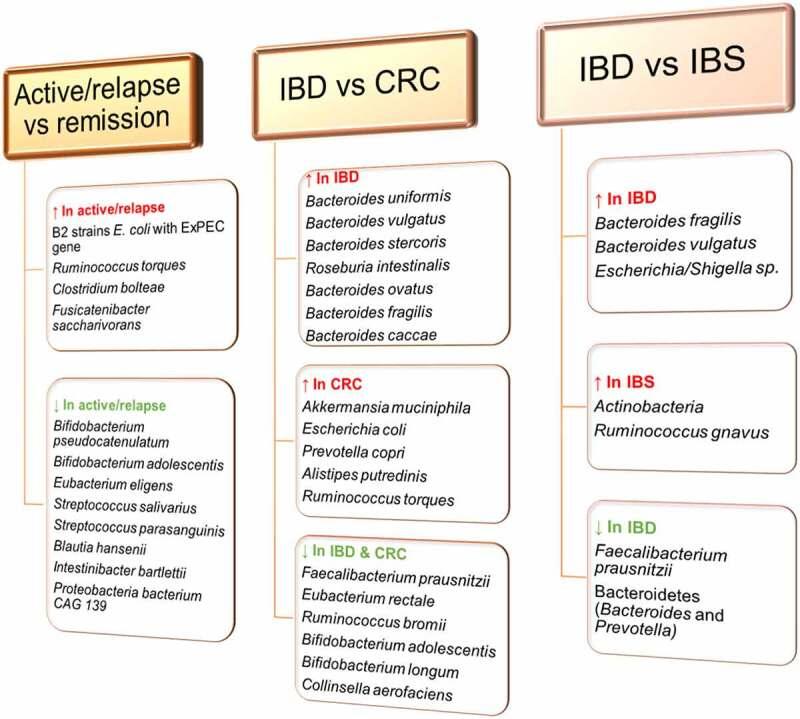
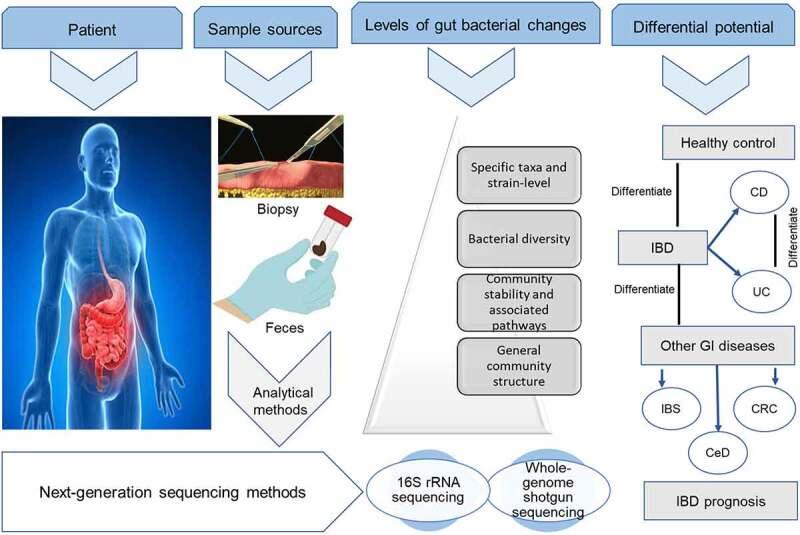
The gut microbiome serves as a signaling hub that integrates environmental inputs with genetic and immune signals to influence the host's metabolism and immunity. Gut bacteria are intricately connected with human health and disease state, with specific bacteria species driving the characteristic dysbiosis found in gastrointestinal conditions such as inflammatory bowel disease (IBD); thus, gut bacteria changes could be harnessed to improve IBD diagnosis, prognosis, and treatment. The advancement in next-generation sequencing techniques such as 16S rRNA and whole-genome shotgun sequencing has allowed the exploration of the complexity of the gut microbial ecosystem with high resolution. Current microbiome data is promising and appears to perform better in some studies than the currently used fecal inflammation biomarker, calprotectin, in predicting IBD from healthy controls and irritable bowel syndrome (IBS). This study reviews current data on the differential potential of gut bacteria within IBD cohorts, and between IBD and other gastrointestinal diseases.
肠道微生物组作为一个信号枢纽,将环境输入与遗传和免疫信号整合在一起,影响宿主的代谢和免疫。肠道细菌与人类健康和疾病状态密切相关,特定的细菌种类驱动着胃肠道疾病(如炎症性肠病[IBD])中发现的特征性菌群失调;因此,肠道细菌的变化可以被利用来改善 IBD 的诊断、预后和治疗。下一代测序技术(如 16S rRNA 和全基因组鸟枪法测序)的进步使得可以高分辨率地探索肠道微生物生态系统的复杂性。目前的微生物组数据很有前景,在某些研究中似乎比目前用于预测 IBD 从健康对照和肠易激综合征(IBS)的粪便炎症生物标志物钙卫蛋白表现更好。本研究综述了目前关于 IBD 队列中肠道细菌的差异潜力,以及 IBD 与其他胃肠道疾病之间的差异潜力。
 Zotero 插件