
运动过程中骨骼肌疲劳发展中的内源性和外源性抗氧化剂
Endogenous and Exogenous Antioxidants in Skeletal Muscle Fatigue Development during Exercise.
作者信息
Supruniuk Elżbieta, Górski Jan, Chabowski Adrian
机构信息
Department of Physiology, Medical University of Białystok, 15-222 Białystok, Poland.
Department of Medical Sciences, Academy of Applied Sciences, 18-400 Łomża, Poland.
出版信息
Antioxidants (Basel). 2023 Feb 16;12(2):501. doi: 10.3390/antiox12020501.
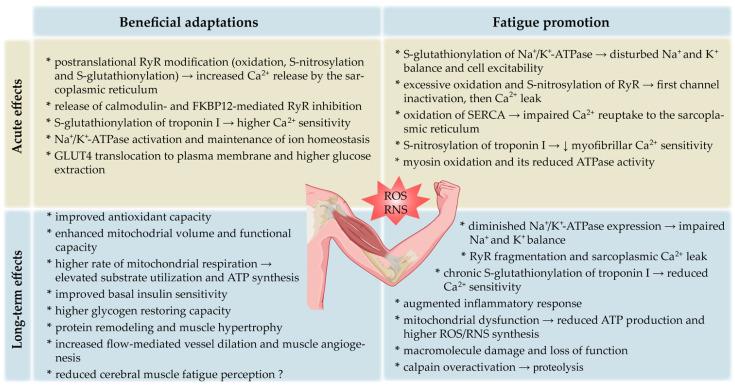
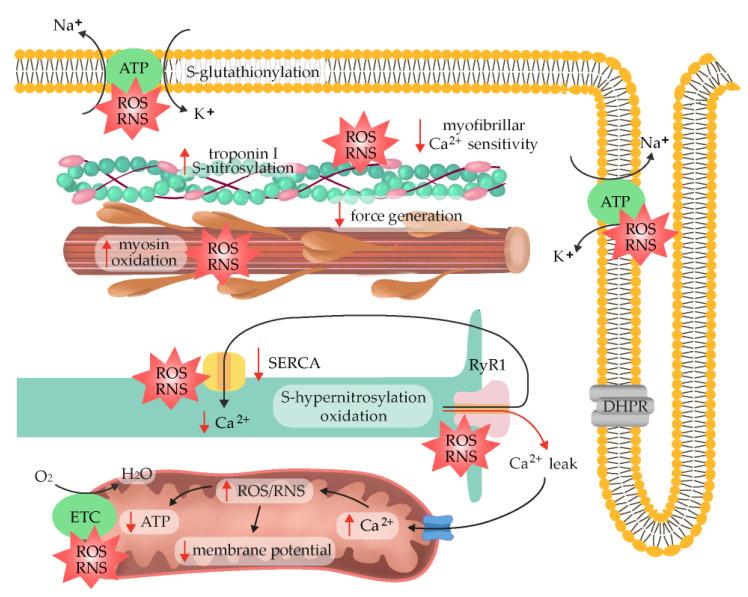
Muscle fatigue is defined as a decrease in maximal force or power generated in response to contractile activity, and it is a risk factor for the development of musculoskeletal injuries. One of the many stressors imposed on skeletal muscle through exercise is the increased production of reactive oxygen species (ROS) and reactive nitrogen species (RNS), which intensifies as a function of exercise intensity and duration. Exposure to ROS/RNS can affect Na/K-ATPase activity, intramyofibrillar calcium turnover and sensitivity, and actin-myosin kinetics to reduce muscle force production. On the other hand, low ROS/RNS concentrations can likely upregulate an array of cellular adaptative responses related to mitochondrial biogenesis, glucose transport and muscle hypertrophy. Consequently, growing evidence suggests that exogenous antioxidant supplementation might hamper exercise-engendering upregulation in the signaling pathways of mitogen-activated protein kinases (MAPKs), peroxisome-proliferator activated co-activator 1α (PGC-1α), or mammalian target of rapamycin (mTOR). Ultimately, both high (exercise-induced) and low (antioxidant intervention) ROS concentrations can trigger beneficial responses as long as they do not override the threshold range for redox balance. The mechanisms underlying the two faces of ROS/RNS in exercise, as well as the role of antioxidants in muscle fatigue, are presented in detail in this review.
肌肉疲劳被定义为因收缩活动而产生的最大力量或功率的下降,并且它是肌肉骨骼损伤发生的一个风险因素。通过运动施加于骨骼肌的众多应激源之一是活性氧(ROS)和活性氮(RNS)生成增加,其随着运动强度和持续时间的增加而增强。暴露于ROS/RNS会影响钠钾ATP酶活性、肌原纤维内钙周转和敏感性以及肌动蛋白-肌球蛋白动力学,从而降低肌肉力量产生。另一方面,低浓度的ROS/RNS可能会上调一系列与线粒体生物发生、葡萄糖转运和肌肉肥大相关的细胞适应性反应。因此,越来越多的证据表明,外源性抗氧化剂补充可能会阻碍运动引起的丝裂原活化蛋白激酶(MAPK)、过氧化物酶体增殖物激活受体γ共激活因子1α(PGC-1α)或雷帕霉素靶蛋白(mTOR)信号通路的上调。最终,只要不超过氧化还原平衡的阈值范围,高浓度(运动诱导)和低浓度(抗氧化剂干预)的ROS都可以触发有益反应。本文详细阐述了运动中ROS/RNS两面性的潜在机制以及抗氧化剂在肌肉疲劳中的作用。


 Zotero 插件