
高龄父亲对生育能力和后代遗传疾病风险的影响。
Impact of Advanced Paternal Age on Fertility and Risks of Genetic Disorders in Offspring.
机构信息
Laboratory of Spermatology, Department of Urology, Faculty of Medicine, School of Health Sciences, University of Ioannina, 45110 Ioannina, Greece.
Laboratory of Medical Genetics in Clinical Practice, Faculty of Medicine, School of Health Sciences, University of Ioannina, 45110 Ioannina, Greece.
出版信息
Genes (Basel). 2023 Feb 14;14(2):486. doi: 10.3390/genes14020486.
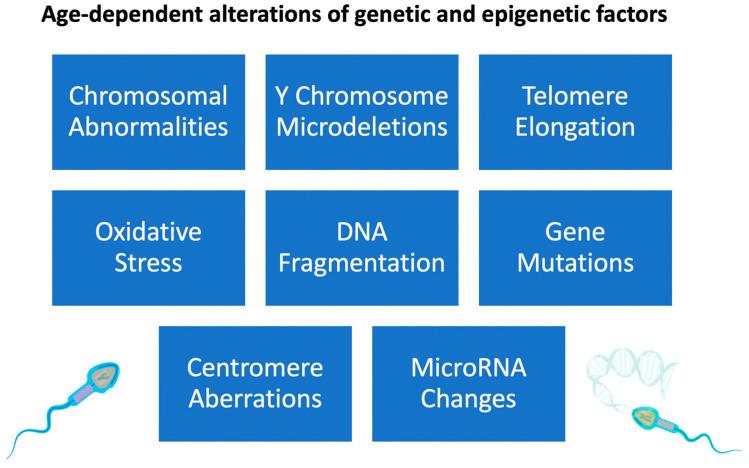
The average age of fathers at first pregnancy has risen significantly over the last decade owing to various variables, including a longer life expectancy, more access to contraception, later marriage, and other factors. As has been proven in several studies, women over 35 years of age have an increased risk of infertility, pregnancy problems, spontaneous abortion, congenital malformations, and postnatal issues. There are varying opinions on whether a father's age affects the quality of his sperm or his ability to father a child. First, there is no single accepted definition of old age in a father. Second, much research has reported contradictory findings in the literature, particularly concerning the most frequently examined criteria. Increasing evidence suggests that the father's age contributes to his offspring's higher vulnerability to inheritable diseases. Our comprehensive literature evaluation shows a direct correlation between paternal age and decreased sperm quality and testicular function. Genetic abnormalities, such as DNA mutations and chromosomal aneuploidies, and epigenetic modifications, such as the silencing of essential genes, have all been linked to the father's advancing years. Paternal age has been shown to affect reproductive and fertility outcomes, such as the success rate of in vitro fertilisation (IVF), intracytoplasmic sperm injection (ICSI), and premature birth rate. Several diseases, including autism, schizophrenia, bipolar disorders, and paediatric leukaemia, have been linked to the father's advanced years. Therefore, informing infertile couples of the alarming correlations between older fathers and a rise in their offspring's diseases is crucial, so that they can be effectively guided through their reproductive years.
由于各种因素,包括预期寿命延长、更多的避孕措施、晚婚等,过去十年来,初为人父的平均年龄显著上升。正如多项研究证明的那样,35 岁以上的女性不孕、妊娠问题、自然流产、先天畸形和产后问题的风险增加。关于父亲的年龄是否会影响精子质量或生育能力,存在不同的观点。首先,父亲年龄大的定义没有一个统一的标准。其次,许多研究在文献中报告了相互矛盾的发现,特别是在最常被检查的标准方面。越来越多的证据表明,父亲的年龄会导致他的后代更容易患上遗传性疾病。我们对文献的综合评估表明,父亲的年龄与精子质量和睾丸功能下降之间存在直接关联。遗传异常,如 DNA 突变和染色体非整倍体,以及表观遗传修饰,如关键基因沉默,都与父亲年龄的增长有关。父亲年龄已被证明会影响生殖和生育结果,例如体外受精(IVF)、胞浆内单精子注射(ICSI)的成功率和早产率。一些疾病,包括自闭症、精神分裂症、双相情感障碍和小儿白血病,都与父亲年龄较大有关。因此,告知不孕夫妇年龄较大的父亲与他们的后代疾病发病率上升之间存在令人震惊的关联至关重要,以便在他们的生殖年龄阶段为他们提供有效的指导。

 Zotero 插件