
对医院中严重急性呼吸综合征冠状病毒2(SARS-CoV-2)RNA表面污染进行的一年监测显示,其与有机物质以及作为污染限制因素的负压之间不存在相关性。
One-year monitoring SARS-CoV-2 RNA surface contamination in hospitals reveals no correlation with organic material and negative pressure as a limiting factor for contamination.
作者信息
Pereira-Gómez Marianoel, Arce Rodrigo, Ferla Diego, Simón Diego, Salazar Cecilia, Perbolianachis Paula, Costábile Alicia, Fajardo Alvaro, Aldunate Fabián, Nin Nicolás, Hurtado Javier, Iraola Gregorio, Moreno Pilar, Moratorio Gonzalo
机构信息
Laboratorio de Evolución Experimental de Virus, Institut Pasteur de Montevideo, Uruguay.
Laboratorio de Virología Molecular, Facultad de Ciencias, Universidad de la República, Uruguay.
出版信息
Heliyon. 2023 Mar;9(3):e13875. doi: 10.1016/j.heliyon.2023.e13875. Epub 2023 Feb 18.
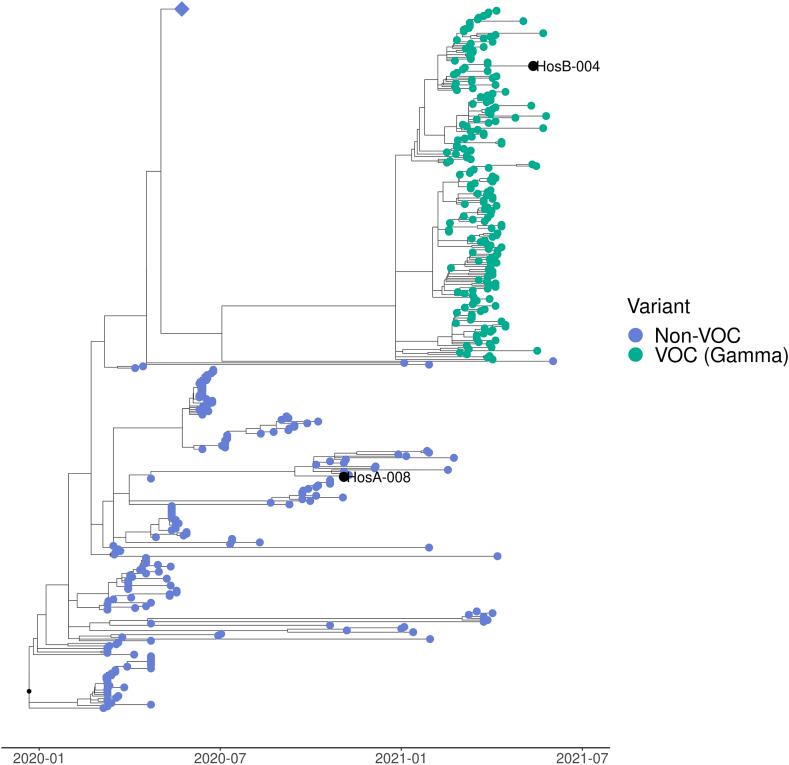
Understanding transmission routes of SARS-CoV-2 is crucial to establish effective interventions in healthcare institutions. Although the role of surface contamination in SARS-CoV-2 transmission has been controversial, fomites have been proposed as a contributing factor. Longitudinal studies about SARS-CoV-2 surface contamination in hospitals with different infrastructure (presence or absence of negative pressure systems) are needed to improve our understanding of their effectiveness on patient healthcare and to advance our knowledge about the viral spread. We performed a one-year longitudinal study to evaluate surface contamination with SARS-CoV-2 RNA in reference hospitals. These hospitals have to admit all COVID-19 patients from public health services that require hospitalization. Surfaces samples were molecular tested for SARS-CoV-2 RNA presence considering three factors: the dirtiness by measuring organic material, the circulation of a high transmissibility variant, and the presence or absence of negative pressure systems in hospitalized patients' rooms. Our results show that: (i) There is no correlation between the amount of organic material dirtiness and SARS-CoV-2 RNA detected on surfaces; (ii) SARS-CoV-2 high transmissible Gamma variant introduction significantly increased surface contamination; (iii) the hospital with negative pressure systems was associated with lower levels of SARS-CoV-2 surface contamination and, iv) most environmental samples recovered from contaminated surfaces were assigned as non-infectious. This study provides data gathered for one year about the surface contamination with SARS-CoV-2 RNA sampling hospital settings. Our results suggest that spatial dynamics of SARS-CoV-2 RNA contamination varies according with the type of SARS-CoV-2 genetic variant and the presence of negative pressure systems. In addition, we showed that there is no correlation between the amount of organic material dirtiness and the quantity of viral RNA detected in hospital settings. Our findings suggest that SARS CoV-2 RNA surface contamination monitoring might be useful for the understanding of SARS-CoV-2 dissemination with impact on hospital management and public health policies. This is of special relevance for the Latin-American region where ICU rooms with negative pressure are insufficient.
了解严重急性呼吸综合征冠状病毒2(SARS-CoV-2)的传播途径对于在医疗机构建立有效的干预措施至关重要。尽管表面污染在SARS-CoV-2传播中的作用一直存在争议,但已有人提出污染物是一个促成因素。需要对具有不同基础设施(有无负压系统)的医院进行SARS-CoV-2表面污染的纵向研究,以增进我们对其在患者医疗保健方面有效性的理解,并推进我们对病毒传播的认识。我们进行了一项为期一年的纵向研究,以评估参考医院中SARS-CoV-2 RNA的表面污染情况。这些医院必须接收来自公共卫生服务机构需要住院治疗的所有新冠肺炎患者。考虑到三个因素,对表面样本进行了SARS-CoV-2 RNA存在情况的分子检测:通过测量有机物质来评估污染程度、高传播性变异株的传播情况以及住院患者病房中有无负压系统。我们的结果表明:(i)表面检测到的有机物质污染量与SARS-CoV-2 RNA之间没有相关性;(ii)SARS-CoV-2高传播性伽马变异株的引入显著增加了表面污染;(iii)设有负压系统的医院SARS-CoV-2表面污染水平较低,以及(iv)从受污染表面采集的大多数环境样本被判定为无传染性。本研究提供了关于医院环境中SARS-CoV-2 RNA采样表面污染情况的一年数据收集。我们的结果表明,SARS-CoV-2 RNA污染的空间动态因SARS-CoV-2基因变异类型和负压系统的存在与否而有所不同。此外,我们表明医院环境中有机物质污染量与检测到的病毒RNA数量之间没有相关性。我们的研究结果表明,SARS-CoV-2 RNA表面污染监测可能有助于了解SARS-CoV-2的传播,对医院管理和公共卫生政策产生影响。这对拉丁美洲地区尤为重要,因为该地区负压重症监护病房不足。


 Zotero 插件