
巴西南部出现新冠病毒“德尔塔克戎”变体的平行进化初期情况。
Incipient Parallel Evolution of SARS-CoV-2 Deltacron Variant in South Brazil.
作者信息
Sant'Anna Fernando Hayashi, Finger Andreis Tiago, Salvato Richard Steiner, Muterle Varela Ana Paula, Comerlato Juliana, Gregianini Tatiana Schäffer, Barcellos Regina Bones, de Souza Godinho Fernanda Marques, Resende Paola Cristina, da Luz Wallau Gabriel, Y Castro Thaís Regina, Casarin Bruna Campestrini, de Almeida Vieira Andressa, Schwarzbold Alexandre Vargas, de Arruda Trindade Priscila, Tumioto Giannini Gabriela Luchiari, Freese Luana, Bristot Giovana, Brasil Carolina Serpa, de Oliveira Rocha Bruna, Martins Paloma Bortolini, de Oliveira Francine Hehn, van Oosterhout Cock, Wendland Eliana
机构信息
Hospital Moinhos de Vento, Porto Alegre 90035-000, RS, Brazil.
Centro de Desenvolvimento Científico e Tecnológico, Centro Estadual de Vigilância em Saúde, Secretaria Estadual da Saúde do Rio Grande do Sul (CDCT/CEVS/SES-RS), Porto Alegre 90450-190, RS, Brazil.
出版信息
Vaccines (Basel). 2023 Jan 18;11(2):212. doi: 10.3390/vaccines11020212.
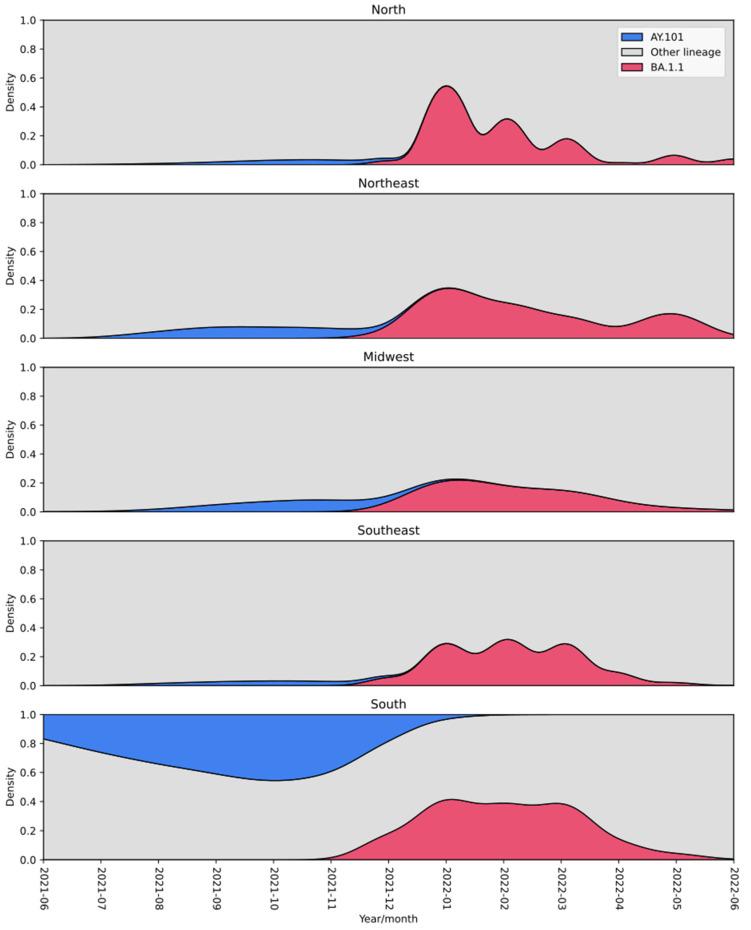
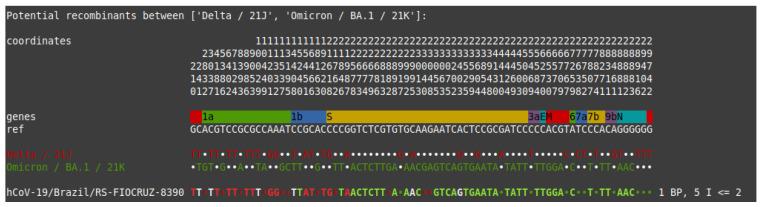
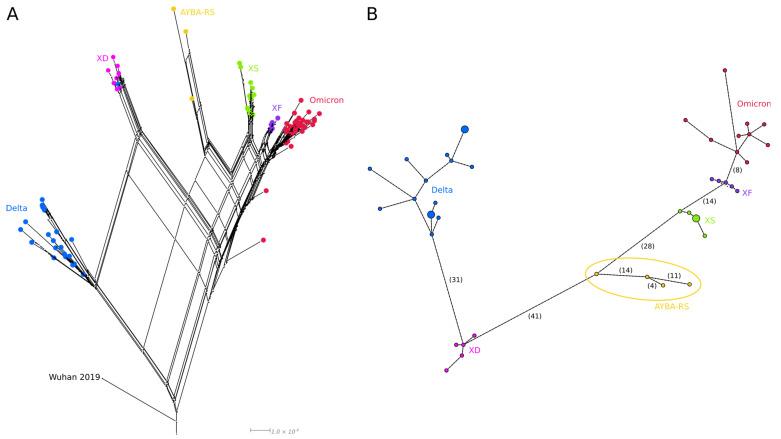
With the coexistence of multiple lineages and increased international travel, recombination and gene flow are likely to become increasingly important in the adaptive evolution of SARS-CoV-2. These processes could result in genetic introgression and the incipient parallel evolution of multiple recombinant lineages. However, identifying recombinant lineages is challenging, and the true extent of recombinant evolution in SARS-CoV-2 may be underestimated. This study describes the first SARS-CoV-2 Deltacron recombinant case identified in Brazil. We demonstrate that the recombination breakpoint is at the beginning of the Spike gene. The 5' genome portion (circa 22 kb) resembles the AY.101 (Delta), and the 3' genome portion (circa 8 kb nucleotides) is most similar to the BA.1.1 (Omicron). Furthermore, evolutionary genomic analyses indicate that the new strain emerged after a single recombination event between lineages of diverse geographical locations in December 2021 in South Brazil. This Deltacron, AYBA-RS, is one of the dozens of recombinants described in 2022. The submission of only four sequences in the GISAID database suggests that this lineage had a minor epidemiological impact. However, the recent emergence of this and other Deltacron recombinant lineages (XD, XF, and XS) suggests that gene flow and recombination may play an increasingly important role in the COVID-19 pandemic. We explain the evolutionary and population genetic theory that supports this assertion, concluding that this stresses the need for continued genomic surveillance. This monitoring is vital for countries where multiple variants are present, as well as for countries that receive significant inbound international travel.
随着多种谱系的共存以及国际旅行的增加,重组和基因流动在严重急性呼吸综合征冠状病毒2(SARS-CoV-2)的适应性进化中可能会变得越来越重要。这些过程可能导致基因渗入以及多个重组谱系的初始平行进化。然而,识别重组谱系具有挑战性,SARS-CoV-2中重组进化的真实程度可能被低估。本研究描述了在巴西发现的首例SARS-CoV-2 Deltacron重组病例。我们证明重组断点位于刺突基因的起始处。基因组的5'部分(约22 kb)类似于AY.101(德尔塔),而3'基因组部分(约8 kb核苷酸)与BA.1.1(奥密克戎)最为相似。此外,进化基因组分析表明,这种新毒株于2021年12月在巴西南部不同地理位置的谱系之间发生单次重组事件后出现。这种Deltacron,即AYBA-RS,是2022年描述的众多重组毒株之一。全球共享流感数据倡议组织(GISAID)数据库中仅提交了四条序列,这表明该谱系的流行病学影响较小。然而,这种以及其他Deltacron重组谱系(XD、XF和XS)的近期出现表明,基因流动和重组可能在新冠疫情中发挥越来越重要的作用。我们解释了支持这一论断的进化和群体遗传学理论,得出结论认为这凸显了持续进行基因组监测的必要性。这种监测对于存在多种变体的国家以及接收大量国际入境旅客的国家至关重要。





 Zotero 插件