
异源初免-加强细胞免疫接种诱导针对三阴性乳腺癌的有效抗肿瘤免疫。
Heterologous prime-boost cellular vaccination induces potent antitumor immunity against triple negative breast cancer.
机构信息
Department of Immunology and Cell Biology, Université de Sherbrooke, Sherbrooke, QC, Canada.
Department of Medical Laboratory Technology, Faculty of Applied Medical Sciences, University of Tabuk, Tabuk, Saudi Arabia.
出版信息
Front Immunol. 2023 Feb 13;14:1098344. doi: 10.3389/fimmu.2023.1098344. eCollection 2023.
INTRODUCTION
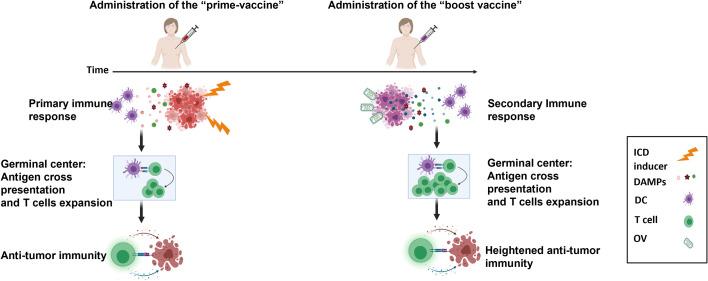
Triple negative breast cancer (TNBC) is the most aggressive and hard-to-treat subtype of breast cancer, affecting 10-20% of all women diagnosed with breast cancer. Surgery, chemotherapy and hormone/Her2 targeted therapies are the cornerstones of treatment for breast cancer, but women with TNBC do not benefit from these treatments. Although the prognosis is dismal, immunotherapies hold significant promise in TNBC, even in wide spread disease because TNBC is infiltrated with more immune cells. This preclinical study is proposing to optimize an oncolytic virus-infected cell vaccine (ICV) based on a prime-boost vaccination strategy to address this unmet clinical need.
METHODS
We used various classes of immunomodulators to improve the immunogenicity of whole tumor cells in the prime vaccine, followed by their infection with oncolytic Vesicular Stomatitis Virus (VSVd51) to deliver the boost vaccine. For in vivo studies, we compared the efficacy of a homologous prime-boost vaccination regimen to a heterologous strategy by treating 4T1 tumor bearing BALB/c mice and further by conducting re-challenge studies to evaluate immune memory responses in surviving mice. Due to the aggressive nature of 4T1 tumor spread (akin to stage IV TNBC in human patients), we also compared early surgical resection of primary tumors versus later surgical resection combined with vaccination.
RESULTS
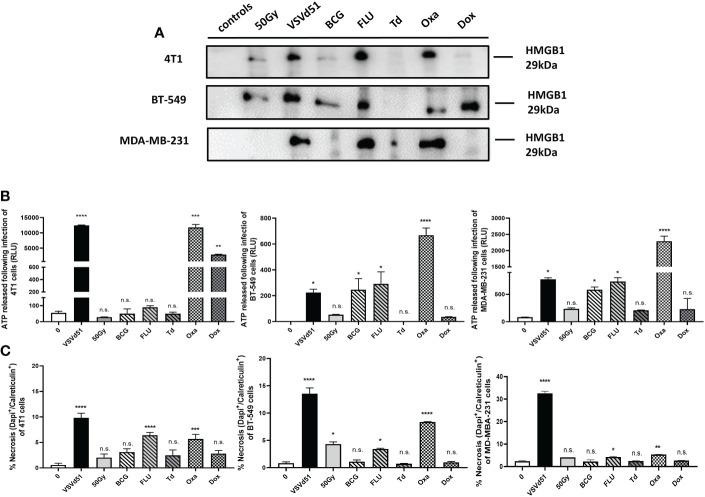
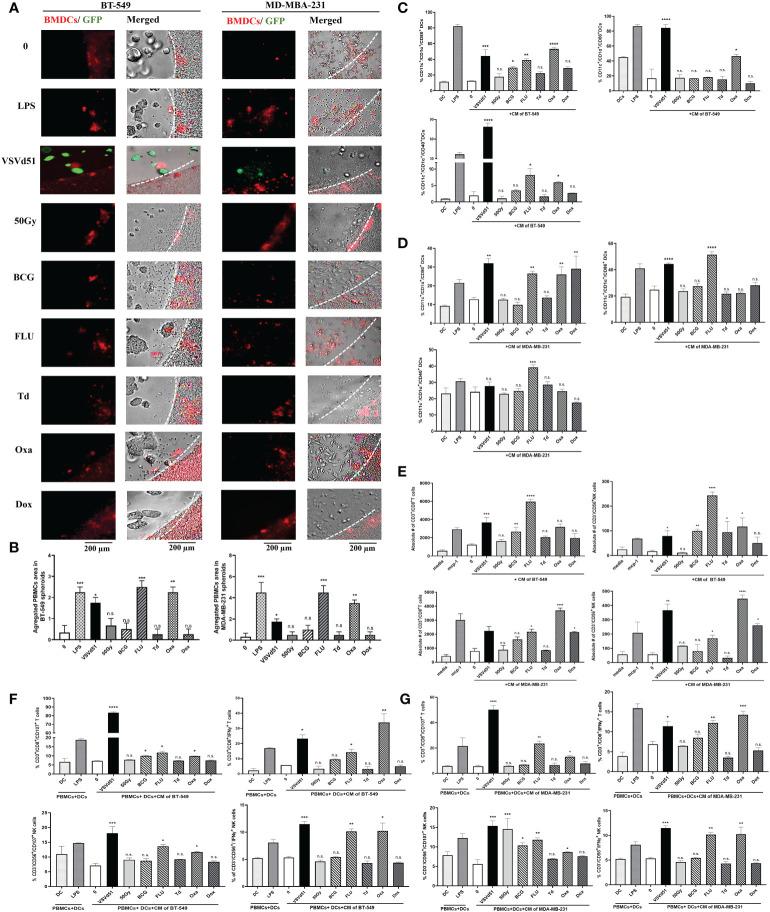
results demonstrated that immunogenic cell death (ICD) markers and pro-inflammatory cytokines were released at the highest levels following treatment of mouse 4T1 TNBC cells with oxaliplatin chemotherapy and influenza vaccine. These ICD inducers also contributed towards higher dendritic cell recruitment and activation. With the top ICD inducers at hand, we observed that treatment of TNBC-bearing mice with the influenza virus-modified prime vaccine followed by VSVd51 infected boost vaccine resulted in the best survival. Furthermore, higher frequencies of both effector and central memory T cells along with a complete absence of recurrent tumors were observed in re-challenged mice. Importantly, early surgical resection combined with prime-boost vaccination led to improved overall survival in mice.
CONCLUSION
Taken together, this novel cancer vaccination strategy following early surgical resection could be a promising therapeutic avenue for TNBC patients.
简介
三阴性乳腺癌(TNBC)是最具侵袭性和难以治疗的乳腺癌亚型,影响所有乳腺癌患者的 10-20%。手术、化疗和激素/Her2 靶向治疗是乳腺癌治疗的基石,但 TNBC 患者不能从这些治疗中获益。尽管预后不佳,但免疫疗法在 TNBC 中具有重要的应用前景,甚至在广泛传播的疾病中也是如此,因为 TNBC 中浸润了更多的免疫细胞。这项临床前研究旨在提出一种优化的基于起始-加强免疫接种策略的溶瘤病毒感染细胞疫苗(ICV),以解决这一未满足的临床需求。
方法
我们使用了各种免疫调节剂来提高起始疫苗中全肿瘤细胞的免疫原性,然后用溶瘤性水疱性口炎病毒(VSVd51)感染它们,以提供加强疫苗。在体内研究中,我们通过治疗 4T1 荷瘤 BALB/c 小鼠,并进一步进行再挑战研究来评估存活小鼠的免疫记忆反应,比较了同源起始-加强免疫接种方案与异源策略的疗效。由于 4T1 肿瘤的侵袭性传播(类似于人类患者的 IV 期 TNBC),我们还比较了早期手术切除原发肿瘤与晚期手术切除联合疫苗接种的效果。
结果
结果表明,用奥沙利铂化疗和流感疫苗处理小鼠 4T1 TNBC 细胞后,释放出最高水平的免疫原性细胞死亡(ICD)标志物和促炎细胞因子。这些 ICD 诱导物也有助于更高水平的树突状细胞募集和激活。有了最佳的 ICD 诱导物,我们观察到用流感病毒修饰的起始疫苗治疗 TNBC 小鼠,然后用 VSVd51 感染的加强疫苗,可以获得最佳的生存。此外,在再挑战的小鼠中观察到更高频率的效应和中央记忆 T 细胞,以及完全没有复发性肿瘤。重要的是,早期手术切除联合起始-加强免疫接种可提高小鼠的总生存率。
结论
综上所述,这种新的癌症疫苗接种策略结合早期手术切除可能是 TNBC 患者有前途的治疗途径。



 Zotero 插件