
“疯狂之中自有方法”:对老年人家庭用药管理的定性研究
"There Is Method to This Madness" A Qualitative Investigation of Home Medication Management by Older Adults.
作者信息
Fadare Olajide, Witry Matthew
机构信息
Department of Pharmacy Practice and Science, University of Iowa College of Pharmacy, Iowa City, IA 52242, USA.
出版信息
Pharmacy (Basel). 2023 Feb 23;11(2):42. doi: 10.3390/pharmacy11020042.
OBJECTIVES
This paper explores (1) the systems and processes older adults use to manage medications at home, and (2) the well-being goals of personal interest that motivate them.
METHODS
Qualitative interviews were conducted in the homes of 12 older adults in a small city in the Midwest United States. Interviews were analyzed using inductive template analysis.
RESULTS
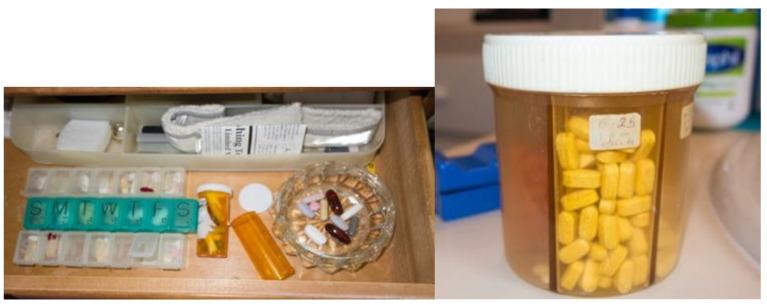
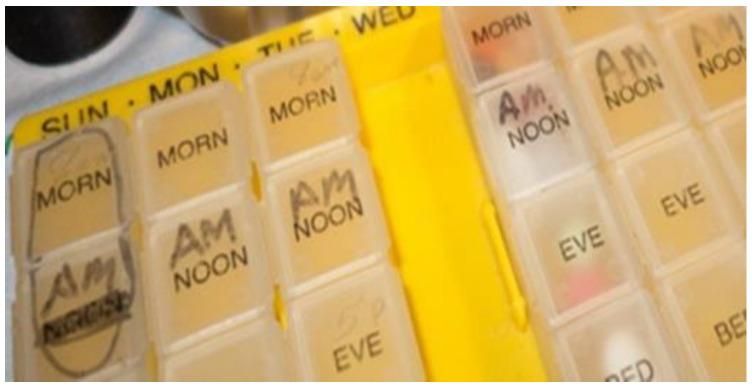
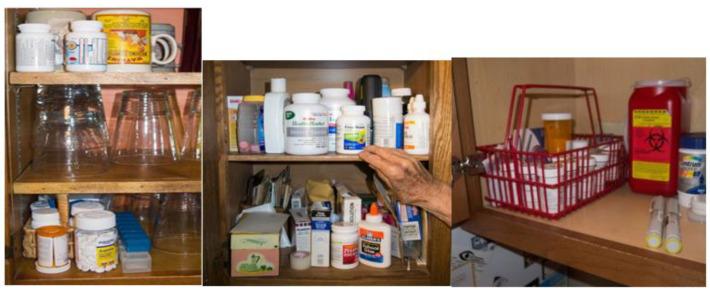
The average age of older adults in this study was 74.2 years (SD = 10.5), 66.7% were women. The most prominent home medication management tools used were pill boxes, containers and vials, and medication lists. Routines were often aligned with activities of daily living such as teeth brushing and eating. Their medication management work occurred in contexts of other household members and budget constraints. Routines and practices were sometimes idiosyncratic adaptations and supported goals of maintaining control and decreasing vulnerability.
CONCLUSION
In developing routines for home medication management, older adults developed systems and deliberate processes to make sense of their medication experiences in the context of their home environment and based on available resources.
目的
本文探讨(1)老年人在家中管理药物所使用的系统和流程,以及(2)促使他们这么做的个人兴趣方面的幸福目标。
方法
在美国中西部一个小城市的12位老年人家中进行了定性访谈。采用归纳模板分析法对访谈进行分析。
结果
本研究中老年人的平均年龄为74.2岁(标准差 = 10.5),66.7%为女性。使用最频繁的家庭药物管理工具是药盒、容器和药瓶,以及用药清单。日常安排通常与刷牙和吃饭等日常生活活动一致。他们的药物管理工作是在有其他家庭成员以及预算有限的情况下进行的。日常安排和做法有时是独特的适应方式,有助于实现保持控制和降低脆弱性的目标。
结论
在制定家庭药物管理的日常安排时,老年人开发了一些系统和精心设计的流程,以便在家庭环境中并基于可用资源来理解他们的用药体验。

 Zotero 插件