
低温电子显微镜揭示了一个前所未有的钠离子通道 Na1.7 抑制剂结合位点,使强效混合型抑制剂的合理设计成为可能。
Cryo-EM reveals an unprecedented binding site for Na1.7 inhibitors enabling rational design of potent hybrid inhibitors.
机构信息
Genentech Inc, Structural Biology, South San Francisco, United States.
Genentech Inc, Discovery Chemistry, South San Francisco, United States.
出版信息
Elife. 2023 Mar 28;12:e84151. doi: 10.7554/eLife.84151.
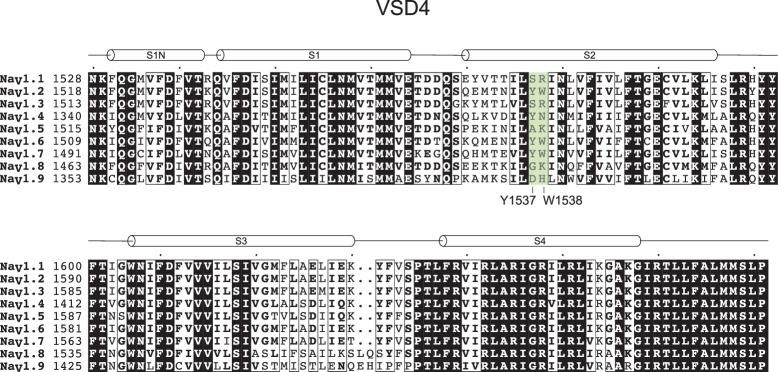
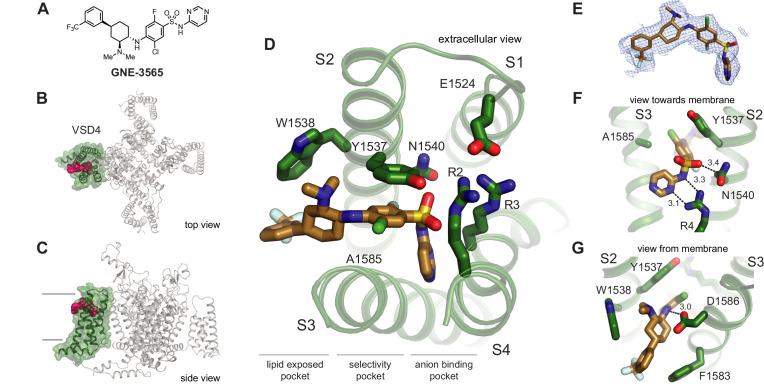
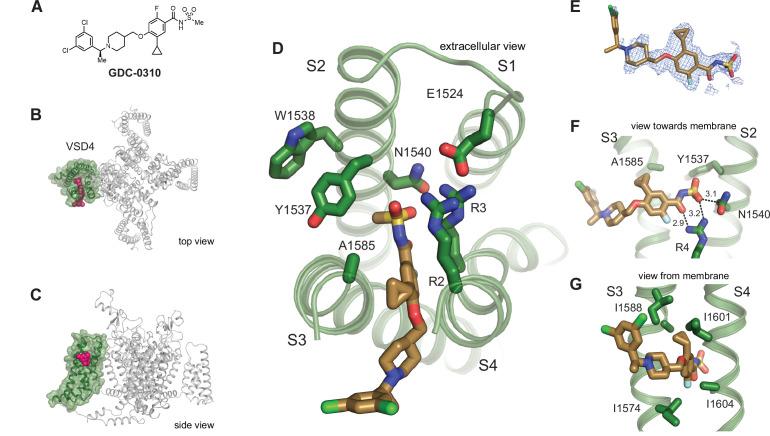
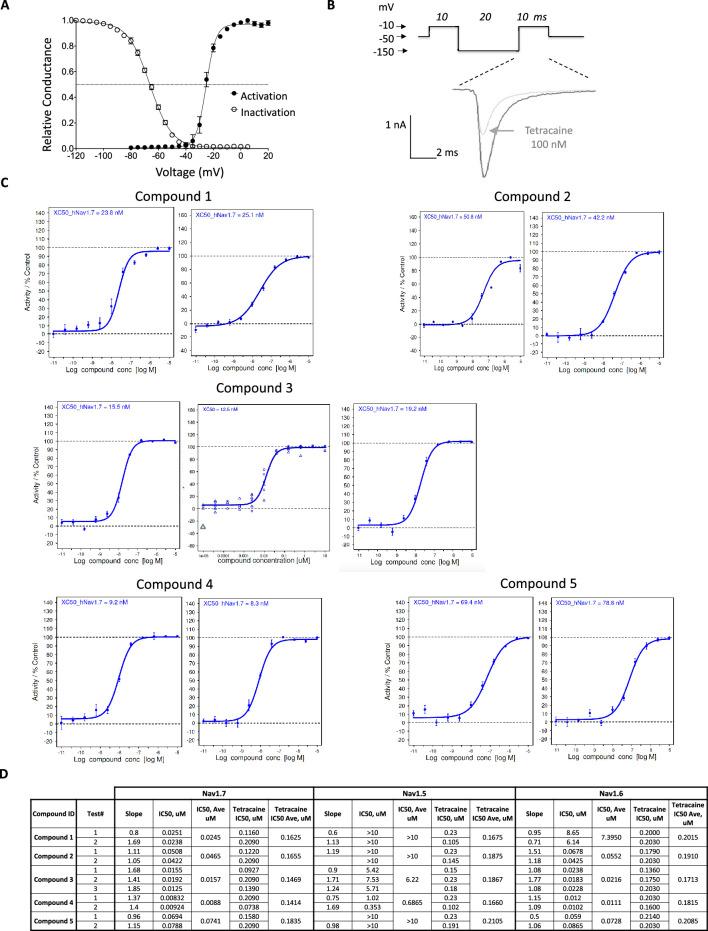
The voltage-gated sodium (Na) channel Na1.7 has been identified as a potential novel analgesic target due to its involvement in human pain syndromes. However, clinically available Na channel-blocking drugs are not selective among the nine Na channel subtypes, Na1.1-Na1.9. Moreover, the two currently known classes of Na1.7 subtype-selective inhibitors (aryl- and acylsulfonamides) have undesirable characteristics that may limit their development. To this point understanding of the structure-activity relationships of the acylsulfonamide class of Na1.7 inhibitors, exemplified by the clinical development candidate , has been based solely on a single co-crystal structure of an arylsulfonamide inhibitor bound to voltage-sensing domain 4 (VSD4). To advance inhibitor design targeting the Na1.7 channel, we pursued high-resolution ligand-bound Na1.7-VSD4 structures using cryogenic electron microscopy (cryo-EM). Here, we report that engages the Na1.7-VSD4 through an unexpected binding mode orthogonal to the arylsulfonamide inhibitor class binding pose, which identifies a previously unknown ligand binding site in Na channels. This finding enabled the design of a novel hybrid inhibitor series that bridges the aryl- and acylsulfonamide binding pockets and allows for the generation of molecules with substantially differentiated structures and properties. Overall, our study highlights the power of cryo-EM methods to pursue challenging drug targets using iterative and high-resolution structure-guided inhibitor design. This work also underscores an important role of the membrane bilayer in the optimization of selective Na channel modulators targeting VSD4.
电压门控钠离子 (Na) 通道 Na1.7 已被确定为一种有潜力的新型镇痛靶点,因为它与人类疼痛综合征有关。然而,临床可用的 Na 通道阻断药物在九种 Na 通道亚型(Na1.1-Na1.9)中没有选择性。此外,目前已知的两种 Na1.7 亚型选择性抑制剂(芳基和酰基磺酰胺)具有不理想的特性,可能限制其发展。到目前为止,对酰基磺酰胺类 Na1.7 抑制剂的结构-活性关系的理解,以临床开发候选物 为例,仅基于与电压感应域 4(VSD4)结合的芳基磺酰胺抑制剂的单一共晶结构。为了推进针对 Na1.7 通道的抑制剂设计,我们使用低温电子显微镜(cryo-EM)研究了高分辨率配体结合的 Na1.7-VSD4 结构。在这里,我们报告 以一种与芳基磺酰胺抑制剂类结合构象正交的意外结合模式与 Na1.7-VSD4 结合,这在 Na 通道中确定了一个以前未知的配体结合位点。这一发现使我们能够设计一种新型混合抑制剂系列,该抑制剂系列桥接芳基和酰基磺酰胺结合口袋,并允许生成具有显著不同结构和性质的分子。总的来说,我们的研究强调了 cryo-EM 方法在使用迭代和高分辨率结构导向抑制剂设计来探索具有挑战性的药物靶点方面的强大功能。这项工作还强调了膜双层在优化针对 VSD4 的选择性 Na 通道调节剂方面的重要作用。







 Zotero 插件