
NANOBODIES®:诊断和治疗应用的综述。
NANOBODIES®: A Review of Diagnostic and Therapeutic Applications.
机构信息
Laboratory for Biomedical Research, Ghent University Global Campus, Incheon 21985, Republic of Korea.
Department of Biotechnical and Diagnostic Sciences, College of Veterinary Medicine, Animal Resources and Biosecurity, Makerere University, Kampala 7062, Uganda.
出版信息
Int J Mol Sci. 2023 Mar 22;24(6):5994. doi: 10.3390/ijms24065994.
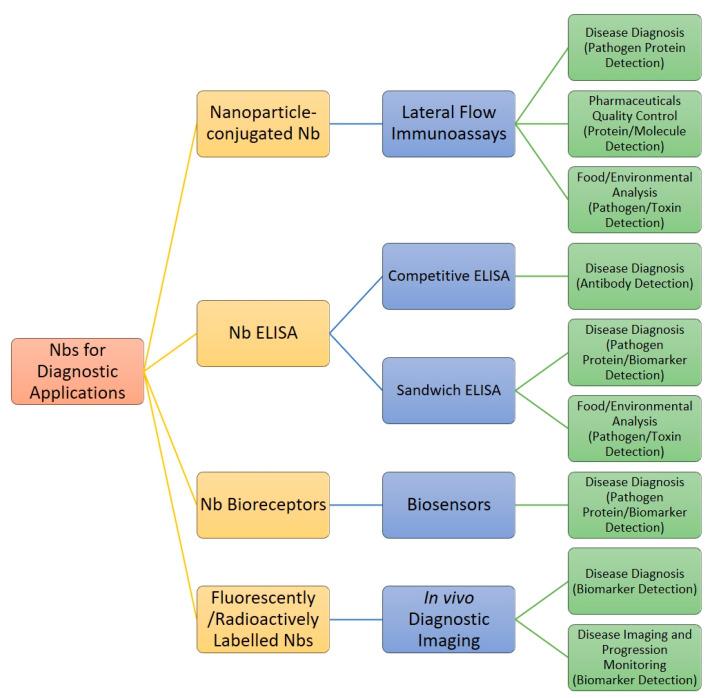
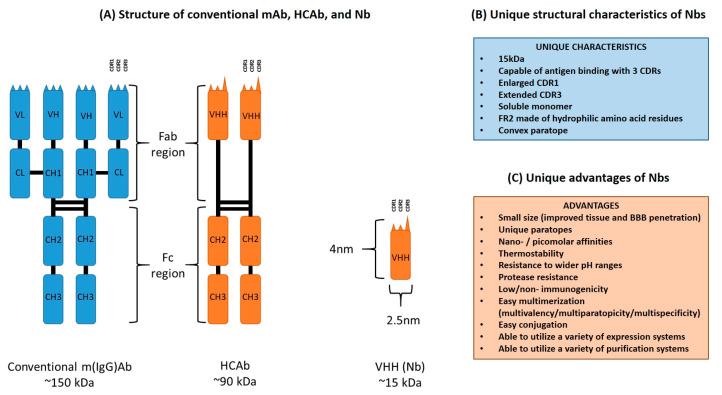
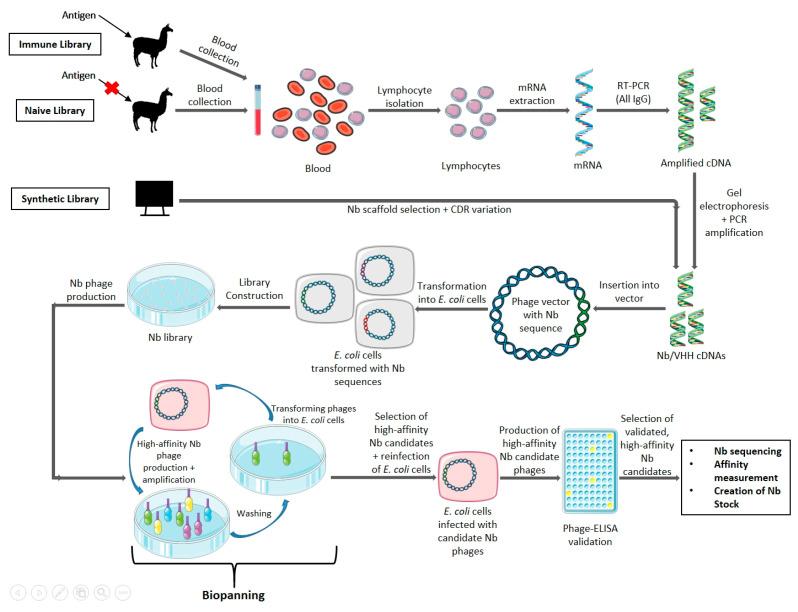
NANOBODY® (a registered trademark of Ablynx N.V) molecules (Nbs), also referred to as single domain-based VHHs, are antibody fragments derived from heavy-chain only IgG antibodies found in the family. Due to their small size, simple structure, high antigen binding affinity, and remarkable stability in extreme conditions, nanobodies possess the potential to overcome several of the limitations of conventional monoclonal antibodies. For many years, nanobodies have been of great interest in a wide variety of research fields, particularly in the diagnosis and treatment of diseases. This culminated in the approval of the world's first nanobody based drug (Caplacizumab) in 2018 with others following soon thereafter. This review will provide an overview, with examples, of (i) the structure and advantages of nanobodies compared to conventional monoclonal antibodies, (ii) methods used to generate and produce antigen-specific nanobodies, (iii) applications for diagnostics, and (iv) ongoing clinical trials for nanobody therapeutics as well as promising candidates for clinical development.
NANOBODY®(Ablynx N.V 的注册商标)分子(Nbs),也称为基于单结构域的 VHH,是源自重链仅免疫球蛋白 G 抗体的抗体片段,在 家族中发现。由于其体积小、结构简单、抗原结合亲和力高以及在极端条件下的显著稳定性,纳米抗体有可能克服传统单克隆抗体的许多限制。多年来,纳米抗体在广泛的研究领域都非常受关注,特别是在疾病的诊断和治疗方面。这最终导致 2018 年世界上第一个基于纳米抗体的药物(Caplacizumab)获得批准,随后不久又有其他药物获得批准。本文将通过示例,综述(i)与传统单克隆抗体相比,纳米抗体的结构和优势,(ii)用于产生和生产抗原特异性纳米抗体的方法,(iii)诊断应用,以及(iv)正在进行的纳米抗体治疗临床试验以及有希望进入临床开发的候选药物。

 Zotero 插件