
肿瘤转移定植中的氨基酸代谢重编程
Amino acid metabolic reprogramming in tumor metastatic colonization.
作者信息
Wang Zihao, Wu Xingyun, Chen Hai-Ning, Wang Kui
机构信息
Colorectal Cancer Center, West China Hospital, Sichuan University, Chengdu, China.
West China School of Basic Medical Science and Forensic Medicine, Sichuan University, Chengdu, China.
出版信息
Front Oncol. 2023 Mar 14;13:1123192. doi: 10.3389/fonc.2023.1123192. eCollection 2023.
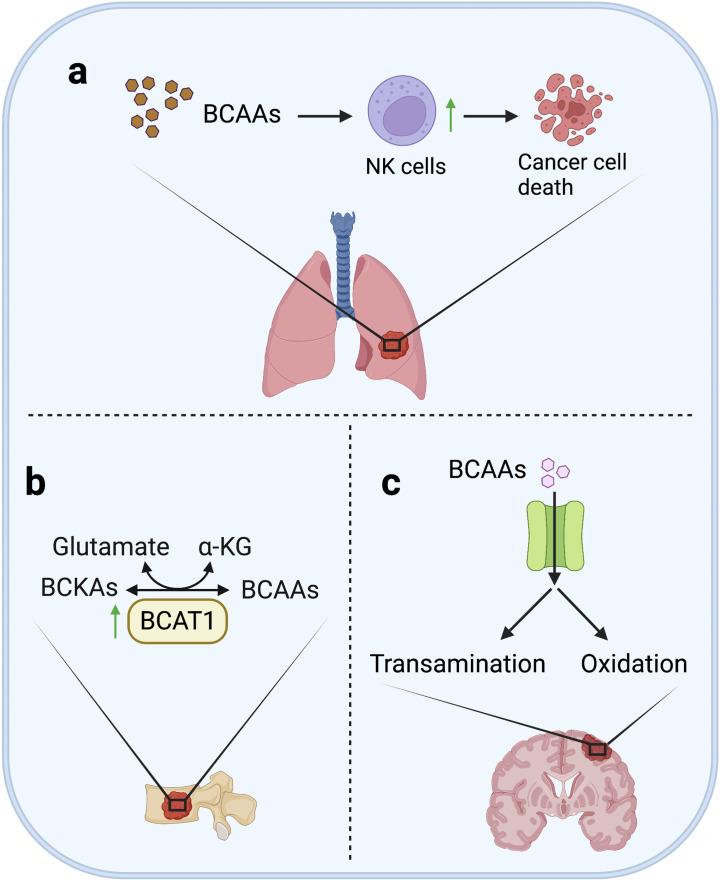
Metastasis is considered as the major cause of cancer death. Cancer cells can be released from primary tumors into the circulation and then colonize in distant organs. How cancer cells acquire the ability to colonize in distant organs has always been the focus of tumor biology. To enable survival and growth in the new environment, metastases commonly reprogram their metabolic states and therefore display different metabolic properties and preferences compared with the primary lesions. For different microenvironments in various colonization sites, cancer cells must transfer to specific metabolic states to colonize in different distant organs, which provides the possibility of evaluating metastasis tendency by tumor metabolic states. Amino acids provide crucial precursors for many biosynthesis and play an essential role in cancer metastasis. Evidence has proved the hyperactivation of several amino acid biosynthetic pathways in metastatic cancer cells, including glutamine, serine, glycine, branched chain amino acids (BCAAs), proline, and asparagine metabolism. The reprogramming of amino acid metabolism can orchestrate energy supply, redox homeostasis, and other metabolism-associated pathways during cancer metastasis. Here, we review the role and function of amino acid metabolic reprogramming in cancer cells colonizing in common metastatic organs, including lung, liver, brain, peritoneum, and bone. In addition, we summarize the current biomarker identification and drug development of cancer metastasis under the amino acid metabolism reprogramming, and discuss the possibility and prospect of targeting organ-specific metastasis for cancer treatment.
转移被认为是癌症死亡的主要原因。癌细胞可从原发性肿瘤释放进入循环系统,然后在远处器官定植。癌细胞如何获得在远处器官定植的能力一直是肿瘤生物学的研究重点。为了在新环境中存活和生长,转移灶通常会重新编程其代谢状态,因此与原发性病灶相比表现出不同的代谢特性和偏好。对于不同定植部位的不同微环境,癌细胞必须转变为特定的代谢状态才能在不同的远处器官定植,这为通过肿瘤代谢状态评估转移倾向提供了可能性。氨基酸为许多生物合成提供关键前体,在癌症转移中起重要作用。有证据表明转移性癌细胞中几种氨基酸生物合成途径过度激活,包括谷氨酰胺、丝氨酸、甘氨酸、支链氨基酸(BCAAs)、脯氨酸和天冬酰胺代谢。氨基酸代谢重编程可在癌症转移过程中协调能量供应、氧化还原稳态及其他与代谢相关的途径。在此,我们综述了氨基酸代谢重编程在癌细胞定植于常见转移器官(包括肺、肝、脑、腹膜和骨)中的作用和功能。此外,我们总结了氨基酸代谢重编程情况下癌症转移的当前生物标志物鉴定和药物开发,并讨论了针对器官特异性转移进行癌症治疗的可能性和前景。


 Zotero 插件