
在小鼠大脑中,对 Pumilio1 变异体的剂量敏感性反映了不同的分子机制。
Dosage sensitivity to Pumilio1 variants in the mouse brain reflects distinct molecular mechanisms.
机构信息
Department of Genetics and Development, Columbia University Irving Medical Center, New York, NY, USA.
Department of Translational Medical Science, University of Campania Luigi Vanvitelli, Caserta, Italy.
出版信息
EMBO J. 2023 Jun 1;42(11):e112721. doi: 10.15252/embj.2022112721. Epub 2023 Apr 18.
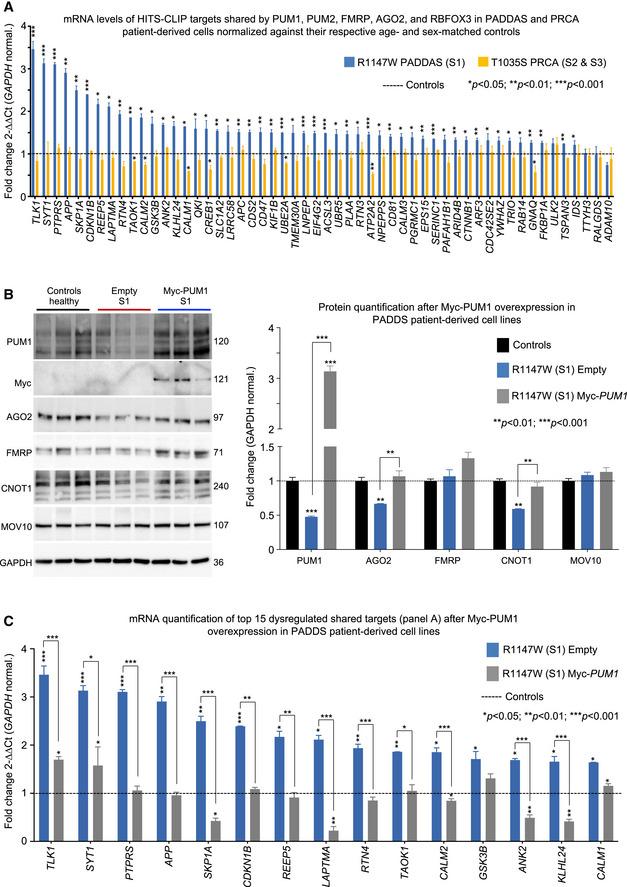
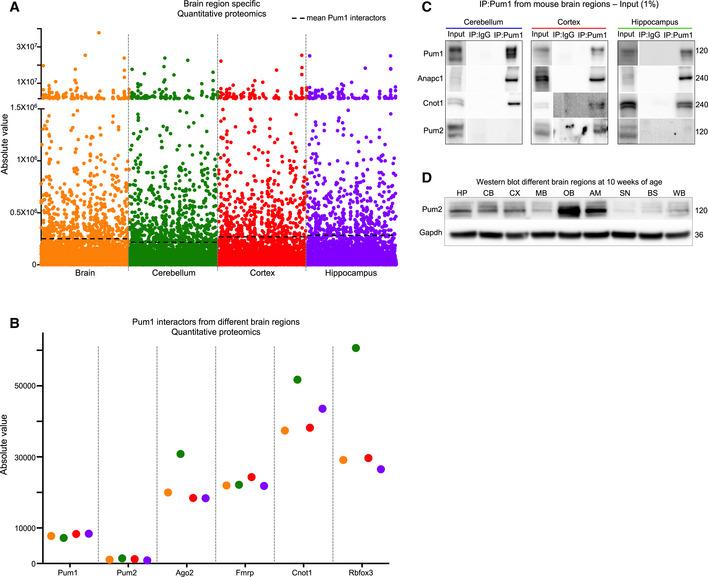
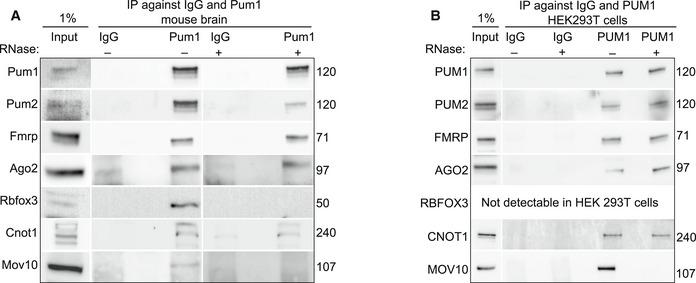
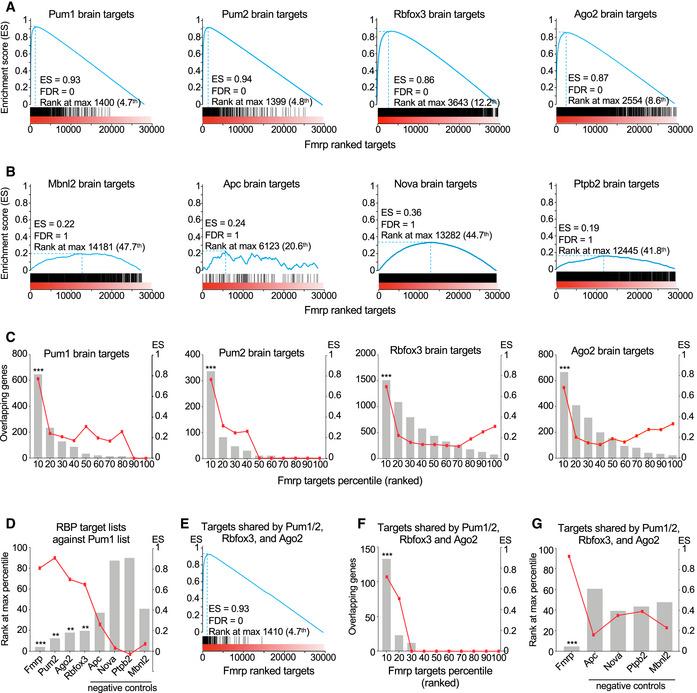
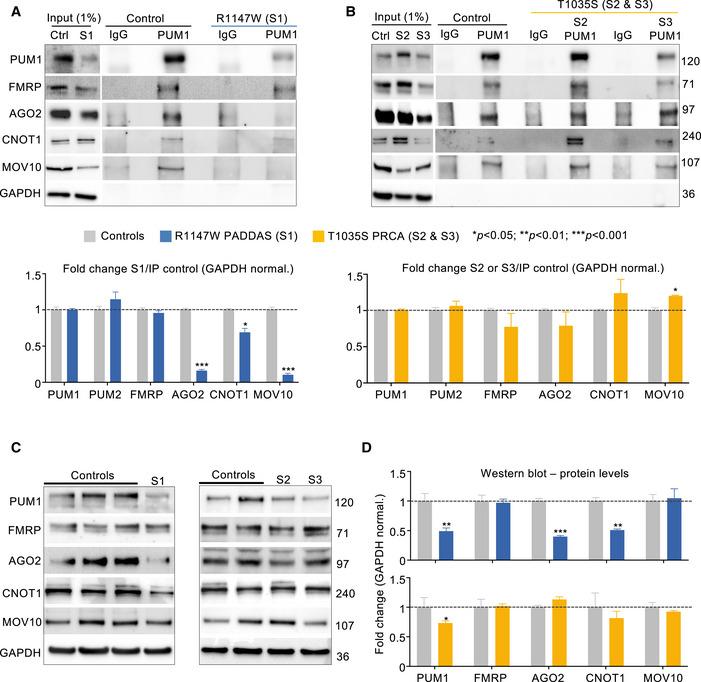
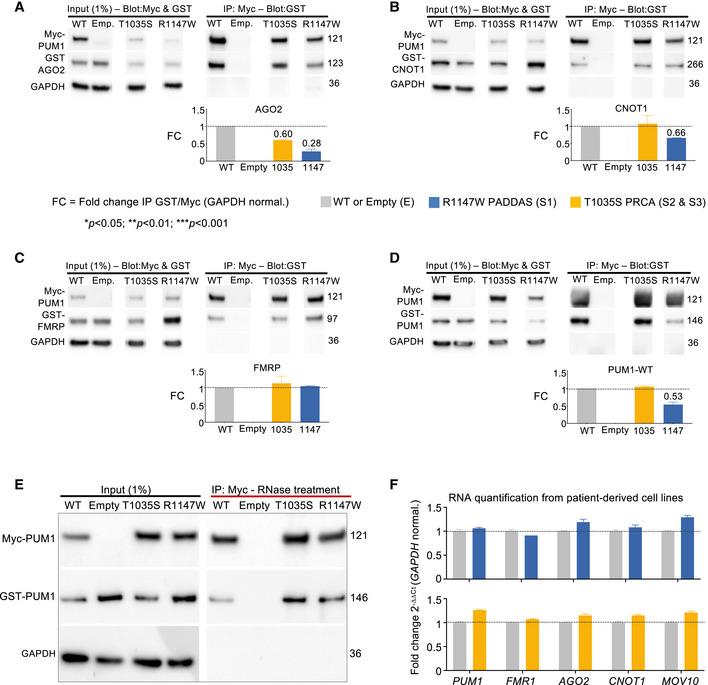
Different mutations in the RNA-binding protein Pumilio1 (PUM1) cause divergent phenotypes whose severity tracks with dosage: a mutation that reduces PUM1 levels by 25% causes late-onset ataxia, whereas haploinsufficiency causes developmental delay and seizures. Yet PUM1 targets are derepressed to equal degrees in both cases, and the more severe mutation does not hinder PUM1's RNA-binding ability. We therefore considered the possibility that the severe mutation might disrupt PUM1 interactions, and identified PUM1 interactors in the murine brain. We find that mild PUM1 loss derepresses PUM1-specific targets, but the severe mutation disrupts interactions with several RNA-binding proteins and the regulation of their targets. In patient-derived cell lines, restoring PUM1 levels restores these interactors and their targets to normal levels. Our results demonstrate that dosage sensitivity does not always signify a linear relationship with protein abundance but can involve distinct mechanisms. We propose that to understand the functions of RNA-binding proteins in a physiological context will require studying their interactions as well as their targets.
不同的 RNA 结合蛋白 Pumilio1 (PUM1) 突变导致表型不同,其严重程度与剂量相关:降低 PUM1 水平 25%的突变导致迟发性共济失调,而半合子缺失导致发育迟缓和癫痫发作。然而,在这两种情况下,PUM1 的靶标都被同等程度地去抑制,更严重的突变并没有阻碍 PUM1 的 RNA 结合能力。因此,我们考虑了严重突变可能破坏 PUM1 相互作用的可能性,并在鼠脑中鉴定了 PUM1 相互作用蛋白。我们发现轻度 PUM1 缺失会去抑制 PUM1 特异性靶标,但严重突变会破坏与几种 RNA 结合蛋白的相互作用及其靶标的调控。在患者来源的细胞系中,恢复 PUM1 水平可将这些相互作用蛋白及其靶标恢复到正常水平。我们的结果表明,剂量敏感性并不总是意味着与蛋白质丰度呈线性关系,而是可能涉及不同的机制。我们提出,要在生理环境中理解 RNA 结合蛋白的功能,需要研究它们的相互作用以及它们的靶标。





 Zotero 插件