
局部补体在 SARS-CoV-2 感染中导致肺血管内皮细胞的致病激活。
Local Complement Contributes to Pathogenic Activation of Lung Endothelial Cells in SARS-CoV-2 Infection.
机构信息
Cardiovascular Pulmonary Research Laboratories, Department of Pediatrics and Medicine.
Department of Immunology and Microbiology, and.
出版信息
Am J Respir Cell Mol Biol. 2023 Aug;69(2):210-219. doi: 10.1165/rcmb.2022-0373OC.
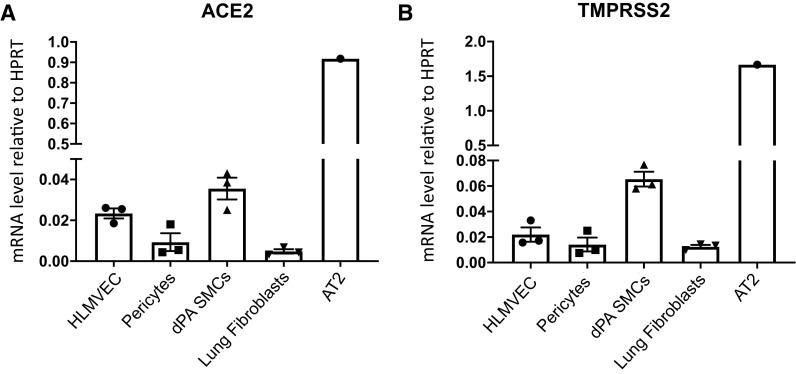
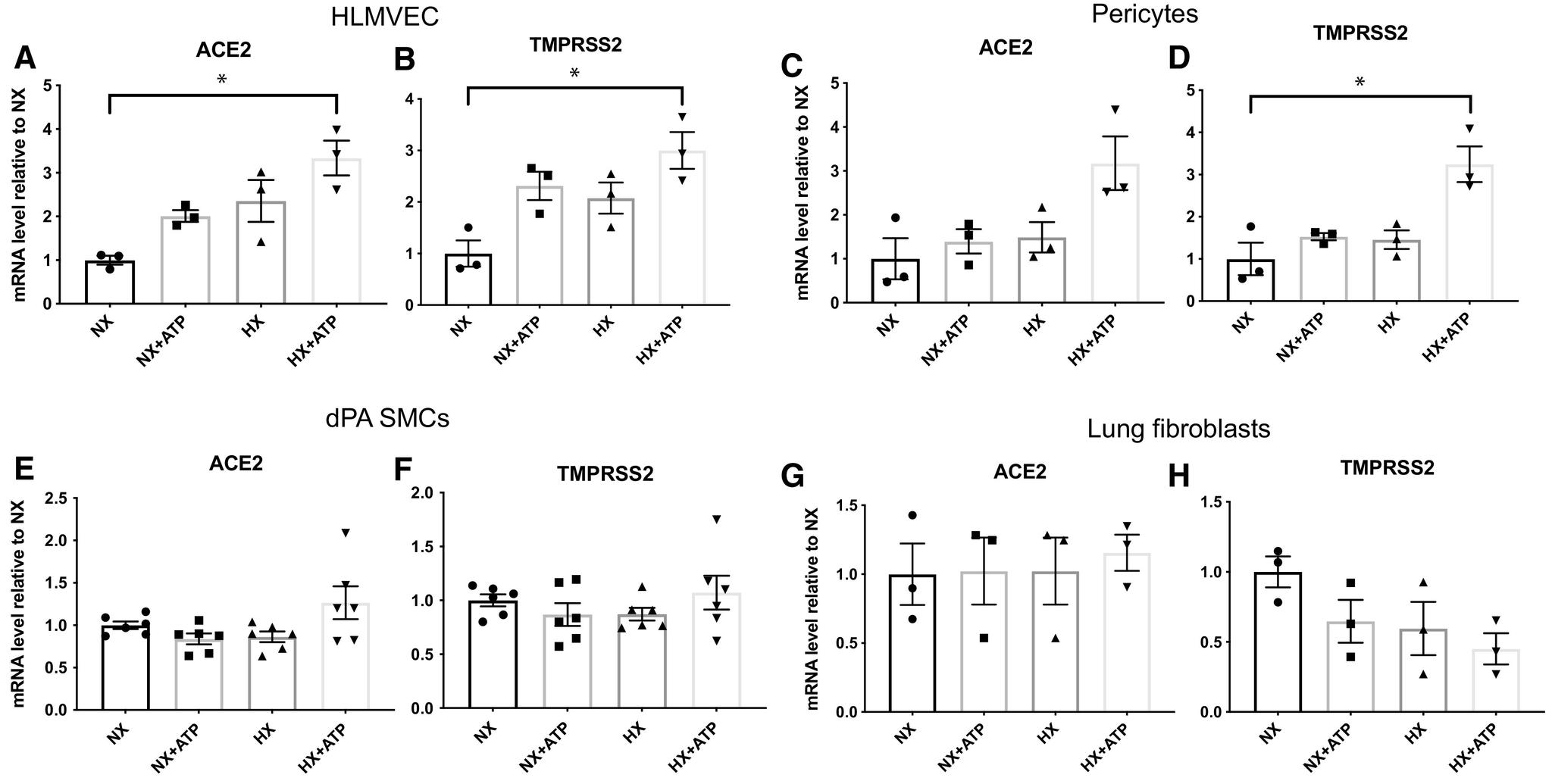
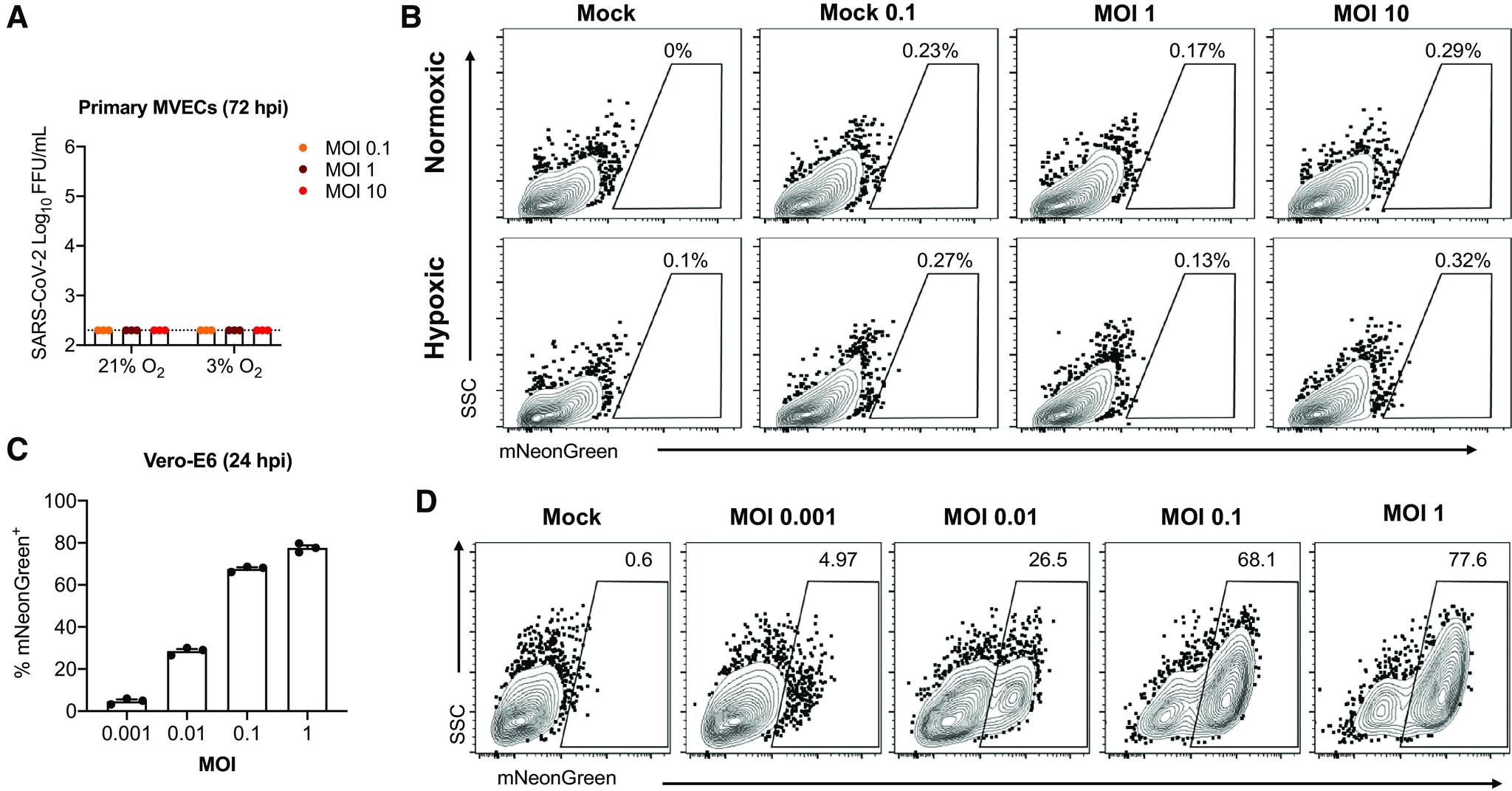
Endothelial dysfunction and inflammation contribute to the vascular pathology of coronavirus disease (COVID-19). However, emerging evidence does not support direct infection of endothelial or other vascular wall cells, and thus inflammation may be better explained as a secondary response to epithelial cell infection. In this study, we sought to determine whether lung endothelial or other resident vascular cells are susceptible to productive severe acute respiratory syndrome coronavirus 2 (SARS-CoV-2) infection and how local complement activation contributes to endothelial dysfunction and inflammation in response to hypoxia and SARS-CoV-2-infected lung alveolar epithelial cells. We found that ACE2 (angiotensin-converting enzyme 2) and TMPRSS2 (transmembrane serine protease 2) mRNA expression in lung vascular cells, including primary human lung microvascular endothelial cells (HLMVECs), pericytes, smooth muscle cells, and fibroblasts, was 20- to 90-fold lower compared with primary human alveolar epithelial type II cells. Consistently, we found that HLMVECs and other resident vascular cells were not susceptible to productive SARS-CoV-2 infection under either normoxic or hypoxic conditions. However, viral uptake without replication (abortive infection) was observed in HLMVECs when exposed to conditioned medium from SARS-CoV-2-infected human ACE2 stably transfected A549 epithelial cells. Furthermore, we demonstrated that exposure of HLMVECs to conditioned medium from SARS-CoV-2-infected human ACE2 stably transfected A549 epithelial cells and hypoxia resulted in upregulation of inflammatory factors such as ICAM-1 (intercellular adhesion molecule 1), VCAM-1 (vascular cell adhesion molecule 1), and IL-6 (interleukin 6) as well as complement components such as C3 (complement C3), C3AR1 (complement C3a receptor 1), C1QA (complement C1q A chain), and CFB (complement factor B). Taken together, our data support a model in which lung endothelial and vascular dysfunction during COVID-19 involves the activation of complement and inflammatory signaling and does not involve productive viral infection of endothelial cells.
内皮功能障碍和炎症是导致冠状病毒病 (COVID-19) 血管病变的原因。然而,新出现的证据并不支持内皮细胞或其他血管壁细胞的直接感染,因此炎症可能更好地解释为对上皮细胞感染的继发反应。在这项研究中,我们试图确定肺内皮细胞或其他常驻血管细胞是否容易受到严重急性呼吸综合征冠状病毒 2(SARS-CoV-2)的有效感染,以及局部补体激活如何导致对缺氧和 SARS-CoV-2 感染的肺肺泡上皮细胞的内皮功能障碍和炎症反应。我们发现,肺血管细胞(包括原代人肺微血管内皮细胞 [HLMVEC]、周细胞、平滑肌细胞和成纤维细胞)中的 ACE2(血管紧张素转换酶 2)和 TMPRSS2(跨膜丝氨酸蛋白酶 2)mRNA 表达水平比原代人肺泡上皮细胞 II 型细胞低 20-90 倍。一致地,我们发现,在常氧或低氧条件下,HLMVEC 和其他常驻血管细胞均不易受到有效 SARS-CoV-2 感染。然而,当暴露于 SARS-CoV-2 感染的人 ACE2 稳定转染 A549 上皮细胞的条件培养基时,HLMVEC 中观察到无复制的病毒摄取(流产感染)。此外,我们证明,当 HLMVEC 暴露于 SARS-CoV-2 感染的人 ACE2 稳定转染 A549 上皮细胞的条件培养基和缺氧时,细胞间黏附分子 1(ICAM-1)、血管细胞黏附分子 1(VCAM-1)和白细胞介素 6(IL-6)等炎症因子以及补体 C3(补体 C3)、补体 C3a 受体 1(C3AR1)、补体 C1q A 链(C1QA)和补体因子 B(CFB)等补体成分的表达上调。综上所述,我们的数据支持这样一种模型,即在 COVID-19 期间,肺内皮和血管功能障碍涉及补体和炎症信号的激活,而不涉及内皮细胞的有效病毒感染。



 Zotero 插件