
肠道微生态对儿童毛细支气管炎和哮喘的调节作用:综述。
Gut microecological regulation on bronchiolitis and asthma in children: A review.
机构信息
Department of Pediatrics, The First Affiliated Hospital of Ningbo University, Ningbo, Zhejiang, China.
Department of Pediatric Respiratory Medicine, The Second Affiliated Hospital and Yuying Children's Hospital of Wenzhou Medical University, Wenzhou, Zhejiang, China.
出版信息
Clin Respir J. 2023 Oct;17(10):975-985. doi: 10.1111/crj.13622. Epub 2023 Apr 27.
INTRODUCTION
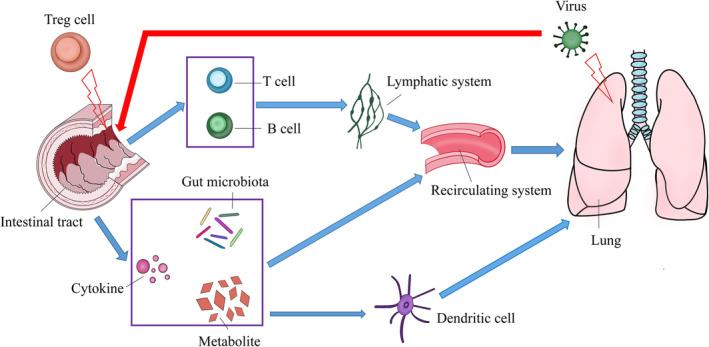
Asthma and bronchiolitis in children are considered common clinical problems associated with gut microbiota. However, the exact relationship between gut microbiota and the above-mentioned diseases remains unclear. Here, we discussed recent advances in understanding the potential mechanism underlying immune regulation of gut microbiota on asthma and bronchiolitis in children as well as the role of the gut-lung axis.
METHODS
We retrieved and assessed all relevant original articles related to gut microbiota, airway inflammation-induced wheezing in children, and gut-lung axis studies from databases that have been published so far, including PubMed/MEDLINE, Scopus, Google Scholar, China National Knowledge Infrastructure (CNKI) and the Wanfang Database.
RESULTS
The infant period is critical for the development of gut microbiota, which can be influenced by gestational age, delivery mode, antibiotic exposure and feeding mode. The gut microbiota in children with asthma and bronchiolitis is significantly distinct from those in healthy subjects. Gut microbiota dysbiosis is implicated in asthma and bronchiolitis in children. The presence of intestinal disturbances in lung diseases highlights the importance of the gut-lung axis.
CONCLUSION
Gut microbiota dysbiosis potentially increases the risk of asthma and bronchiolitis in children. Moreover, a deeper understanding of the gut-lung axis with regard to the gut microbiota of children with respiratory diseases could contribute to clinical practice for pulmonary diseases.
简介
儿童哮喘和细支气管炎被认为是与肠道微生物群相关的常见临床问题。然而,肠道微生物群与上述疾病的确切关系尚不清楚。在这里,我们讨论了理解肠道微生物群对儿童哮喘和细支气管炎的免疫调节潜在机制以及肠-肺轴作用的最新进展。
方法
我们从迄今为止已发表的数据库中检索和评估了所有与肠道微生物群、儿童气道炎症性喘息和肠-肺轴研究相关的相关原始文章,包括 PubMed/MEDLINE、Scopus、Google Scholar、中国国家知识基础设施(CNKI)和万方数据库。
结果
婴儿期是肠道微生物群发育的关键时期,其受胎龄、分娩方式、抗生素暴露和喂养方式的影响。哮喘和细支气管炎患儿的肠道微生物群与健康受试者明显不同。肠道微生物群失调与儿童哮喘和细支气管炎有关。肺部疾病中肠道紊乱的存在强调了肠-肺轴的重要性。
结论
肠道微生物群失调可能会增加儿童患哮喘和细支气管炎的风险。此外,更深入地了解呼吸疾病儿童的肠-肺轴与肠道微生物群相关的问题可能有助于肺部疾病的临床实践。

 Zotero 插件