
利用足部压力特征和机器学习预测外骨骼辅助下蹲的代谢成本
Predicting the metabolic cost of exoskeleton-assisted squatting using foot pressure features and machine learning.
作者信息
Ramadurai Sruthi, Jeong Heejin, Kim Myunghee
机构信息
Rehabilitation Robotics Laboratory, Department of Mechanical and Industrial Engineering, University of Illinois at Chicago, Chicago, IL, United States.
The Polytechnic School, Ira A. Fulton Schools of Engineering, Arizona State University, Mesa, AZ, United States.
出版信息
Front Robot AI. 2023 Apr 19;10:1166248. doi: 10.3389/frobt.2023.1166248. eCollection 2023.
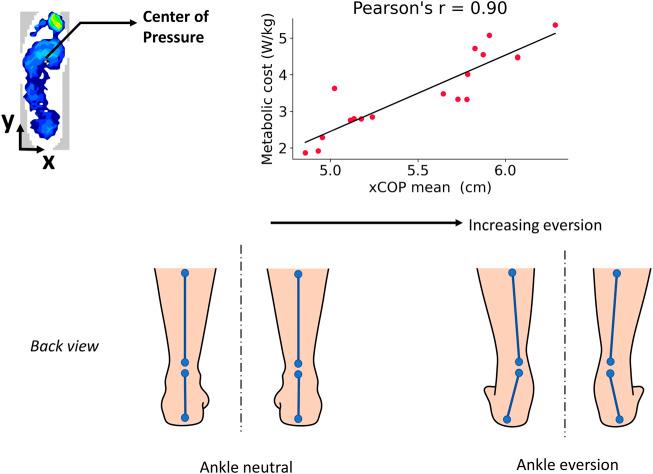
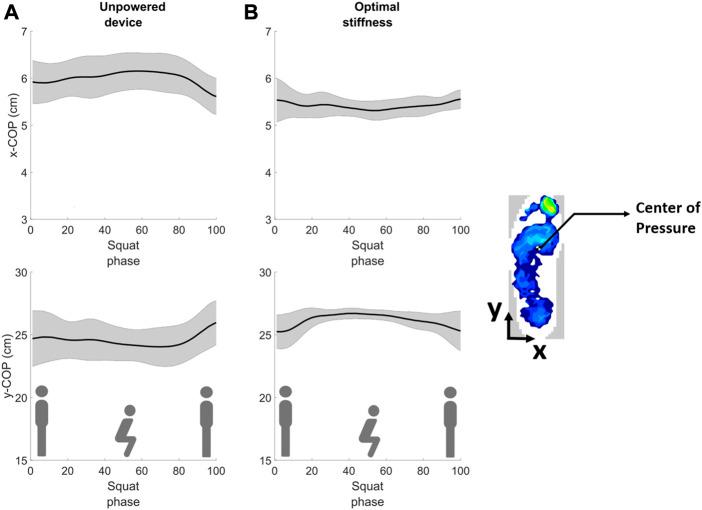
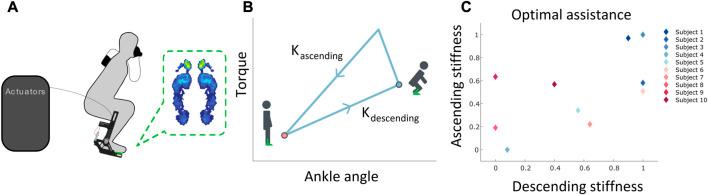
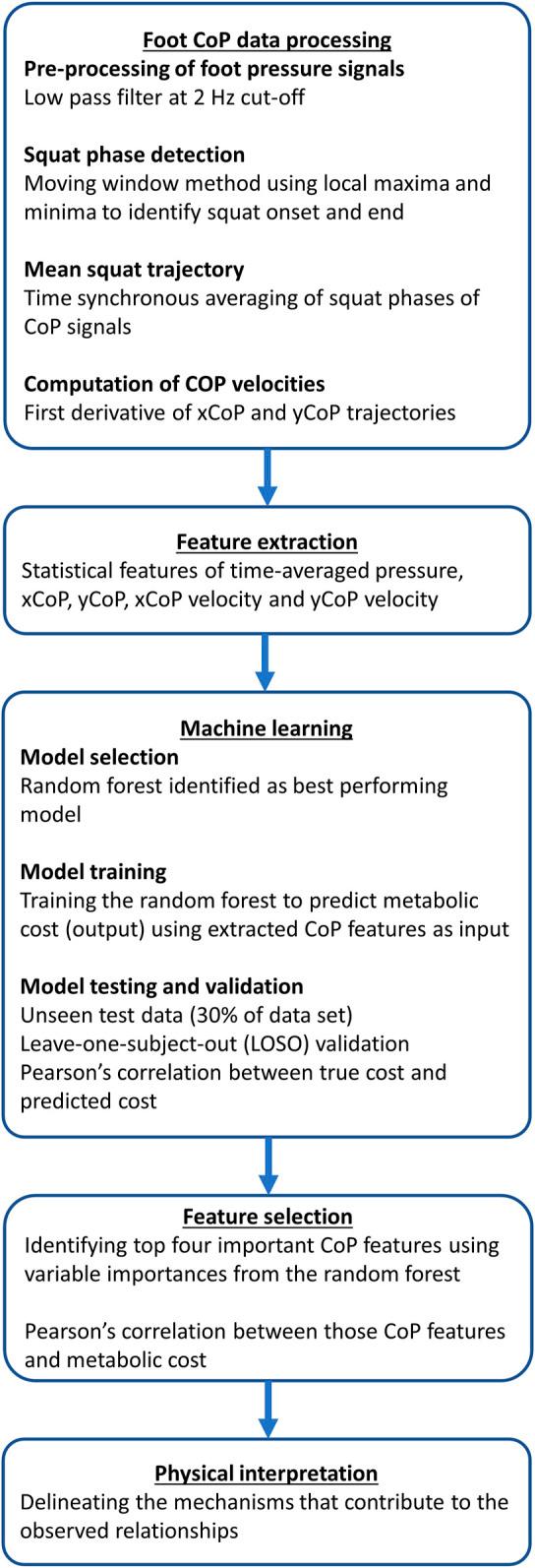
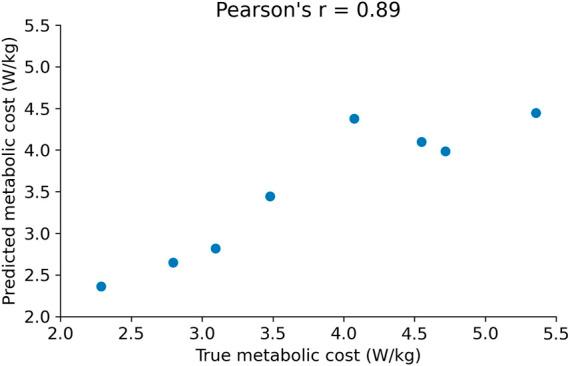
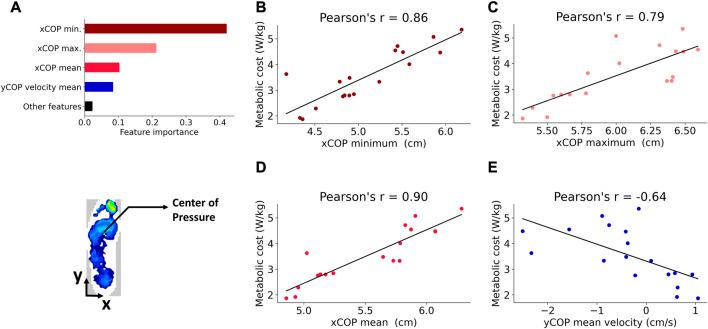
Recent studies found that wearable exoskeletons can reduce physical effort and fatigue during squatting. In particular, subject-specific assistance helped to significantly reduce physical effort, shown by reduced metabolic cost, using human-in-the-loop optimization of the exoskeleton parameters. However, measuring metabolic cost using respiratory data has limitations, such as long estimation times, presence of noise, and user discomfort. A recent study suggests that foot contact forces can address those challenges and be used as an alternative metric to the metabolic cost to personalize wearable robot assistance during walking. In this study, we propose that foot center of pressure (CoP) features can be used to estimate the metabolic cost of squatting using a machine learning method. Five subjects' foot pressure and metabolic cost data were collected as they performed squats with an ankle exoskeleton at different assistance conditions in our prior study. In this study, we extracted statistical features from the CoP squat trajectories and fed them as input to a random forest model, with the metabolic cost as the output. The model predicted the metabolic cost with a mean error of 0.55 W/kg on unseen test data, with a high correlation (r = 0.89, < 0.01) between the true and predicted cost. The features of the CoP trajectory in the medial-lateral direction of the foot (xCoP), which relate to ankle eversion-inversion, were found to be important and highly correlated with metabolic cost. Our findings indicate that increased ankle eversion (outward roll of the ankle), which reflects a suboptimal squatting strategy, results in higher metabolic cost. Higher ankle eversion has been linked with the etiology of chronic lower limb injuries. Hence, a CoP-based cost function in human-in-the-loop optimization could offer several advantages, such as reduced estimation time, injury risk mitigation, and better user comfort.
最近的研究发现,可穿戴外骨骼可以减少深蹲过程中的体力消耗和疲劳。特别是,通过对外骨骼参数进行人在回路优化,特定于个体的辅助显著降低了体力消耗,这表现为代谢成本的降低。然而,使用呼吸数据测量代谢成本存在局限性,比如估计时间长、存在噪声以及使用者不适。最近的一项研究表明,足部接触力可以应对这些挑战,并可作为代谢成本的替代指标,用于在行走过程中个性化可穿戴机器人的辅助。在本研究中,我们提出足部压力中心(CoP)特征可用于通过机器学习方法估计深蹲的代谢成本。在我们之前的研究中,五名受试者在不同辅助条件下穿着脚踝外骨骼进行深蹲时,收集了他们的足部压力和代谢成本数据。在本研究中,我们从CoP深蹲轨迹中提取统计特征,并将其作为输入提供给一个随机森林模型,以代谢成本作为输出。该模型在未见测试数据上预测代谢成本的平均误差为0.55W/kg,真实成本与预测成本之间具有高度相关性(r = 0.89,<0.01)。发现与脚踝外翻 - 内翻相关的足部内外侧方向(xCoP)上的CoP轨迹特征很重要,并且与代谢成本高度相关。我们的研究结果表明,脚踝外翻增加(脚踝向外滚动)反映了次优的深蹲策略,会导致更高的代谢成本。较高的脚踝外翻与慢性下肢损伤的病因有关。因此,在人在回路优化中基于CoP的成本函数可以提供几个优点,例如减少估计时间、降低受伤风险以及提高使用者舒适度。

 Zotero 插件