
去氢紫堇碱通过 p38 通路对人骨肉瘤细胞的凋亡作用和细胞阻滞。
Apoptotic effect and cell arrest of deoxyshikonin in human osteosarcoma cells through the p38 pathway.
机构信息
School of Medical Laboratory and Biotechnology, Chung Shan Medical University, Taichung, Taiwan.
Department of Clinical Laboratory, Chung Shan Medical University Hospital, Taichung, Taiwan.
出版信息
J Cell Mol Med. 2023 Jun;27(11):1592-1602. doi: 10.1111/jcmm.17764. Epub 2023 May 8.
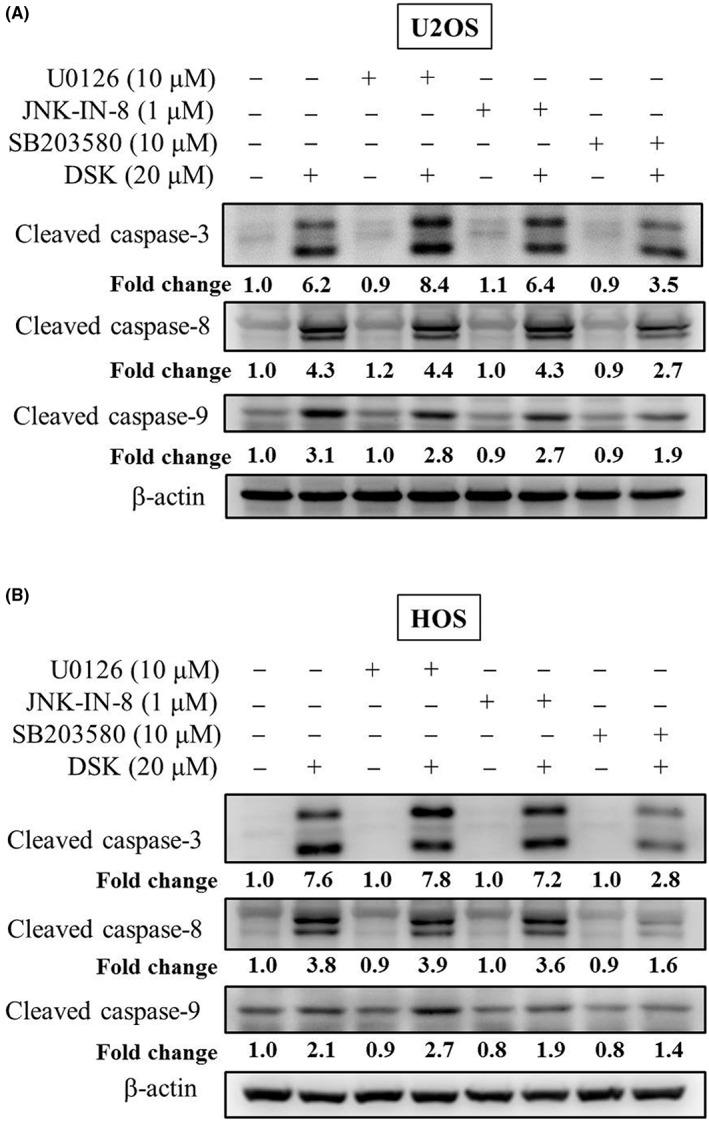
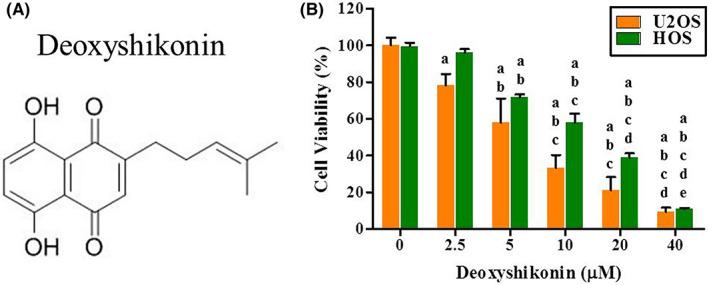
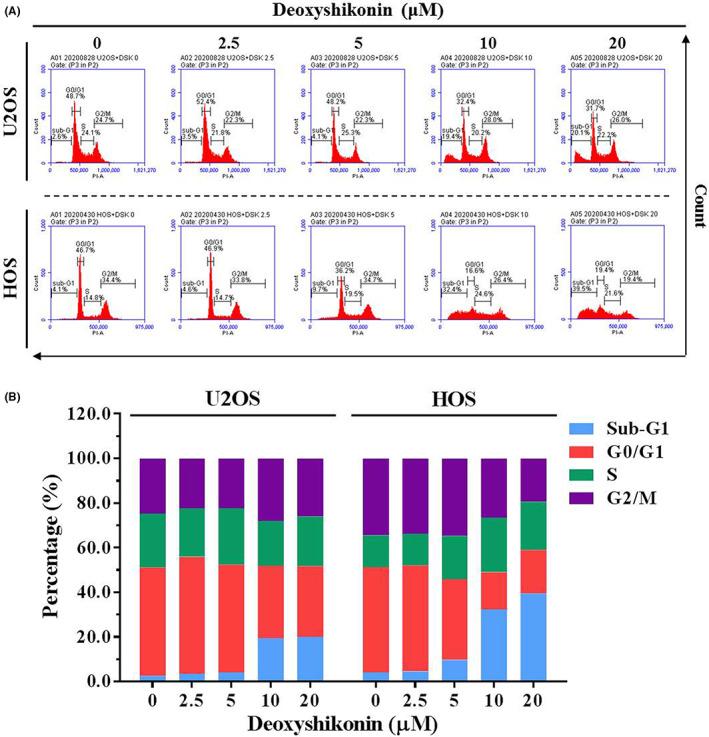
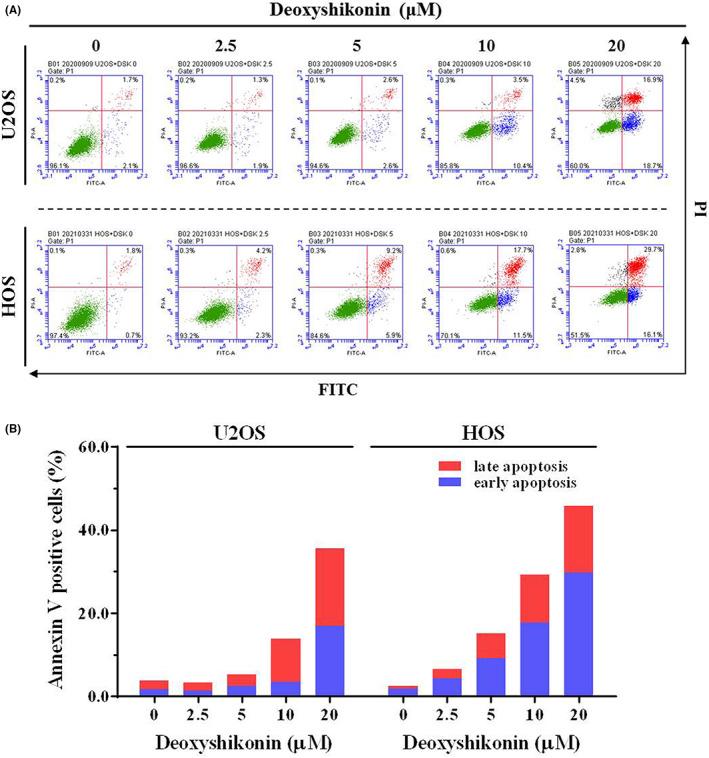
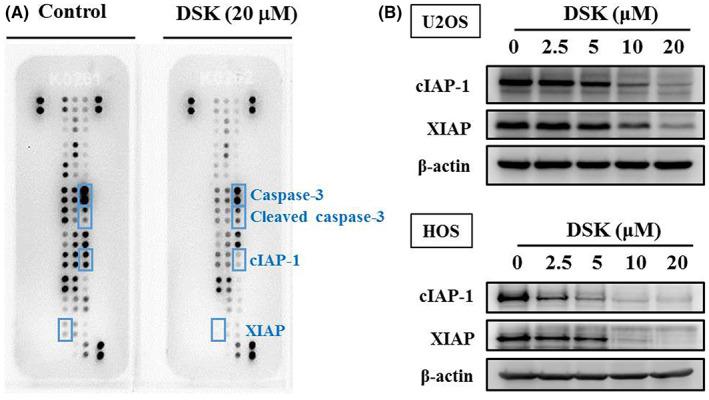
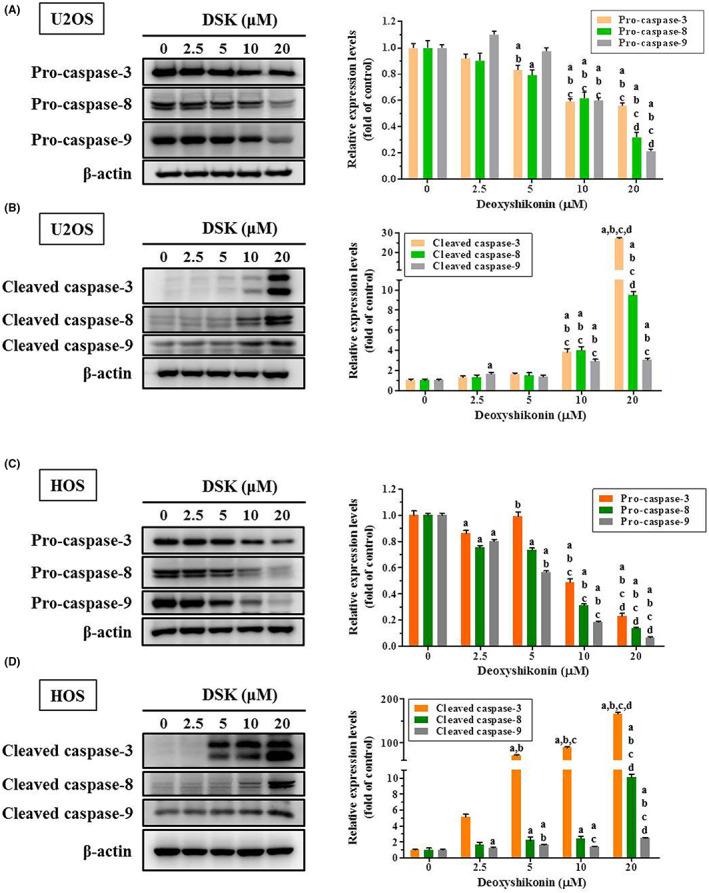
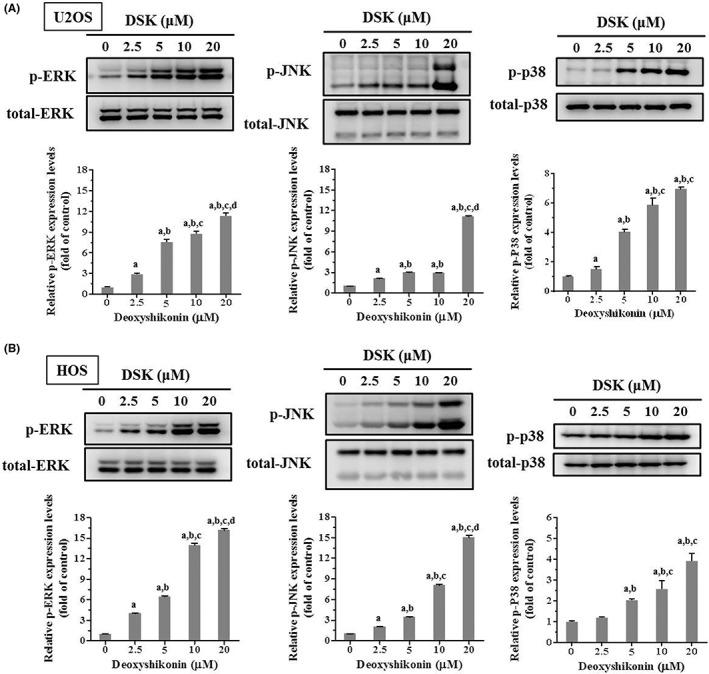
Osteosarcoma is the most common primary bone cancer that affects adolescents with early metastatic potential and drastically reduces their long-term survival rate if pulmonary metastases are detected at diagnosis. The natural naphthoquinol compound deoxyshikonin exhibits anticancer properties, so we hypothesized that it has an apoptotic effect on osteosarcoma U2OS and HOS cells and studied its mechanisms. After deoxyshikonin treatment, dose-dependent decreases in cell viability, induction of cell apoptosis and arrest in the sub-G1 phase of U2OS and HOS cells were observed. The increases in cleaved caspase 3 expression and the decreases in X-chromosome-linked IAP (XIAP) and cellular inhibitors of apoptosis 1 (cIAP-1) expressions after deoxyshikonin treatment in the human apoptosis array were identified in HOS cells, and dose-dependent expression changes of IAPs and cleaved caspase 3, 8 and 9 were verified by Western blotting in U2OS and HOS cells. Phosphorylation of extracellular signal-regulated protein kinases (ERK)1/2, c-Jun N-terminal kinases (JNK)1/2 and p38 expressions in U2OS and HOS cells was also increased by deoxyshikonin in a dose-dependent manner. Subsequently, cotreatment with inhibitors of ERK (U0126), JNK (JNK-IN-8) and p38 (SB203580) was performed to show that p38 signalling is responsible for deoxyshikonin-induced apoptosis in U2OS and HOS cells, but not via the ERK and JNK pathways. These discoveries demonstrate that deoxyshikonin may be a possible chemotherapeutic candidate to induce cell arrest and apoptosis by activating extrinsic and intrinsic pathways through p38 for human osteosarcoma.
骨肉瘤是最常见的原发性骨癌,主要影响青少年,其早期转移潜能较大,如果在诊断时发现肺部转移,其长期生存率会大幅降低。天然萘醌化合物去氢紫草素具有抗癌特性,因此我们假设它对骨肉瘤 U2OS 和 HOS 细胞具有凋亡作用,并研究了其机制。去氢紫草素处理后,观察到 U2OS 和 HOS 细胞的细胞活力呈剂量依赖性下降,细胞凋亡诱导和 G1 期阻滞。在 HOS 细胞中,人类凋亡阵列中去氢紫草素处理后,cleaved caspase 3 表达增加,X 染色体连接的凋亡抑制蛋白(XIAP)和细胞凋亡抑制蛋白 1(cIAP-1)表达降低,并且通过 Western blot 在 U2OS 和 HOS 细胞中验证了 IAP 和 cleaved caspase 3、8 和 9 的剂量依赖性表达变化。去氢紫草素还以剂量依赖性方式增加 U2OS 和 HOS 细胞中细胞外信号调节激酶(ERK)1/2、c-Jun N-末端激酶(JNK)1/2 和 p38 的磷酸化。随后,用 ERK(U0126)、JNK(JNK-IN-8)和 p38(SB203580)抑制剂进行共处理,表明 p38 信号通路负责去氢紫草素诱导的 U2OS 和 HOS 细胞凋亡,但不通过 ERK 和 JNK 途径。这些发现表明,去氢紫草素可能是一种通过激活 p38 来诱导细胞停滞和凋亡的潜在化疗候选药物,用于治疗人类骨肉瘤。
 Zotero 插件