
重症监护的未来:微循环研究将有助于指导我们的治疗。
The future of intensive care: the study of the microcirculation will help to guide our therapies.
机构信息
Department of Anesthesiology and Intensive Care, Bicêtre Hospital, Assistance Publique Hôpitaux de Paris (AP-HP), INSERM UMR-S 999, Paris-Saclay University, Le Kremlin-Bicêtre, France.
Department of Intensive Care, CHIREC Hospitals, Université Libre de Bruxelles, Boulevard du Triomphe 201, 1160, Brussels, Belgium.
出版信息
Crit Care. 2023 May 16;27(1):190. doi: 10.1186/s13054-023-04474-x.
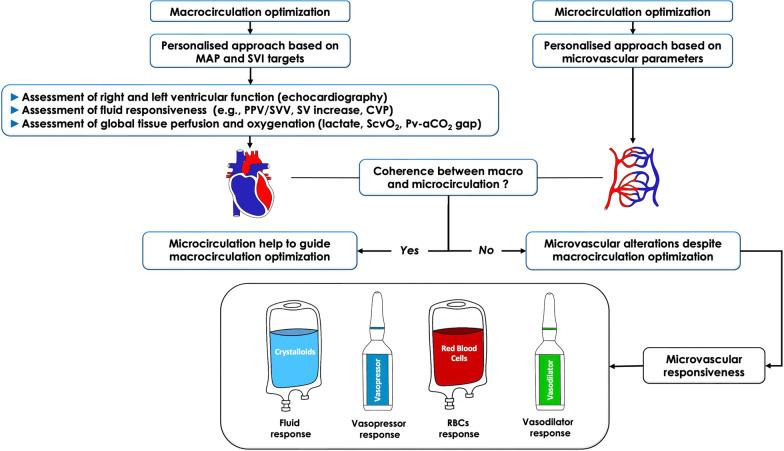
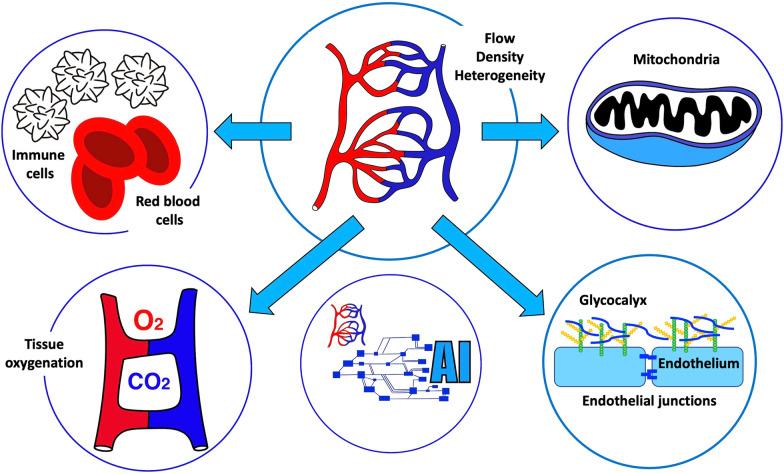
The goal of hemodynamic resuscitation is to optimize the microcirculation of organs to meet their oxygen and metabolic needs. Clinicians are currently blind to what is happening in the microcirculation of organs, which prevents them from achieving an additional degree of individualization of the hemodynamic resuscitation at tissue level. Indeed, clinicians never know whether optimization of the microcirculation and tissue oxygenation is actually achieved after macrovascular hemodynamic optimization. The challenge for the future is to have noninvasive, easy-to-use equipment that allows reliable assessment and immediate quantitative analysis of the microcirculation at the bedside. There are different methods for assessing the microcirculation at the bedside; all have strengths and challenges. The use of automated analysis and the future possibility of introducing artificial intelligence into analysis software could eliminate observer bias and provide guidance on microvascular-targeted treatment options. In addition, to gain caregiver confidence and support for the need to monitor the microcirculation, it is necessary to demonstrate that incorporating microcirculation analysis into the reasoning guiding hemodynamic resuscitation prevents organ dysfunction and improves the outcome of critically ill patients.
血流动力学复苏的目标是优化器官的微循环,以满足其氧合和代谢需求。临床医生目前无法了解器官微循环的情况,这使得他们无法在组织水平上实现血流动力学复苏的进一步个体化。事实上,临床医生永远不知道在大血管血流动力学优化后,微循环和组织氧合是否真的得到了优化。未来的挑战是开发出非侵入性、易于使用的设备,以便在床边可靠地评估和立即对微循环进行定量分析。有不同的方法可以在床边评估微循环;所有方法都有其优点和挑战。使用自动化分析以及将来有可能将人工智能引入分析软件中,可以消除观察者的偏见,并为微血管靶向治疗选择提供指导。此外,为了获得护理人员对监测微循环的必要性的信任和支持,有必要证明将微循环分析纳入指导血流动力学复苏的推理中,可以预防器官功能障碍并改善危重症患者的预后。


 Zotero 插件