
抗胶质纤维酸性蛋白抗体相关疾病患者的临床、影像学特征和转归:一项回顾性研究。
Clinical, imaging features and outcomes of patients with anti-GFAP antibodies: a retrospective study.
机构信息
Department of Neurology, The First Affiliated Hospital of Zhengzhou University, Zhengzhou, Henan, China.
出版信息
Front Immunol. 2023 May 2;14:1106490. doi: 10.3389/fimmu.2023.1106490. eCollection 2023.
OBJECTIVE
To evaluate and compare the clinical features, imaging, overlapping antibodies, and prognosis of pediatric and adult patients with anti-GFAP antibodies.
METHODS
This study included 59 patients with anti-GFAP antibodies (28 females and 31 males) who were admitted between December 2019 and September 2022.
RESULTS
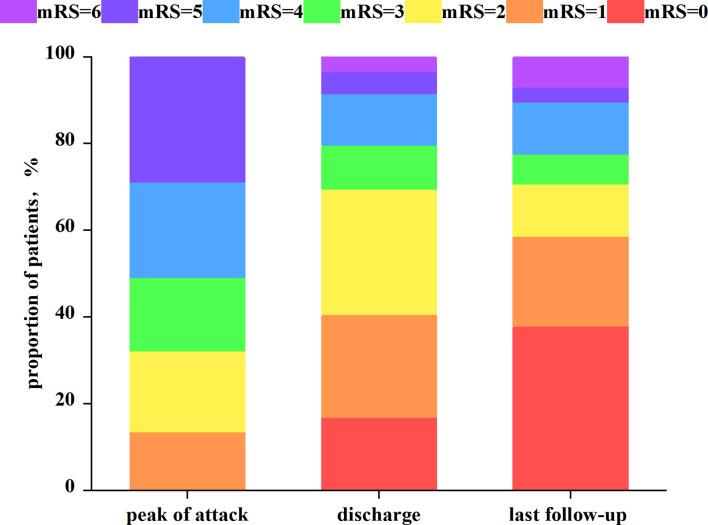
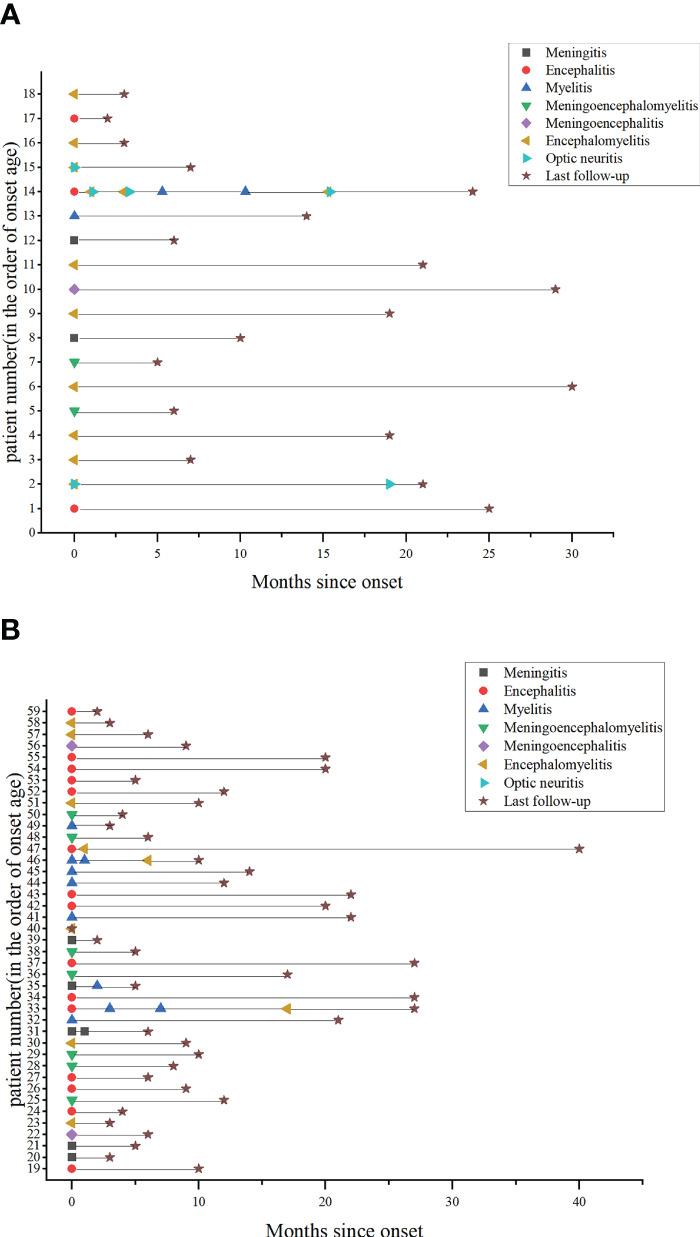
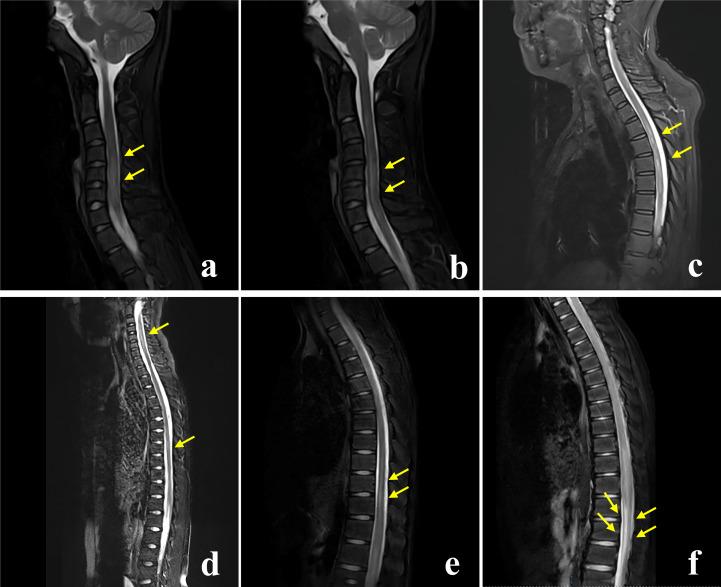
Out of 59 patients, 18 were children (under 18 years old), and 31 were adults. The overall cohort's median age at onset was 32 years old, 7 for children, and 42 for adults. There were 23 (41.1%) patients with prodromic infection, 1 (1.7%) patient with a tumor, 29 (53.7%) patients with other non-neurological autoimmune diseases, and 17 (22.8%) patients with hyponatremia. Fourteen (23.7%) patients had multiple neural autoantibodies, with the AQP4 antibody being the most common. Encephalitis (30.5%) was the most common phenotypic syndrome. Common clinical symptoms included fever (59.3%), headache (47.5%), nausea and vomiting (35.6%), limb weakness (35.6%), and disturbance of consciousness (33.9%). Brain MRI lesions were primarily located in the cortex/subcortex (37.3%), brainstem (27.1%), thalamus (23.7%), and basal ganglia (22.0%). Spinal cord MRI lesions often involved the cervical and thoracic spinal cord. There was no statistically significant difference in the MRI lesion site between children and adults. Out of 58 patients, 47 (81.0%) had a monophasic course, and 4 died. The last follow-up showed that 41/58 (80.7%) patients had an improved functional outcome (mRS <3), and children were more likely than adults to have no residual disability symptoms (p = 0.001).
CONCLUSION
There was no statistically significant difference in clinical symptoms and imaging findings between children and adult patients with anti-GFAP antibodies; Patients with anti-GFAP antibodies may present with normal MRI findings or delayed MRI abnormalities, and patients with overlapping antibodies were common. Most patients had monophasic courses, and those with overlapping antibodies were more likely to relapse. Children were more likely than adults to have no disability. Finally, we hypothesize that the presence of anti-GFAP antibodies is a non-specific witness of inflammation.
目的
评估和比较抗神经胶质纤维酸性蛋白(GFAP)抗体的儿科和成年患者的临床特征、影像学表现、重叠抗体和预后。
方法
本研究纳入了 2019 年 12 月至 2022 年 9 月期间收治的 59 例抗 GFAP 抗体患者(28 名女性和 31 名男性)。
结果
59 例患者中,18 例为儿童(<18 岁),31 例为成年患者。总体队列的发病中位年龄为 32 岁,儿童为 7 岁,成年患者为 42 岁。23 例(41.1%)患者有前驱感染,1 例(1.7%)患者有肿瘤,29 例(53.7%)患者有其他非神经自身免疫性疾病,17 例(22.8%)患者有低钠血症。14 例(23.7%)患者有多种神经自身抗体,其中最常见的是水通道蛋白 4(AQP4)抗体。脑炎(30.5%)是最常见的表型综合征。常见的临床症状包括发热(59.3%)、头痛(47.5%)、恶心和呕吐(35.6%)、肢体无力(35.6%)和意识障碍(33.9%)。脑 MRI 病变主要位于皮质/皮质下(37.3%)、脑干(27.1%)、丘脑(23.7%)和基底节(22.0%)。脊髓 MRI 病变常累及颈段和胸段脊髓。儿童和成年患者的 MRI 病变部位无统计学差异。58 例患者中,47 例(81.0%)为单相病程,4 例死亡。末次随访显示,41/58(80.7%)例患者的功能结局改善(mRS<3),且儿童比成年患者更不易遗留残疾症状(p=0.001)。
结论
抗 GFAP 抗体的儿童和成年患者的临床症状和影像学表现无统计学差异;抗 GFAP 抗体患者可能表现为正常 MRI 表现或延迟的 MRI 异常,且常伴有重叠抗体。大多数患者为单相病程,伴有重叠抗体的患者更易复发。儿童比成年患者更不易遗留残疾。最后,我们假设抗 GFAP 抗体的存在是非特异性炎症的见证。


 Zotero 插件