
了解癌症中的耐药机制并以其为靶点。
Understanding and targeting resistance mechanisms in cancer.
作者信息
Lei Zi-Ning, Tian Qin, Teng Qiu-Xu, Wurpel John N D, Zeng Leli, Pan Yihang, Chen Zhe-Sheng
机构信息
Precision Medicine Center Scientific Research Center The Seventh Affiliated Hospital Sun Yat-Sen University Shenzhen P. R. China.
Department of Pharmaceutical Sciences College of Pharmacy and Health Sciences St. John's University Queens New York USA.
出版信息
MedComm (2020). 2023 May 22;4(3):e265. doi: 10.1002/mco2.265. eCollection 2023 Jun.
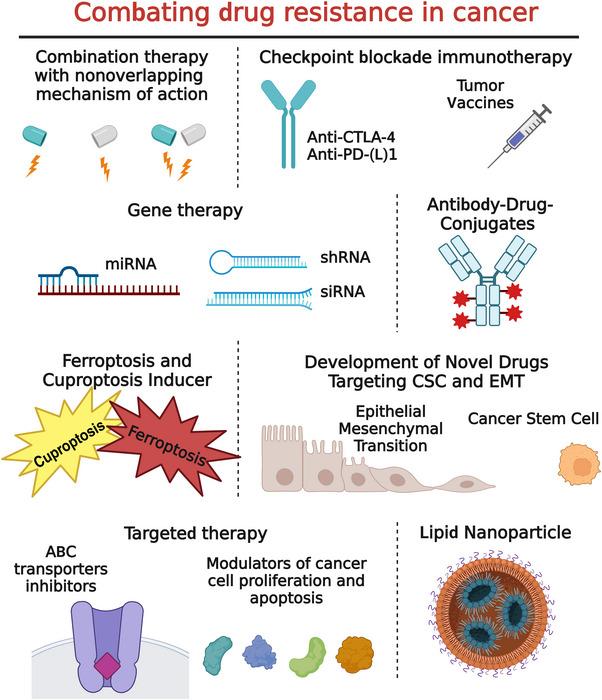
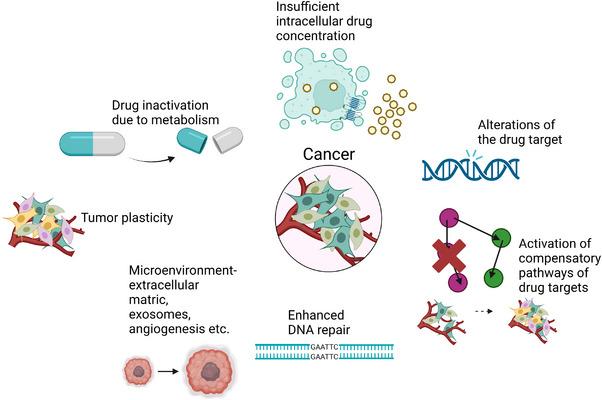
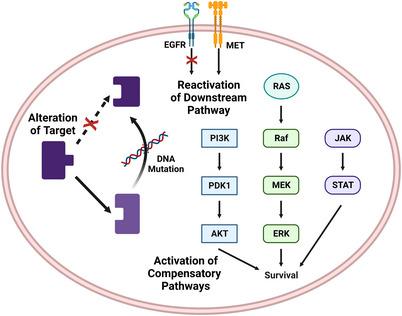
Resistance to cancer therapies has been a commonly observed phenomenon in clinical practice, which is one of the major causes of treatment failure and poor patient survival. The reduced responsiveness of cancer cells is a multifaceted phenomenon that can arise from genetic, epigenetic, and microenvironmental factors. Various mechanisms have been discovered and extensively studied, including drug inactivation, reduced intracellular drug accumulation by reduced uptake or increased efflux, drug target alteration, activation of compensatory pathways for cell survival, regulation of DNA repair and cell death, tumor plasticity, and the regulation from tumor microenvironments (TMEs). To overcome cancer resistance, a variety of strategies have been proposed, which are designed to enhance the effectiveness of cancer treatment or reduce drug resistance. These include identifying biomarkers that can predict drug response and resistance, identifying new targets, developing new targeted drugs, combination therapies targeting multiple signaling pathways, and modulating the TME. The present article focuses on the different mechanisms of drug resistance in cancer and the corresponding tackling approaches with recent updates. Perspectives on polytherapy targeting multiple resistance mechanisms, novel nanoparticle delivery systems, and advanced drug design tools for overcoming resistance are also reviewed.
癌症治疗耐药性是临床实践中常见的现象,是治疗失败和患者生存率低的主要原因之一。癌细胞反应性降低是一种多方面的现象,可能源于遗传、表观遗传和微环境因素。人们已经发现并广泛研究了各种机制,包括药物失活、通过减少摄取或增加外排降低细胞内药物积累、药物靶点改变、激活细胞存活的补偿途径、DNA修复和细胞死亡的调节、肿瘤可塑性以及肿瘤微环境(TME)的调节。为了克服癌症耐药性,人们提出了多种策略,旨在提高癌症治疗的有效性或降低耐药性。这些策略包括识别能够预测药物反应和耐药性的生物标志物、识别新靶点、开发新的靶向药物、针对多个信号通路的联合治疗以及调节肿瘤微环境。本文重点介绍癌症耐药性的不同机制以及相应的最新应对方法。还综述了针对多种耐药机制的联合治疗、新型纳米颗粒递送系统以及克服耐药性的先进药物设计工具的相关观点。

 Zotero 插件