
肿瘤细胞可塑性:从细胞、分子和遗传机制到肿瘤异质性和耐药性。
Cancer cell plasticity: from cellular, molecular, and genetic mechanisms to tumor heterogeneity and drug resistance.
机构信息
Advanced Centre for Human Genetics, Sher-I-Kashmir Institute of Medical Sciences, Soura, Srinagar, Jammu and Kashmir, India.
Institute of Human Genetics, University of Jammu, Jammu, Jammu and Kashmir, India.
出版信息
Cancer Metastasis Rev. 2024 Mar;43(1):197-228. doi: 10.1007/s10555-024-10172-z. Epub 2024 Feb 8.
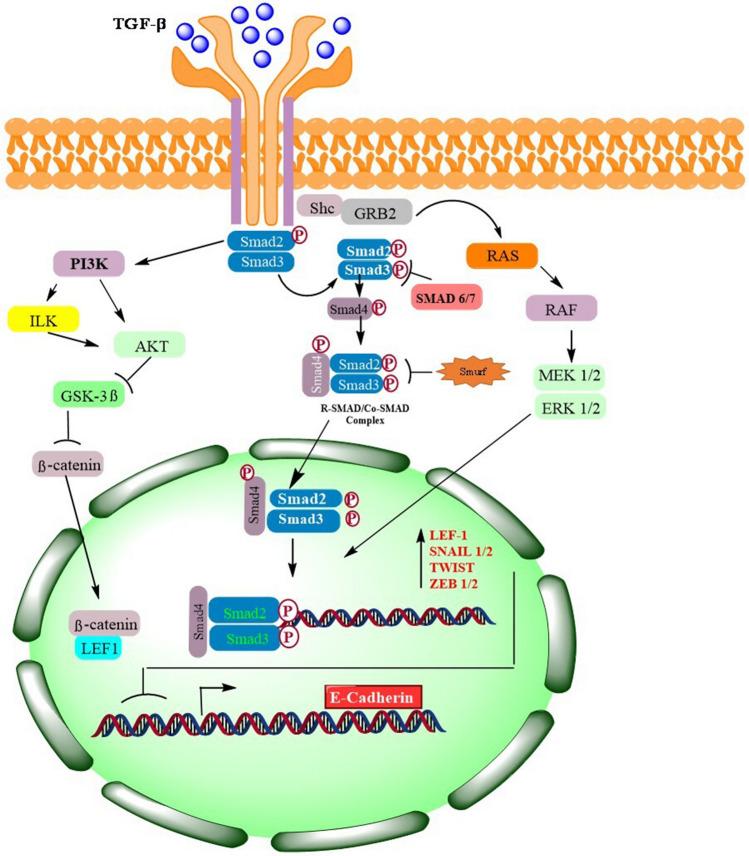
Cancer is a complex disease displaying a variety of cell states and phenotypes. This diversity, known as cancer cell plasticity, confers cancer cells the ability to change in response to their environment, leading to increased tumor diversity and drug resistance. This review explores the intricate landscape of cancer cell plasticity, offering a deep dive into the cellular, molecular, and genetic mechanisms that underlie this phenomenon. Cancer cell plasticity is intertwined with processes such as epithelial-mesenchymal transition and the acquisition of stem cell-like features. These processes are pivotal in the development and progression of tumors, contributing to the multifaceted nature of cancer and the challenges associated with its treatment. Despite significant advancements in targeted therapies, cancer cell adaptability and subsequent therapy-induced resistance remain persistent obstacles in achieving consistent, successful cancer treatment outcomes. Our review delves into the array of mechanisms cancer cells exploit to maintain plasticity, including epigenetic modifications, alterations in signaling pathways, and environmental interactions. We discuss strategies to counteract cancer cell plasticity, such as targeting specific cellular pathways and employing combination therapies. These strategies promise to enhance the efficacy of cancer treatments and mitigate therapy resistance. In conclusion, this review offers a holistic, detailed exploration of cancer cell plasticity, aiming to bolster the understanding and approach toward tackling the challenges posed by tumor heterogeneity and drug resistance. As articulated in this review, the delineation of cellular, molecular, and genetic mechanisms underlying tumor heterogeneity and drug resistance seeks to contribute substantially to the progress in cancer therapeutics and the advancement of precision medicine, ultimately enhancing the prospects for effective cancer treatment and patient outcomes.
癌症是一种表现出多种细胞状态和表型的复杂疾病。这种多样性被称为癌细胞可塑性,使癌细胞能够根据环境变化而改变,从而增加肿瘤的多样性和耐药性。本文深入探讨了癌细胞可塑性的复杂景观,深入研究了支持这一现象的细胞、分子和遗传机制。癌细胞可塑性与上皮-间充质转化和获得干细胞样特征等过程交织在一起。这些过程在肿瘤的发生和发展中起着关键作用,导致癌症的多面性及其治疗相关的挑战。尽管靶向治疗取得了重大进展,但癌细胞的适应性和随后的治疗诱导耐药性仍然是实现一致、成功的癌症治疗结果的持续障碍。我们的综述深入探讨了癌细胞利用多种机制来维持可塑性,包括表观遗传修饰、信号通路改变和环境相互作用。我们讨论了对抗癌细胞可塑性的策略,例如靶向特定细胞途径和采用联合治疗。这些策略有望提高癌症治疗的疗效,并减轻治疗耐药性。总之,本文对癌细胞可塑性进行了全面、详细的探讨,旨在增强对肿瘤异质性和耐药性所带来挑战的理解和应对方法。正如本文所述,阐明肿瘤异质性和耐药性的细胞、分子和遗传机制,有望为癌症治疗的进展和精准医学的推进做出重大贡献,最终提高有效治疗癌症和改善患者预后的前景。



 Zotero 插件