
胰腺癌中 ANGPTL4 过表达的转录组和功能分析鉴定出逆转化疗耐药性的靶标。
Transcriptomic and functional analysis of ANGPTL4 overexpression in pancreatic cancer nominates targets that reverse chemoresistance.
机构信息
HudsonAlpha Institute for Biotechnology, 601 Genome Way, Huntsville, AL, 35806, USA.
The University of Alabama in Huntsville, 301 Sparkman Drive, 35899, Huntsville, AL, USA.
出版信息
BMC Cancer. 2023 Jun 8;23(1):524. doi: 10.1186/s12885-023-11010-1.
BACKGROUND
Pancreatic ductal adenocarcinoma (PDAC) is one of the deadliest cancers based on five-year survival rates. Genes contributing to chemoresistance represent novel therapeutic targets that can improve treatment response. Increased expression of ANGPTL4 in tumors correlates with poor outcomes in pancreatic cancer.
METHODS
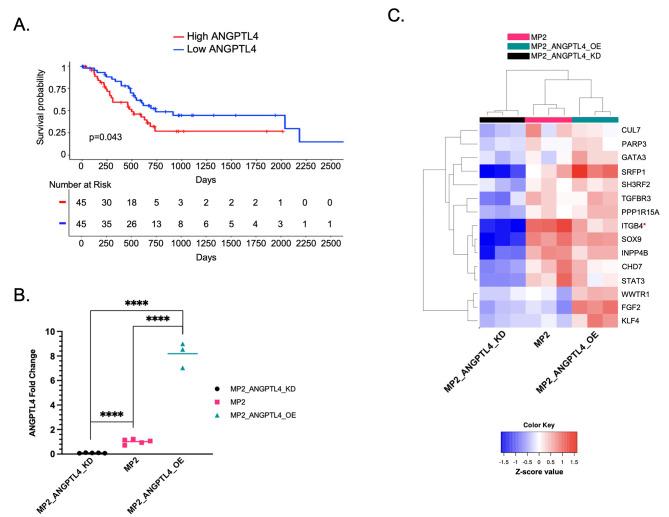
We used statistical analysis of publicly available gene expression data (TCGA-PAAD) to test whether expression of ANGPTL4 and its downstream targets, ITGB4 and APOL1, were correlated with patient survival. We measured the impact of ANGPTL4 overexpression in a common pancreatic cancer cell line, MIA PaCa-2 cells, using CRISPRa for overexpression and DsiRNA for knockdown. We characterized global gene expression changes associated with high levels of ANGPTL4 and response to gemcitabine treatment using RNA-sequencing. Gemcitabine dose response curves were calculated on modified cell lines by measuring cell viability with CellTiter-Glo (Promega). Impacts on cell migration were measured using a time course scratch assay.
RESULTS
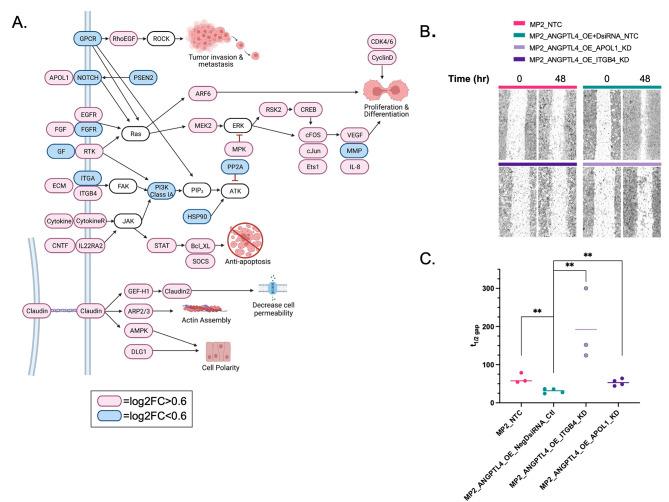
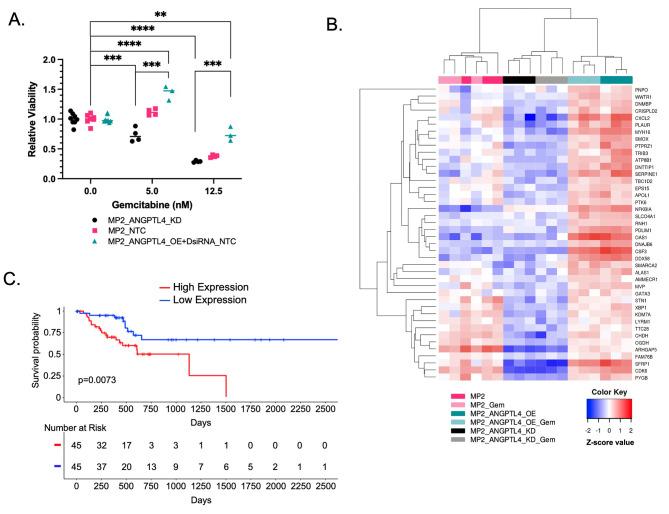
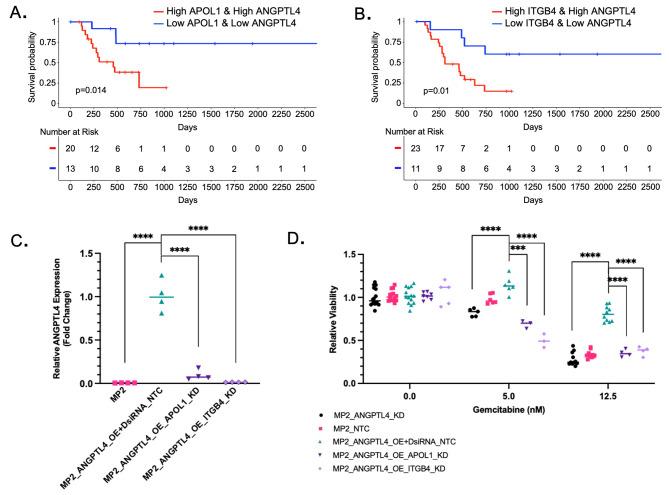
We show that ANGPTL4 overexpression leads to in vitro resistance to gemcitabine and reduced survival times in patients. Overexpression of ANGPTL4 induces transcriptional signatures of tumor invasion and metastasis, proliferation and differentiation, and inhibition of apoptosis. Analyses revealed an overlapping signature of genes associated with both ANGPTL4 activation and gemcitabine response. Increased expression of the genes in this signature in patient PDAC tissues was significantly associated with shorter patient survival. We identified 42 genes that were both co-regulated with ANGPTL4 and were responsive to gemcitabine treatment. ITGB4 and APOL1 were among these genes. Knockdown of either of these genes in cell lines overexpressing ANGPTL4 reversed the observed gemcitabine resistance and inhibited cellular migration associated with epithelial to mesenchymal transition (EMT) and ANGPTL4 overexpression.
CONCLUSIONS
These data suggest that ANGPTL4 promotes EMT and regulates the genes APOL1 and ITGB4. Importantly, we show that inhibition of both targets reverses chemoresistance and decreases migratory potential. Our findings have revealed a novel pathway regulating tumor response to treatment and suggest relevant therapeutic targets in pancreatic cancer.
背景
基于五年生存率,胰腺导管腺癌(PDAC)是最致命的癌症之一。有助于化疗耐药的基因代表了可以改善治疗反应的新的治疗靶点。在胰腺癌中,ANGPTL4 在肿瘤中的表达增加与不良预后相关。
方法
我们使用公共基因表达数据(TCGA-PAAD)的统计分析来测试 ANGPTL4 及其下游靶点 ITGB4 和 APOL1 的表达是否与患者生存相关。我们使用 CRISPRa 过表达和 DsiRNA 敲低在常见的胰腺癌细胞系 MIA PaCa-2 细胞中测量 ANGPTL4 过表达的影响。我们使用 RNA 测序来描述与高水平 ANGPTL4 相关的全基因表达变化和对吉西他滨治疗的反应。通过使用 CellTiter-Glo(Promega)测量细胞活力来计算修饰后的细胞系中的吉西他滨剂量反应曲线。使用时间过程划痕测定来测量细胞迁移的影响。
结果
我们表明,ANGPTL4 过表达导致体外对吉西他滨的耐药性,并降低患者的生存时间。ANGPTL4 的过表达诱导肿瘤侵袭和转移、增殖和分化以及凋亡抑制的转录特征。分析揭示了与 ANGPTL4 激活和吉西他滨反应相关的基因的重叠特征。在患者 PDAC 组织中,该特征中基因的表达增加与患者生存时间显著相关。我们鉴定了 42 个与 ANGPTL4 共调控且对吉西他滨治疗有反应的基因。ITGB4 和 APOL1 就是这些基因中的一部分。在过表达 ANGPTL4 的细胞系中敲低这些基因中的任一个都能逆转观察到的吉西他滨耐药性并抑制与上皮间质转化(EMT)和 ANGPTL4 过表达相关的细胞迁移。
结论
这些数据表明,ANGPTL4 促进 EMT 并调节基因 APOL1 和 ITGB4。重要的是,我们表明抑制这两个靶点可逆转化疗耐药并降低迁移潜力。我们的研究结果揭示了调节肿瘤对治疗反应的新途径,并提出了胰腺癌中的相关治疗靶点。
 Zotero 插件