
通过有效利用生物活性穿心莲内酯及其纳米递送系统来利用叶子和根:通过[具体研究内容1]和[具体研究内容2]研究抗惊厥和抗氧化活性。
Utilizing leaves and roots by effective usage of the bioactive andrographolide and its nanodelivery: investigation of antikindling and antioxidant activities through and studies.
作者信息
Baru Venkata Ramana, Prasanth Dintakurthi Sree Naga Bala Krishna, Pasala Praveen Kumar, Panda Siva Prasad, Tatipamula Vinay Bharadwaj, Mulukuri Sirisha, Kota Ravi Kumar, Rudrapal Mithun, Khan Johra, Aldosari Sahar, Alshehri Bader, Banawas Saeed, Challa Madhusudan Chetty, Kammili Jithendra Kumar
机构信息
Santhiram College of Pharmacy, JNTUA, Nandyal, Andhra Pradesh, India.
Department of Pharmacognosy, KVSR Siddhartha College of Pharmaceutical Sciences, Vijayawada, Andhra Pradesh, India.
出版信息
Front Nutr. 2023 May 31;10:1185236. doi: 10.3389/fnut.2023.1185236. eCollection 2023.
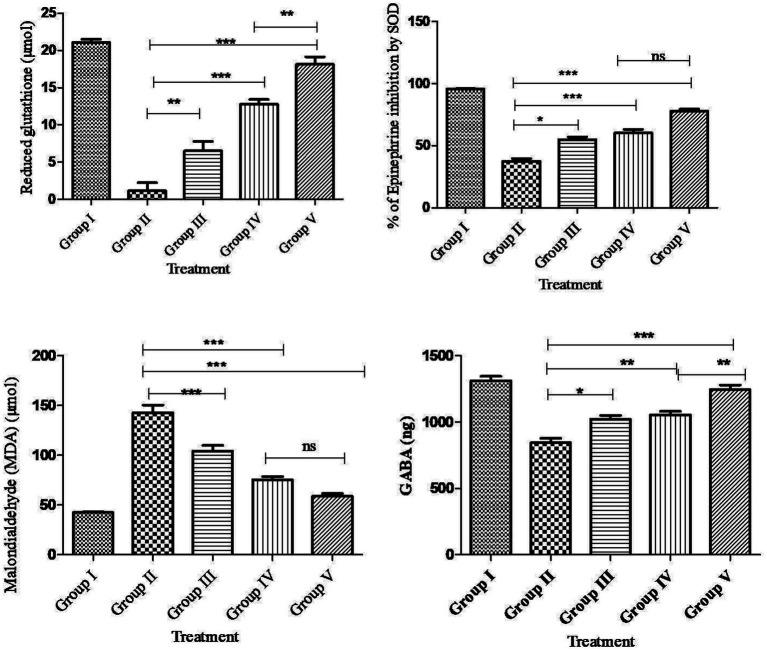
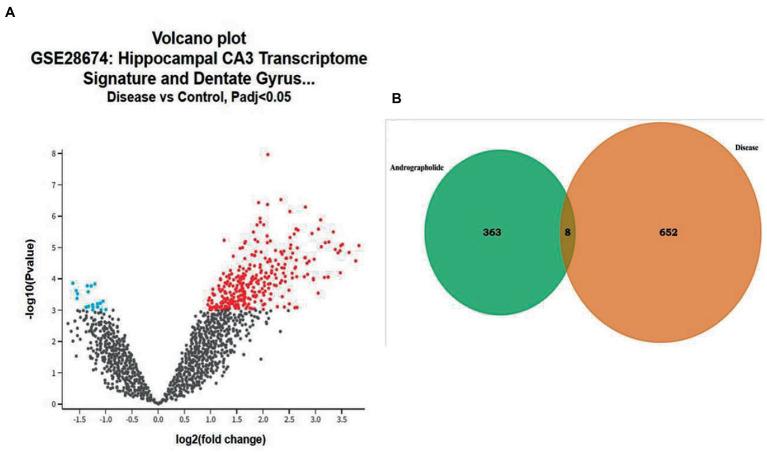
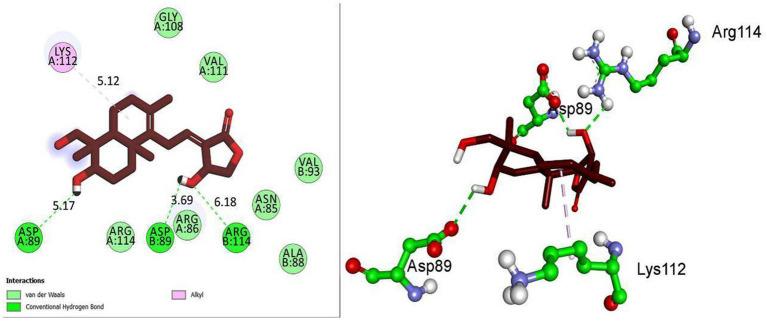
To valorise the bioactive constituents abundant in leaves and other parts of medicinal plants with the objective to minimize the plant-based wastes, this study was undertaken. The main bioactive constituent of an Asian medicinal plant, is andrographolide (AG, a diterpenoid), which has shown promising results in the treatment of neurodegenerative illnesses. Continuous electrical activity in the brain is a hallmark of the abnormal neurological conditions such as epilepsy (EY). This can lead to neurological sequelae. In this study, we used GSE28674 as a microarray expression profiling dataset to identify DEGs associated with andrographolide and those with fold changes >1 and -value <0.05 GEO2R. We obtained eight DEG datasets (two up and six down). There was marked enrichment under various Kyoto Encyclopaedia of Genes and Genomes (KEGG) and Gene Ontology (GO) terms for these DEGs (DUSP10, FN1, AR, PRKCE, CA12, RBP4, GABRG2, and GABRA2). Synaptic vesicles and plasma membranes were the predominant sites of DEG expression. AG acts as an antiepileptic agent by upregulating GABA levels. The low bioavailability of AG is a significant limitation of its application. To control these limitations, andrographolide nanoparticles (AGNPs) were prepared and their neuroprotective effect against pentylenetetrazol (PTZ)-induced kindling epilepsy was investigated using network pharmacology (NP) and docking studies to evaluate the antiepileptic multi-target mechanisms of AG. Andrographolide is associated with eight targets in the treatment of epilepsy. Nicotine addiction, GABAergic synapse, and morphine addiction were mainly related to epilepsy, according to KEGG pathway enrichment analysis ( < 0.05). A docking study showed that andrographolide interacted with the key targets. AG regulates epilepsy and exerts its therapeutic effects by stimulating GABA production. Rats received 80 mg/kg body weight of AG and AGNP, phenytoin and PTZ (30 mg/kg i.p. injection on alternate days), brain MDA, SOD, GSH, GABAand histological changes of hippocampus and cortex were observed. PTZ injected rats showed significantly ( < 0.001) increased kindling behavior, increased MDA, decreased GSH, SOD, GABA activities, compared with normal rats, while treatment AGNPs significantly reduced kindling score and reversed oxidative damage. Finally, we conclude that the leaves and roots of can be effectively utilized for its major bioactive constituent, andrographolide as a potent anti-epileptic agent. Furthermore, the findings of novel nanotherapeutic approach claim that nano-andrographolide can be successfully in the management of kindling seizures and neurodegenerative disorders.
为了使药用植物叶子和其他部位丰富的生物活性成分具有价值,以尽量减少植物性废物,开展了本研究。一种亚洲药用植物的主要生物活性成分是穿心莲内酯(AG,一种二萜类化合物),它在治疗神经退行性疾病方面已显示出有前景的结果。大脑中的持续电活动是癫痫(EY)等异常神经状况的标志。这可能导致神经后遗症。在本研究中,我们使用GSE28674作为微阵列表达谱数据集,以鉴定与穿心莲内酯相关的差异表达基因(DEGs)以及那些倍数变化>1且P值<0.05的基因(GEO2R)。我们获得了八个DEG数据集(两个上调和六个下调)。这些DEGs(双特异性磷酸酶10、纤连蛋白1、雄激素受体、蛋白激酶C epsilon型、碳酸酐酶12、视黄醇结合蛋白4、GABAA受体γ2亚基和GABAA受体α2亚基)在各种京都基因与基因组百科全书(KEGG)和基因本体论(GO)术语下有显著富集。突触小泡和质膜是DEG表达的主要部位。AG通过上调GABA水平发挥抗癫痫作用。AG的低生物利用度是其应用的一个重大限制。为了控制这些限制,制备了穿心莲内酯纳米颗粒(AGNPs),并使用网络药理学(NP)和对接研究来研究其对戊四氮(PTZ)诱导的点燃癫痫的神经保护作用,以评估AG的抗癫痫多靶点机制。穿心莲内酯在治疗癫痫中与八个靶点相关。根据KEGG通路富集分析(P<0.05),尼古丁成瘾、GABA能突触和吗啡成瘾主要与癫痫有关。对接研究表明穿心莲内酯与关键靶点相互作用。AG通过刺激GABA产生来调节癫痫并发挥其治疗作用。给大鼠分别给予80mg/kg体重的AG和AGNP、苯妥英和PTZ(隔天腹腔注射30mg/kg),观察脑丙二醛(MDA)、超氧化物歧化酶(SOD)、谷胱甘肽(GSH)、GABA以及海马和皮层的组织学变化。与正常大鼠相比,注射PTZ的大鼠点燃行为显著增加(P<0.001),MDA增加,GSH、SOD、GABA活性降低,而治疗AGNPs显著降低点燃评分并逆转氧化损伤。最后,我们得出结论,[植物名称]的叶子和根可以因其主要生物活性成分穿心莲内酯而得到有效利用,穿心莲内酯是一种有效的抗癫痫剂。此外,新型纳米治疗方法的研究结果表明,纳米穿心莲内酯可以成功用于治疗点燃性癫痫和神经退行性疾病。



 Zotero 插件