
非病毒一氧化氮基因治疗改善神经母细胞瘤模型的灌注和阿霉素脂质体超声渗透。
Non-viral nitric oxide-based gene therapy improves perfusion and liposomal doxorubicin sonopermeation in neuroblastoma models.
机构信息
Department of Biomedical Engineering, University of Texas at Dallas, Richardson, TX, USA.
Department of Biological Sciences, University of Texas at Dallas, Richardson, TX, USA.
出版信息
Theranostics. 2023 Jun 4;13(10):3402-3418. doi: 10.7150/thno.81700. eCollection 2023.
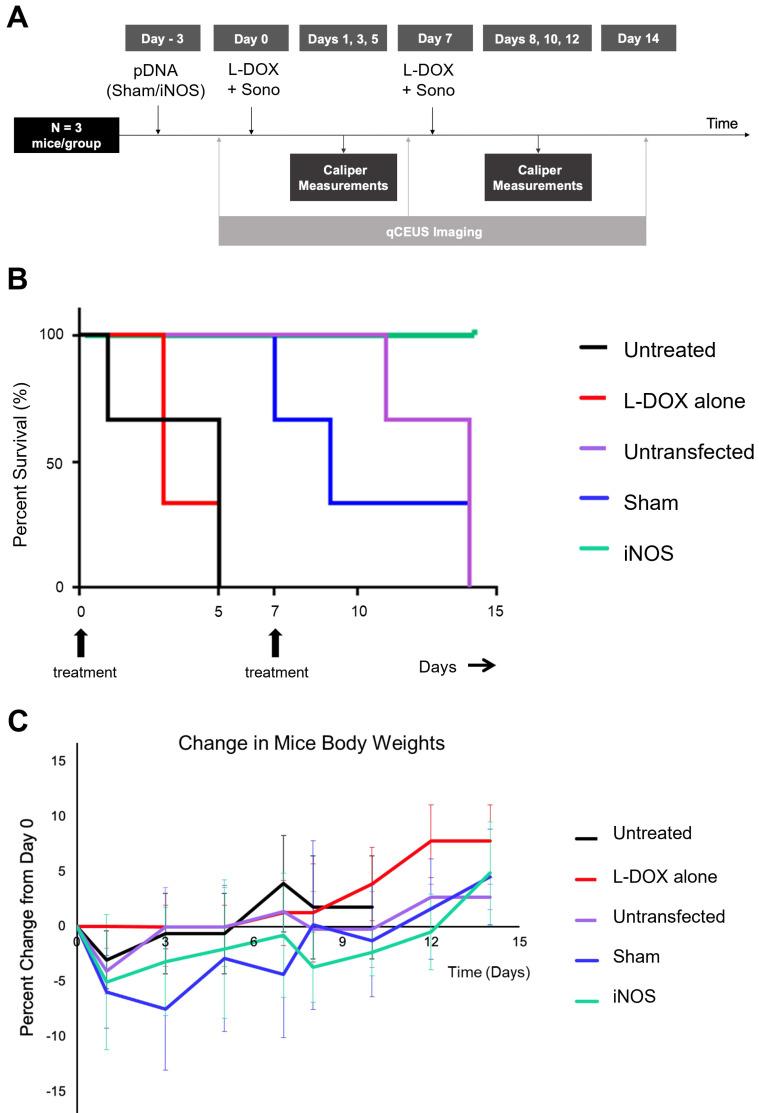
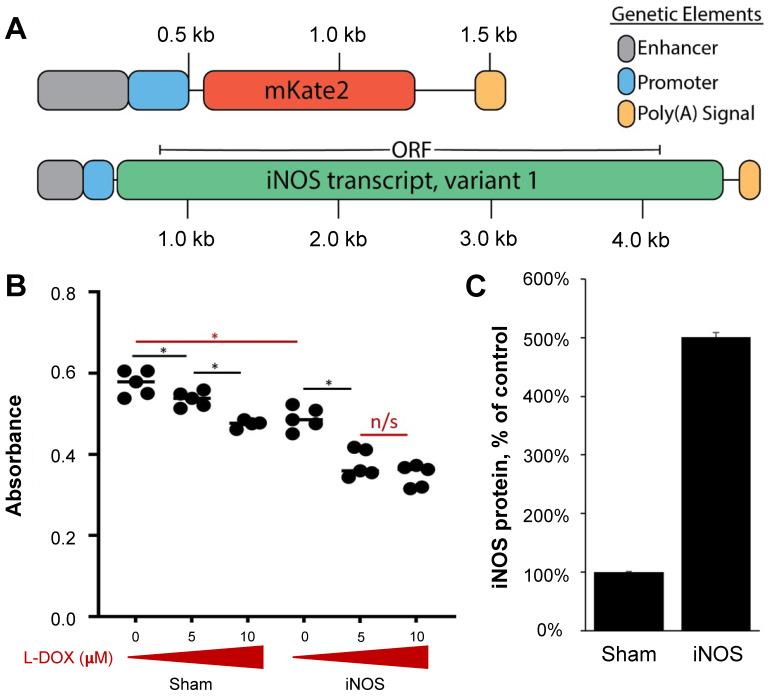
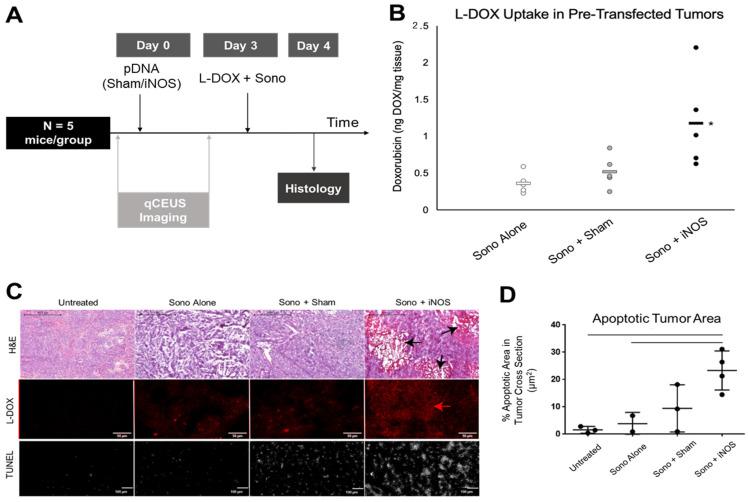
Neuroblastoma (NB) is a pediatric malignancy that accounts for 15% of cancer-related childhood mortality. High-risk NB requires an aggressive chemoradiotherapy regimen that causes significant off-target toxicity. Despite this invasive treatment, many patients either relapse or do not respond adequately. Recent studies suggest that improving tumor perfusion can enhance drug accumulation and distribution within the tumor tissue, potentially augmenting treatment effects without inflicting systemic toxicity. Accordingly, methods that transiently increase tumor perfusion prior to treatment may help combat this disease. Here, we show the use of gene therapy to confer inducible nitric oxide synthase (iNOS) expression solely in the tumor space, using focused ultrasound targeting. NOS catalyzes the reaction that generates nitric oxide (NO), a potent endogenous vasodilator. This study reports the development of a targeted non-viral image-guided platform to deliver iNOS-expressing plasmid DNA (pDNA) to vascular endothelial cells encasing tumor blood vessels. Following transfection, longitudinal quantitative contrast-enhanced ultrasound (qCEUS) imaging revealed an increase in tumor perfusion over 72 h, attributed to elevated intratumoral iNOS expression. : To construct a gene delivery vector, cationic ultrasound-responsive agents (known as "microbubbles") were employed to carry pDNA in circulation and transfect tumor vascular endothelial cells using focused ultrasound (FUS) energy. This was followed by liposomal doxorubicin (L-DOX) treatment. The post-transfection tumor response was monitored longitudinally using qCEUS imaging to determine relative changes in blood volumes and perfusion rates. After therapy, analysis of tumors was performed to examine the bioeffects associated with iNOS expression. : By combining FUS therapy with cationic ultrasound contrast agents (UCAs), we achieved selective intratumoral transfection of pDNA encoding the iNOS enzyme. While transitory, the degree of expression was sufficient to induce significant increases in tumoral perfusion, to appreciably enhance the chemotherapeutic payload and to in an orthotopic xenograft model. : We have demonstrated the ability of a novel targeted non-viral gene therapy strategy to enhance tumor perfusion and improve L-DOX delivery to NB xenografts. While our results demonstrate that transiently increasing tumor perfusion improves liposome-encapsulated chemotherapeutic uptake and distribution, we expect that our iNOS gene delivery paradigm can also significantly improve radio and immunotherapies by increasing the delivery of radiosensitizers and immunomodulators, potentially improving upon current NB treatment without concomitant adverse effects. Our findings further suggest that qCEUS imaging can effectively monitor changes in tumor perfusion , allowing the identification of an ideal time-point to administer therapy.
神经母细胞瘤(NB)是一种小儿恶性肿瘤,占儿童癌症相关死亡率的 15%。高危 NB 需要积极的化疗和放疗方案,这会导致严重的非靶向毒性。尽管进行了这种侵袭性治疗,但许多患者要么复发,要么不能充分反应。最近的研究表明,改善肿瘤灌注可以增强肿瘤组织内药物的积累和分布,有可能在不产生全身毒性的情况下增强治疗效果。因此,在治疗前暂时增加肿瘤灌注的方法可能有助于对抗这种疾病。在这里,我们展示了使用基因治疗来专门在肿瘤空间中诱导表达诱导型一氧化氮合酶(iNOS),使用聚焦超声靶向。NOS 催化产生一氧化氮(NO)的反应,NO 是一种有效的内源性血管扩张剂。这项研究报告了开发一种靶向非病毒图像引导平台,将表达 iNOS 的质粒 DNA(pDNA)递送到包裹肿瘤血管的血管内皮细胞。转染后,纵向定量对比增强超声(qCEUS)成像显示肿瘤灌注在 72 小时内增加,这归因于肿瘤内 iNOS 表达的升高。
为了构建基因传递载体,使用阳离子超声响应剂(称为“微泡”)在循环中携带 pDNA,并使用聚焦超声(FUS)能量转染肿瘤血管内皮细胞。随后进行脂质体多柔比星(L-DOX)治疗。使用 qCEUS 成像纵向监测转染后的肿瘤反应,以确定血液体积和灌注率的相对变化。治疗后,对肿瘤进行分析,以检查与 iNOS 表达相关的生物效应。
通过将 FUS 治疗与阳离子超声对比剂(UCAs)结合,我们实现了对编码 iNOS 酶的 pDNA 的选择性肿瘤内转染。虽然是短暂的,但表达程度足以诱导肿瘤灌注显著增加,显着增强化疗药物的负载,并在原位异种移植模型中产生显著的治疗效果。
我们已经证明了一种新型靶向非病毒基因治疗策略的能力,该策略可以增强肿瘤灌注并改善 NB 异种移植物中的脂质体包裹化疗药物的递送。虽然我们的结果表明,短暂增加肿瘤灌注可以改善脂质体包裹的化疗药物的摄取和分布,但我们预计我们的 iNOS 基因传递范式还可以通过增加放射增敏剂和免疫调节剂的递送来显着改善放射和免疫治疗,而不会产生伴随的不良反应。我们的发现还表明,qCEUS 成像可以有效地监测肿瘤灌注的变化,从而确定给予治疗的理想时间点。



 Zotero 插件