
口腔和皮肤鳞状细胞癌侵袭性背后的独特特征。
The Distinctive Features behind the Aggressiveness of Oral and Cutaneous Squamous Cell Carcinomas.
作者信息
Alonso-Juarranz Miguel, Mascaraque Marta, Carrasco Elisa, Gracia-Cazaña Tamara, De La Sen Oscar, Gilaberte Yolanda, Gonzalez Salvador, Juarranz Ángeles, Falahat Farzin
机构信息
Oral and Maxillofacial Surgery Service, Hospital Clínico San Carlos, 28040 Madrid, Spain.
Surgery Department, Faculty of Medicine, Universidad Complutense, 28040 Madrid, Spain.
出版信息
Cancers (Basel). 2023 Jun 17;15(12):3227. doi: 10.3390/cancers15123227.
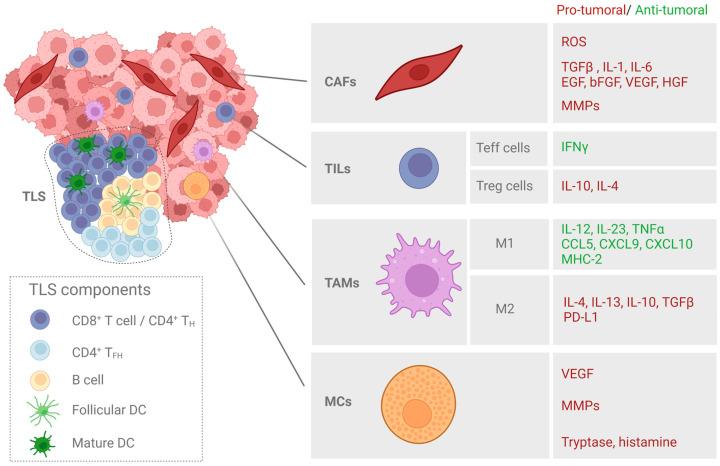
Squamous cell carcinomas arise from stratified squamous epithelia. Here, a comparative analysis based on recent studies defining the genetic alterations and composition of the stroma of oral and cutaneous squamous cell carcinomas (OSCC and CSCC, respectively) was performed. Both carcinomas share some but not all histological and genetic features. This review was focused on how mutations in tumor suppressor genes and protooncogenes cooperate to determine the differentiation, aggressiveness, and metastatic potential of OSCC and CSCC. In fact, driver mutations in tumor suppressor genes are more frequently observed in OSCC than CSCC. These include mutations in (encoding pP53 protein), (encoding cyclin dependent kinase inhibitor 2A), (encoding FAT atypical cadherin 1), and (encoding lysine methyltransferase 2D), with the exception of (encoding Notch receptor 1), whose mutation frequency is lower in OSCC compared to CSCC. Finally, we describe the differential composition of the tumor microenvironment and how this influences the aggressiveness of each tumor type. Although both OSCC and CSCC tumors are highly infiltrated by immune cells, high levels of tumor-infiltrating lymphocytes (TILs) have been more frequently reported as predictors of better outcomes in OSCC than CSCC. In conclusion, OSCC and CSCC partially share genetic alterations and possess different causal factors triggering their development. The tumor microenvironment plays a key role determining the outcome of the disease.
鳞状细胞癌起源于复层鳞状上皮。在此,基于近期研究对口腔和皮肤鳞状细胞癌(分别为OSCC和CSCC)的基因改变及基质组成进行了比较分析。这两种癌有一些但并非所有的组织学和基因特征相同。本综述聚焦于肿瘤抑制基因和原癌基因中的突变如何协同作用以决定OSCC和CSCC的分化、侵袭性及转移潜能。事实上,与CSCC相比,在OSCC中更常观察到肿瘤抑制基因中的驱动突变。这些包括 (编码pP53蛋白)、 (编码细胞周期蛋白依赖性激酶抑制剂2A)、 (编码FAT非典型钙黏蛋白1)和 (编码赖氨酸甲基转移酶2D)中的突变, (编码Notch受体1)除外,其在OSCC中的突变频率低于CSCC。最后,我们描述了肿瘤微环境的差异组成以及这如何影响每种肿瘤类型的侵袭性。尽管OSCC和CSCC肿瘤均被免疫细胞高度浸润,但与CSCC相比,高水平的肿瘤浸润淋巴细胞(TILs)在OSCC中更常被报道为预后较好的预测指标。总之,OSCC和CSCC部分共享基因改变,且具有引发其发展的不同致病因素。肿瘤微环境在决定疾病结局中起关键作用。

 Zotero 插件